
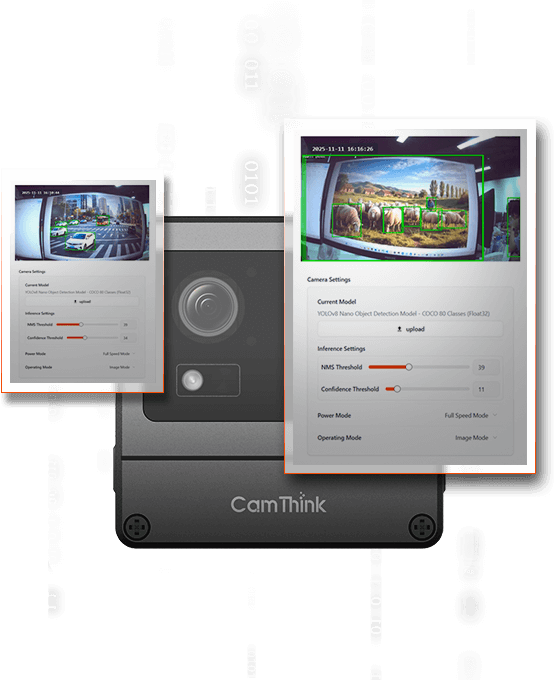
USB Expansion for NeoEyes NE101
As AI vision applications evolve rapidly, users demand better image quality, stronger adaptability, and multi-scenario support. While the standard CPI module (OV5640) is reliable in daily use, it has limitations in image detail, wide-angle coverage, and flexibility.
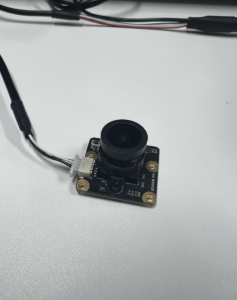
To address this, we designed a USB expansion architecture that allows NeoEyes 101 to support multiple high-performance camera modules. Through low-level interface optimization, even on a base ESP-S3 platform, which does not natively support multi camera input, we achieve stable compatibility and fast expansion. This makes NeoEyes 101 a vision platform that can continuously evolve.
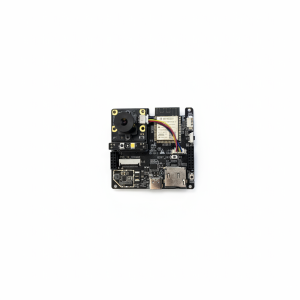
Feature comparison
| Item | Standard OV5640 | USB Module |
|---|---|---|
| Lens Material | Plastic lens | Glass lens |
| Pixel Size | 1.4×1.4µm | 2.9×2.9µm (better light sensitivity) |
| ISP Type | Integrated | Independent ISP (smarter processing) |
| Focus Control | Fixed | Adjustable focus |
| Image Quality | Standard level | High-definition, richer detail |
| Application Ext. | Integrated | Mass customization supported |
| Secondary Dev. | Not supported | Supported |
| HFOV Options | Standard, wide | Standard, wide, ultra-wide |
Note: OV5640 supports macro shooting. USB modules currently do not offer macro specs. If you need macro distances such as ~8 cm or ~15 cm, please choose the OV5640 version. For special needs, contact us for customization.
Additionally, OV5640 is an integrated component. Beyond hardware parameter differences, it leaves limited room for secondary development. OV5640 must be connected to the mainboard, with the main processor reading and processing raw data, which raises the technical threshold and requires low-level drivers.
USB Module Variants
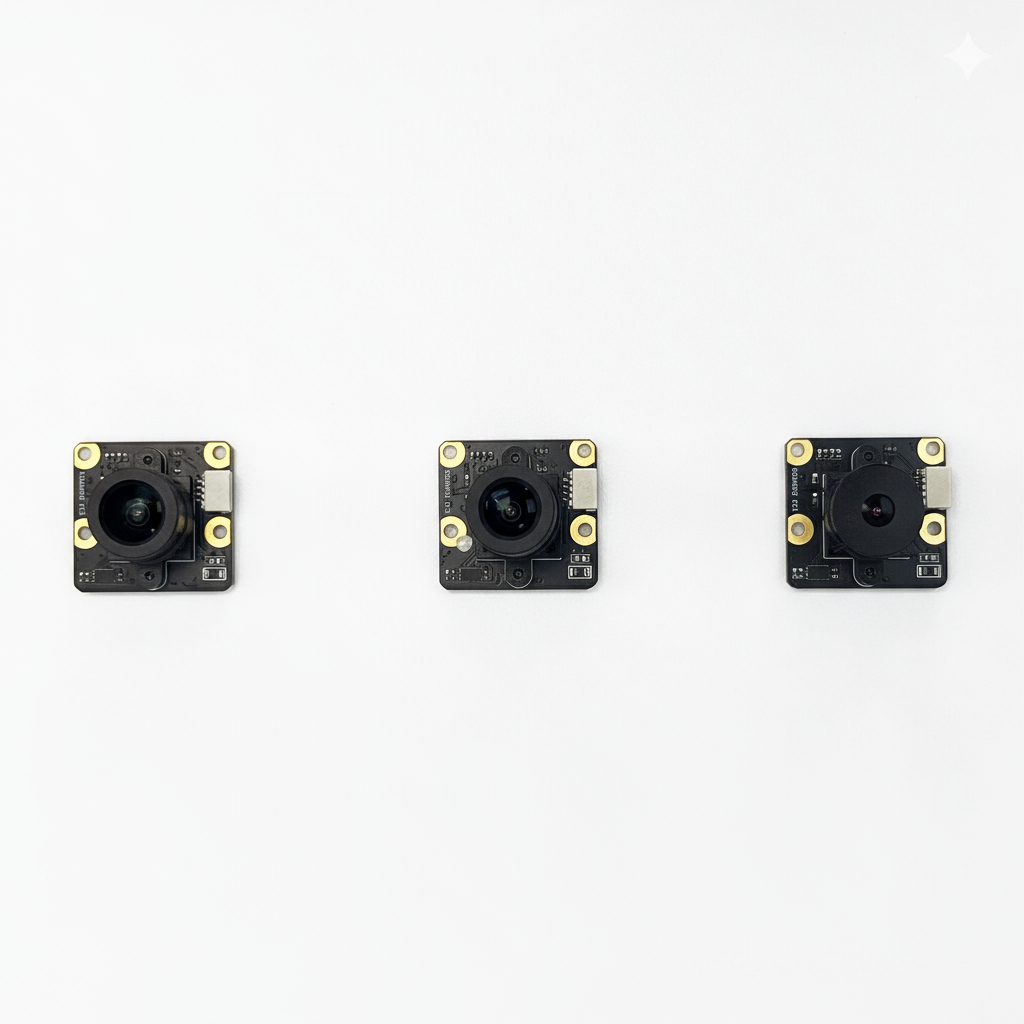
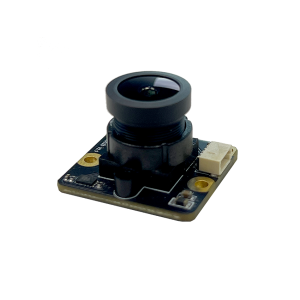
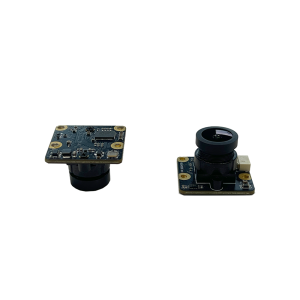
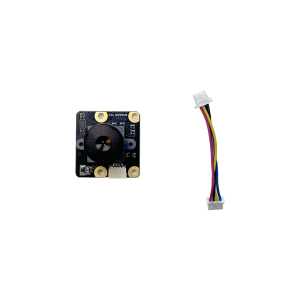
From left to right: SC200AI-137-2M (ultra-wide), SC200AI-88-3M (wide), SC200AI-51-4M (standard).
| Model | HFOV | Focus Distance | Features | Recommended Scenarios |
|---|---|---|---|---|
| SC200AI-51-4M (Standard) | 51° | 4 m | Suited for longer distance; natural imaging, clear detail, high color fidelity | General monitoring, identification |
| SC200AI-88-3M (Wide) | 88° | 3 m | Medium distance; wider coverage, ~50% more view area | Indoor monitoring, crowd analytics, spatial detection |
| SC200AI-137-2M (Ultra-Wide) | 137° | 2 m | Close distance; panoramic capture; widest field | Indoor/outdoor scene monitoring, robotics navigation, edge detection |
Note: We provide separate indoor and outdoor firmware versions tailored for USB camera modules. Choose based on your scenario needs.
OV5640 vs USB Modules — Imaging Comparison
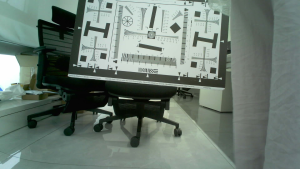
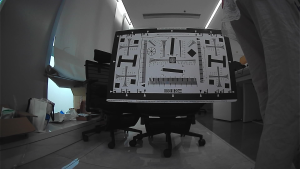
The following shows CPI OV5640 versus USB modules under similar indoor/outdoor conditions:
| CPI Camera | USB Camera (Indoor Firmware) |
|---|---|
HFOV=92° Focus Distance=3 m
| HFOV=137° Focus Distance=2 m
|
HFOV=92° Focus Distance=3 m
| HFOV=88° Focus Distance=3 m
|
HFOV=47° Focus Distance=4 m
| HFOV=51° Focus Distance=4 m
|
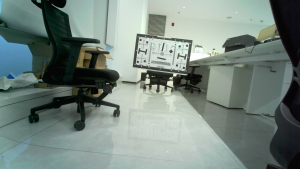
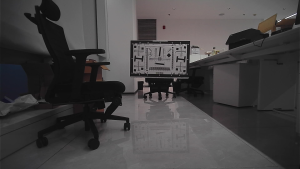
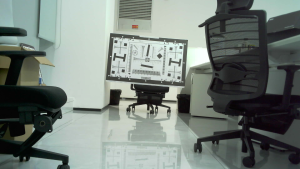
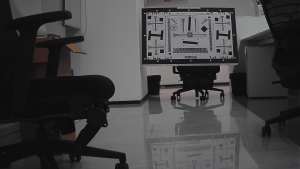
| CPI Camera | USB Camera (Outdoor Firmware) |
|---|---|
HFOV=92° Focus Distance=3 m
| HFOV=137° Focus Distance=2 m
|
HFOV=92° Focus Distance=3 m
| HFOV=88° Focus Distance=3 m
|
HFOV=47° Focus Distance=4 m
| HFOV=51° Focus Distance=4 m
|
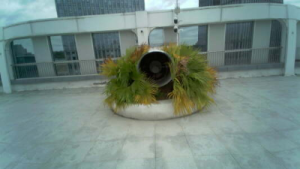
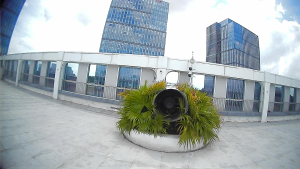
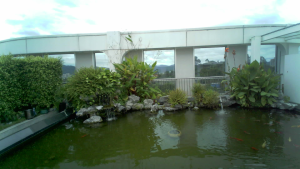
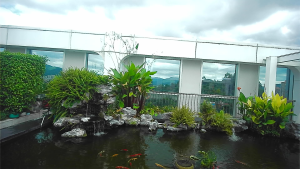
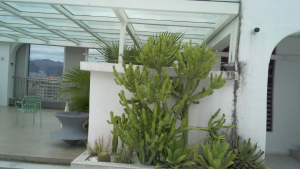
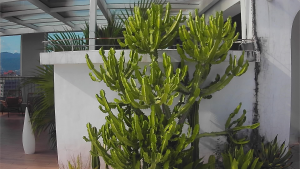
From the comparisons, regardless of indoor or outdoor scenes, USB camera modules deliver better imaging than OV5640. The two lens families are tuned differently; choose based on preference.
USB Module Selection Guide
Normal shooting at longer distance → Standard
Need a wider field of view → Wide
Complex, large-area monitoring at close distance → Ultra-Wide
Three Core Advantages of USB Modules
Image Quality: Glass Lens + Independent ISP
Glass lenses instead of plastic for higher transmittance and durability; reduced chromatic aberration and distortion
Larger pixel size (2.9×2.9µm) for better detail and low-light performance with lower noise
Independent ISP for more precise optimization and wider dynamic range
Flexible Adaptation: Adjustable Focus + Standardized Interface
Adjustable focus to suit near/long-range scenarios
Standardized UVC interface; developers can swap modules quickly without changing low-level drivers; plug-and-play
Customization services for hardware/firmware are available
Open Ecosystem: Developer-Friendly
Better suited for developers who need image tuning or parameter adjustments; easier for secondary development
Strong long-term maintainability; customizable to fit more algorithms and application scenarios
Separate indoor/outdoor firmware versions for smart access control, in-vehicle monitoring, industrial recognition, and more
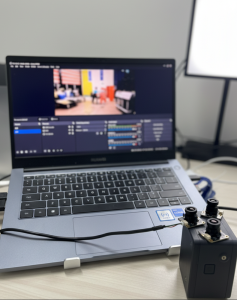
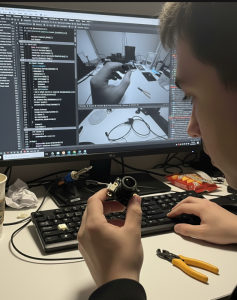
From Hardware to Experience — A Comprehensive Upgrade
USB modules are not just “better cameras”; they represent NeoEyes 101’s move toward openness, extensibility, and modular design. From image quality and flexibility to forward compatibility, we aim to give developers more choices and help end products perform better across diverse scenarios.
Who Should Choose USB Modules?
Users who demand higher imaging quality and clarity
AI vision applications requiring wide-angle/panoramic recognition
Technical developer teams or makers who want secondary development and flexible expansion
Summary
| Item | Standard OV5640 | USB Module |
|---|---|---|
| Lens Material | Plastic | Glass |
| Pixel Size | 1.4×1.4µm | 2.9×2.9µm |
| ISP Type | Integrated | Independent |
| Focus Control | Fixed | Adjustable |
| Adaptability | Lower | Extensible, more flexible |
| Image Quality | Standard | Clearer |
Conclusion: Adding a USB module on top of the standard version lets your NeoEyes 101 not only “see”, but “see more clearly, and adapt more flexibly.”