
No products in the cart.
/
Open Source · Apache-2.0
NeoMind
Edge LLM Agent for IoT
A Rust-based edge AI platform that enables autonomous device management and automated decision-making through Large Language Models.
...
Latest Release
9+
LLM Backends
3
Platforms
What is NeoMind
Edge AI Platform for IoT Automation
NeoMind brings the power of Large Language Models to edge devices, enabling intelligent automation through natural language interaction.
Natural Language Control
Interact with your IoT infrastructure using plain language. Query device status, create automation rules, and execute commands through conversational AI.
Run LLMs at the Edge
Deploy AI models directly on edge devices with Ollama. No cloud dependency, full data privacy, and offline operation capability.
Intelligent Automation
Create automation rules through natural language descriptions. The system understands your intent and generates executable automation logic.
AI-Powered Extensibility
Build custom extensions with AI assistance. Our Claude skill helps you quickly develop Native or WASM extensions. The unified type system makes extension development intuitive and powerful.
LLM as System Brain
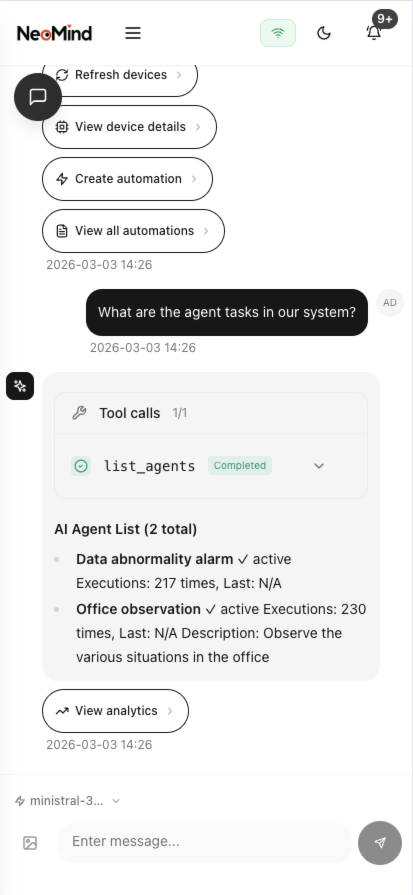
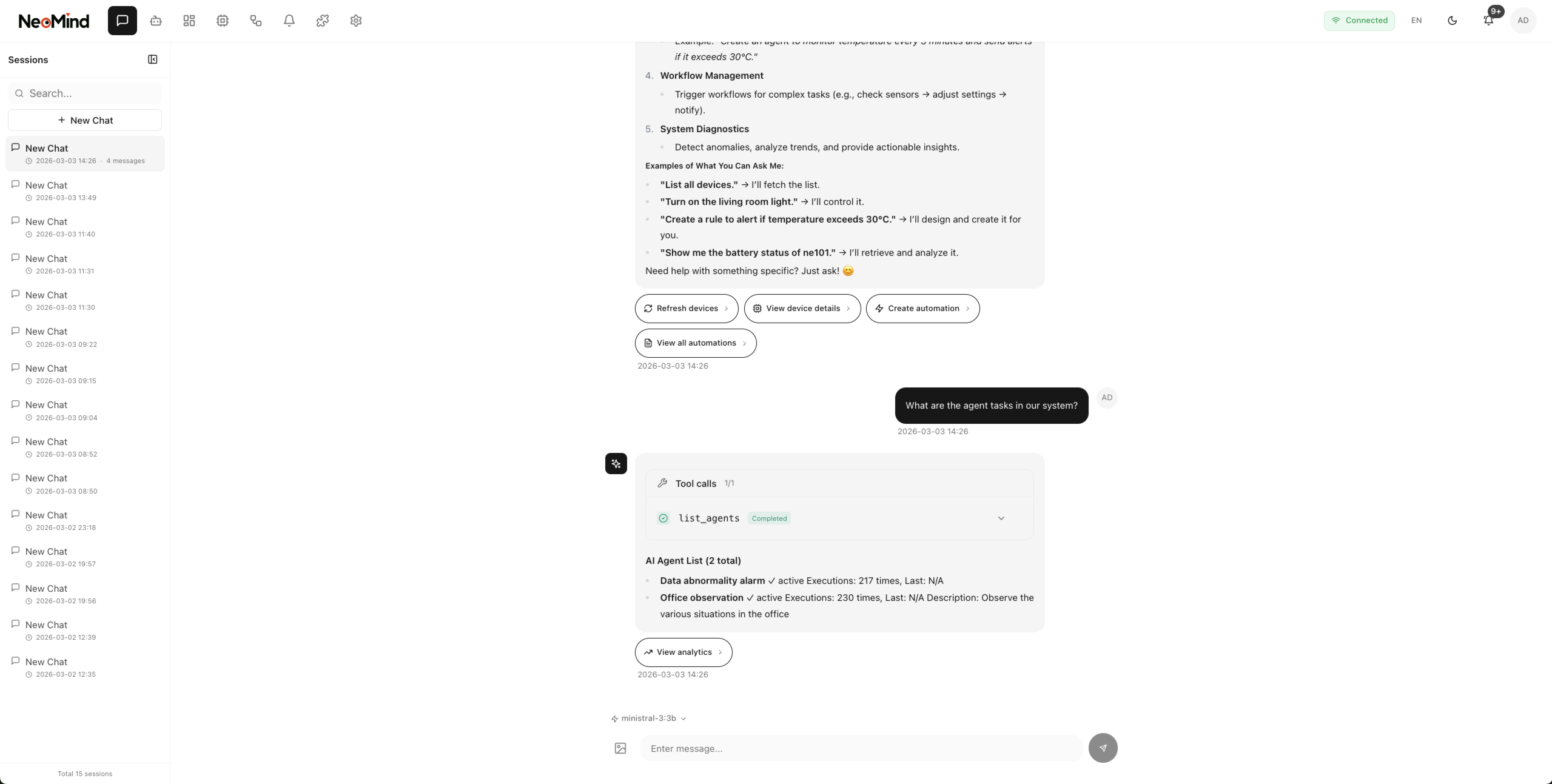
Natural Language Interface
Interactive chat for querying and controlling edge devices through natural language.
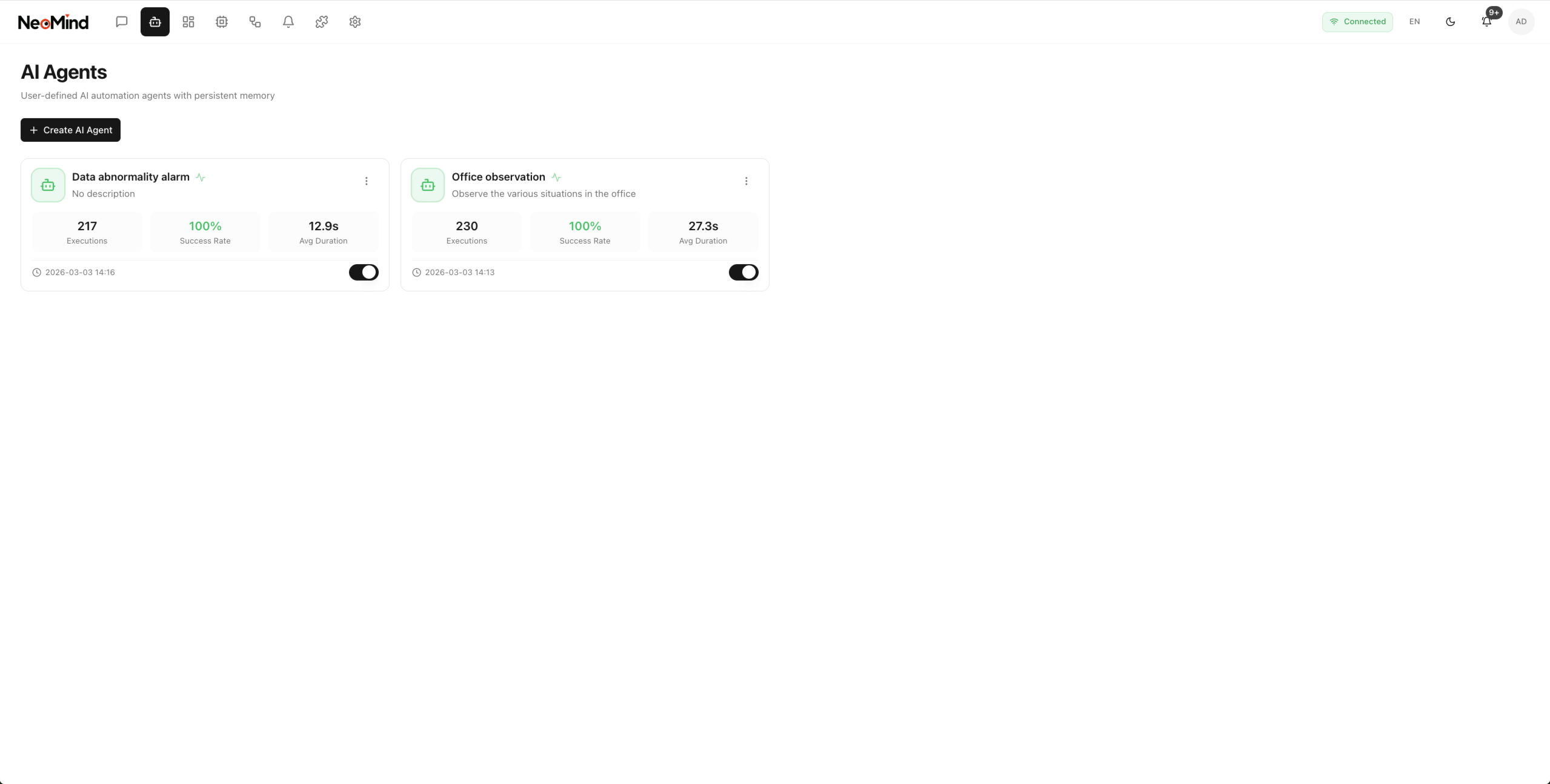
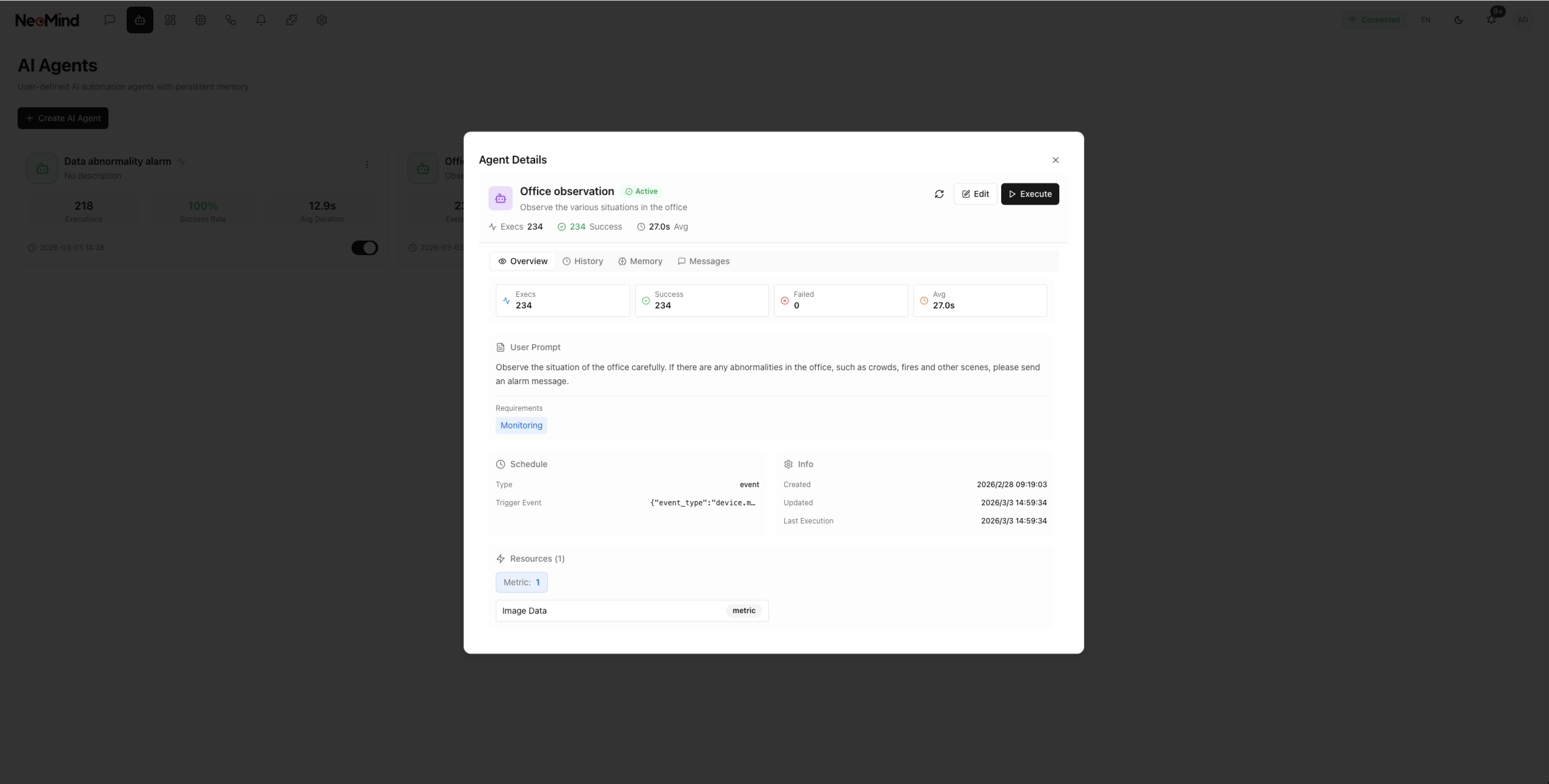
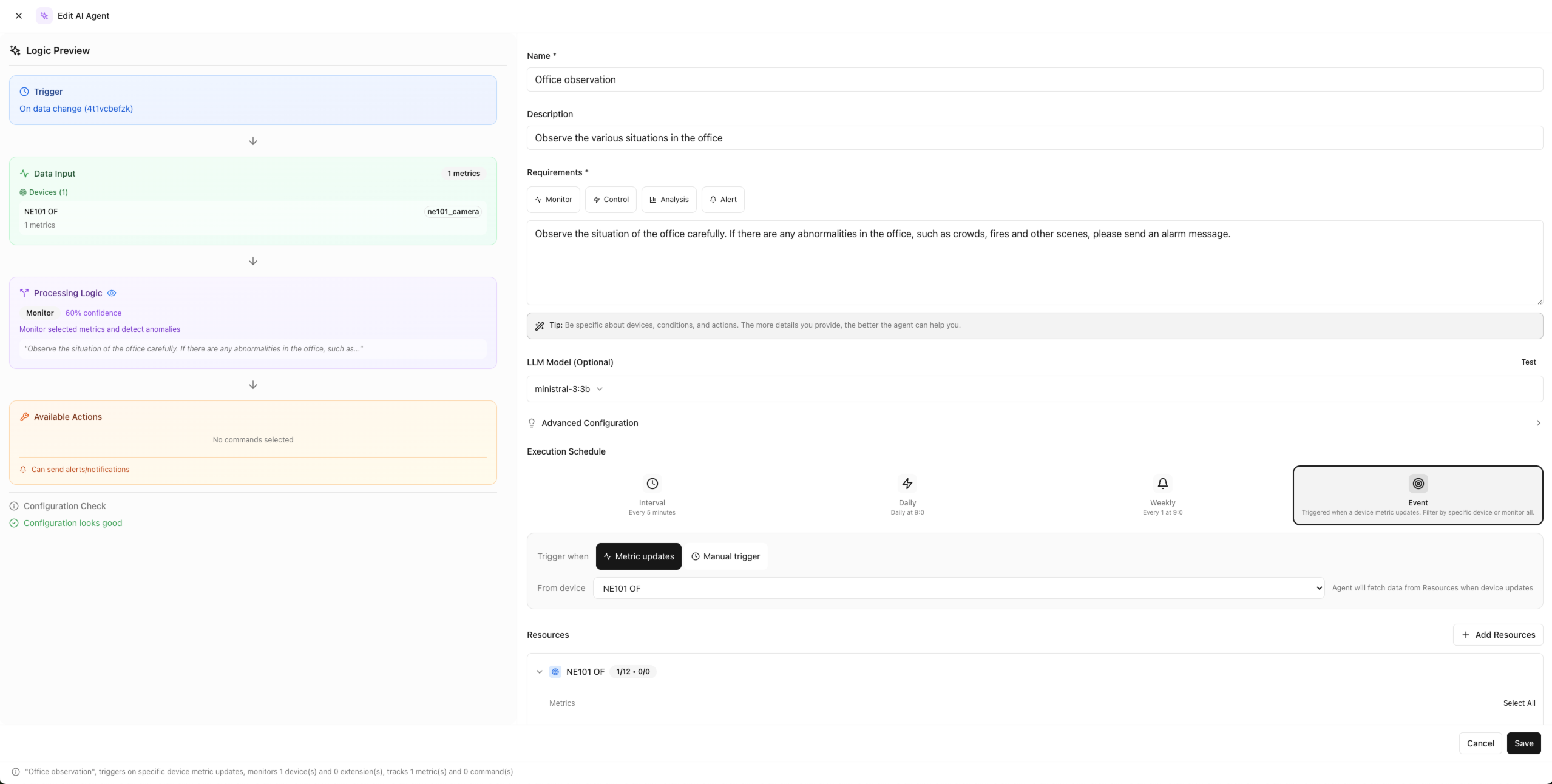
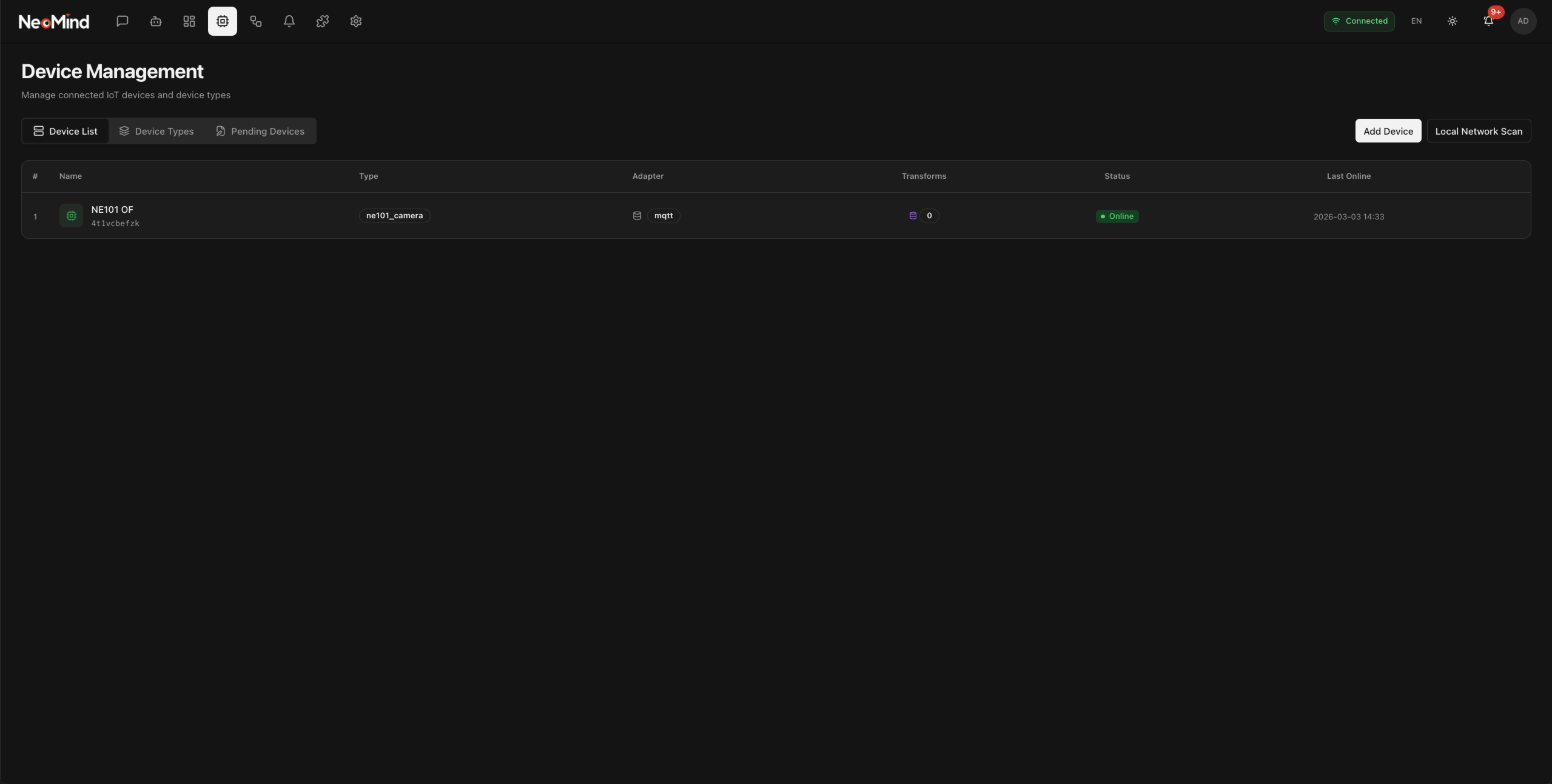
Interface
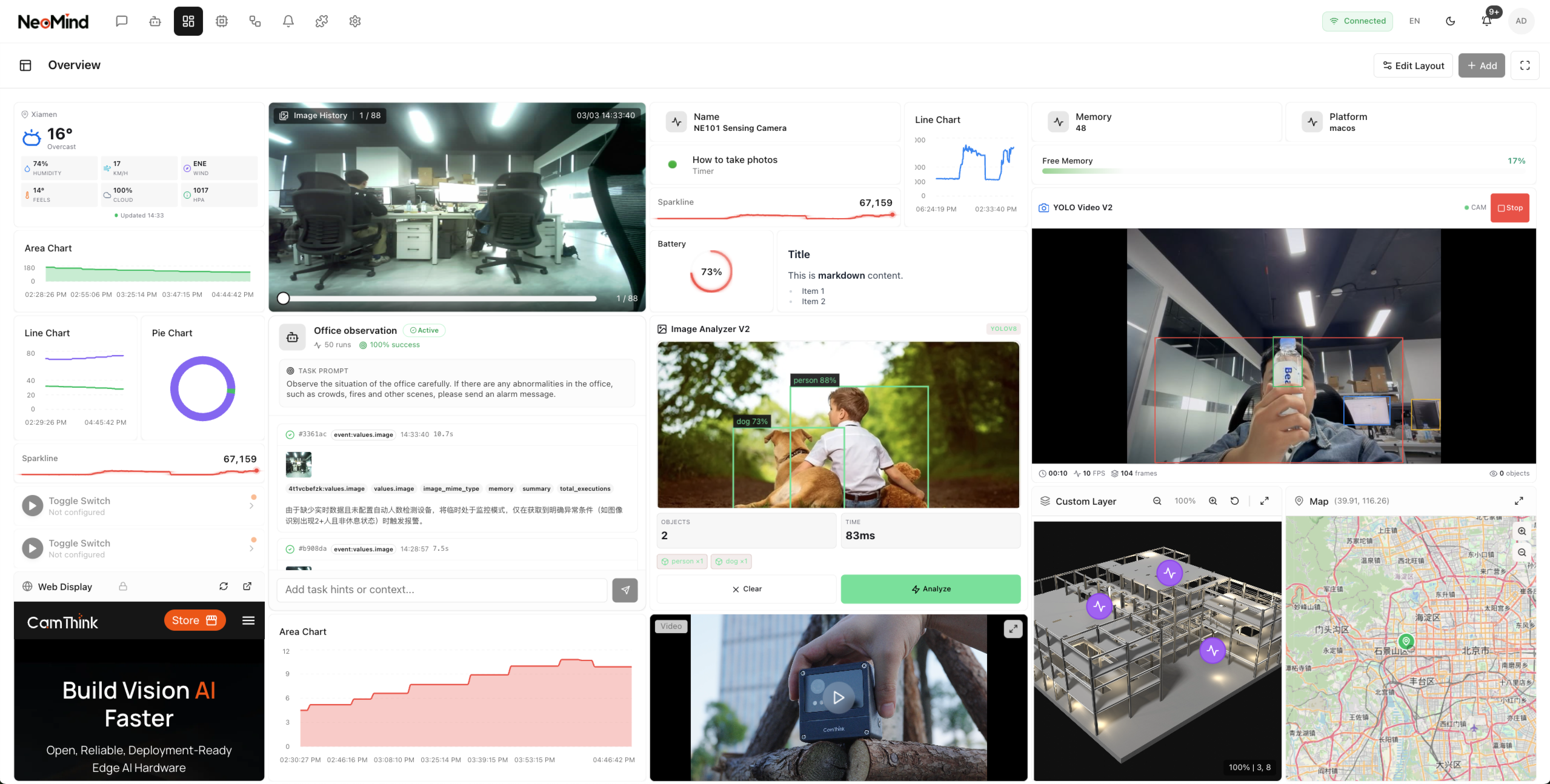
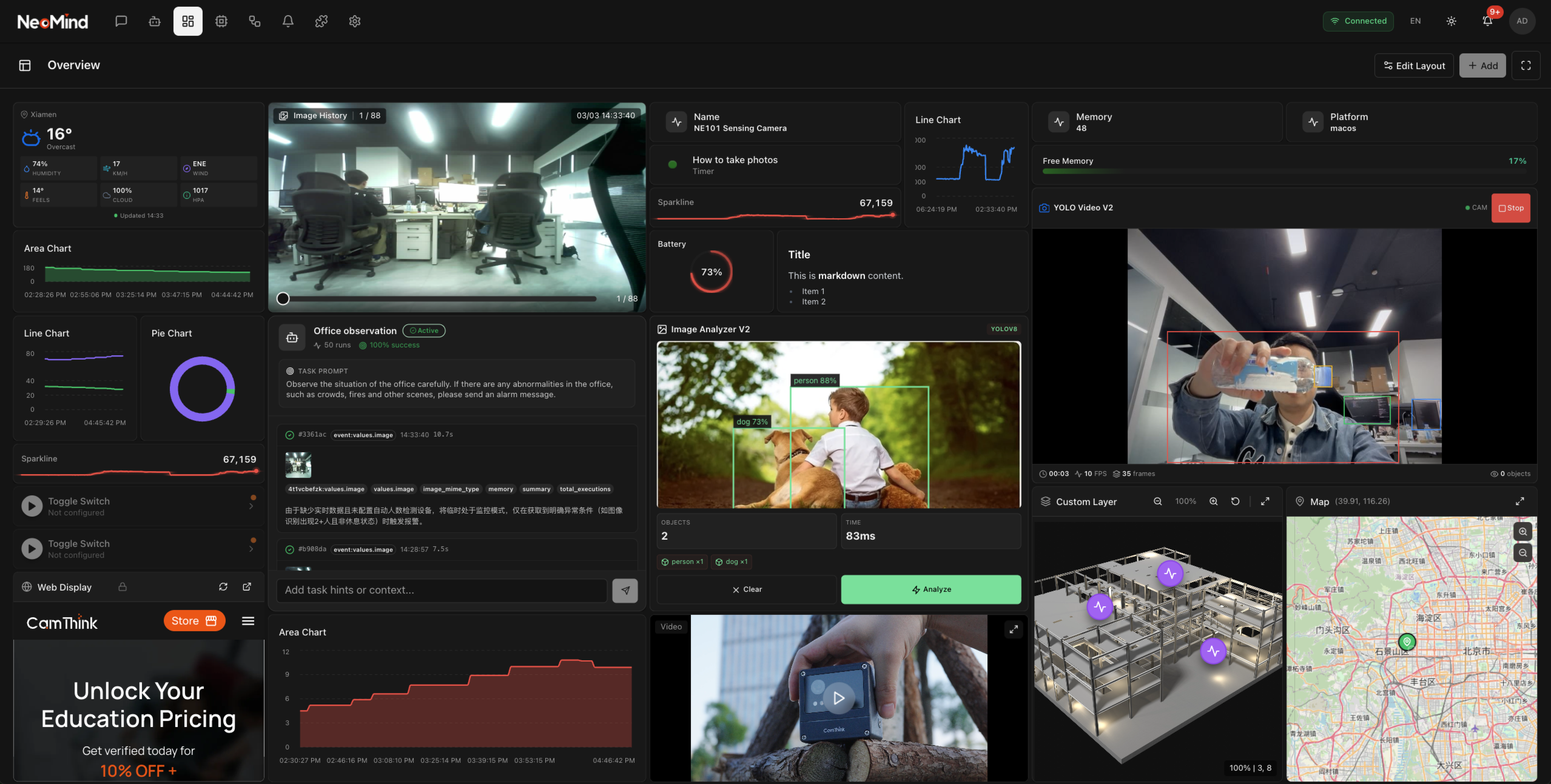
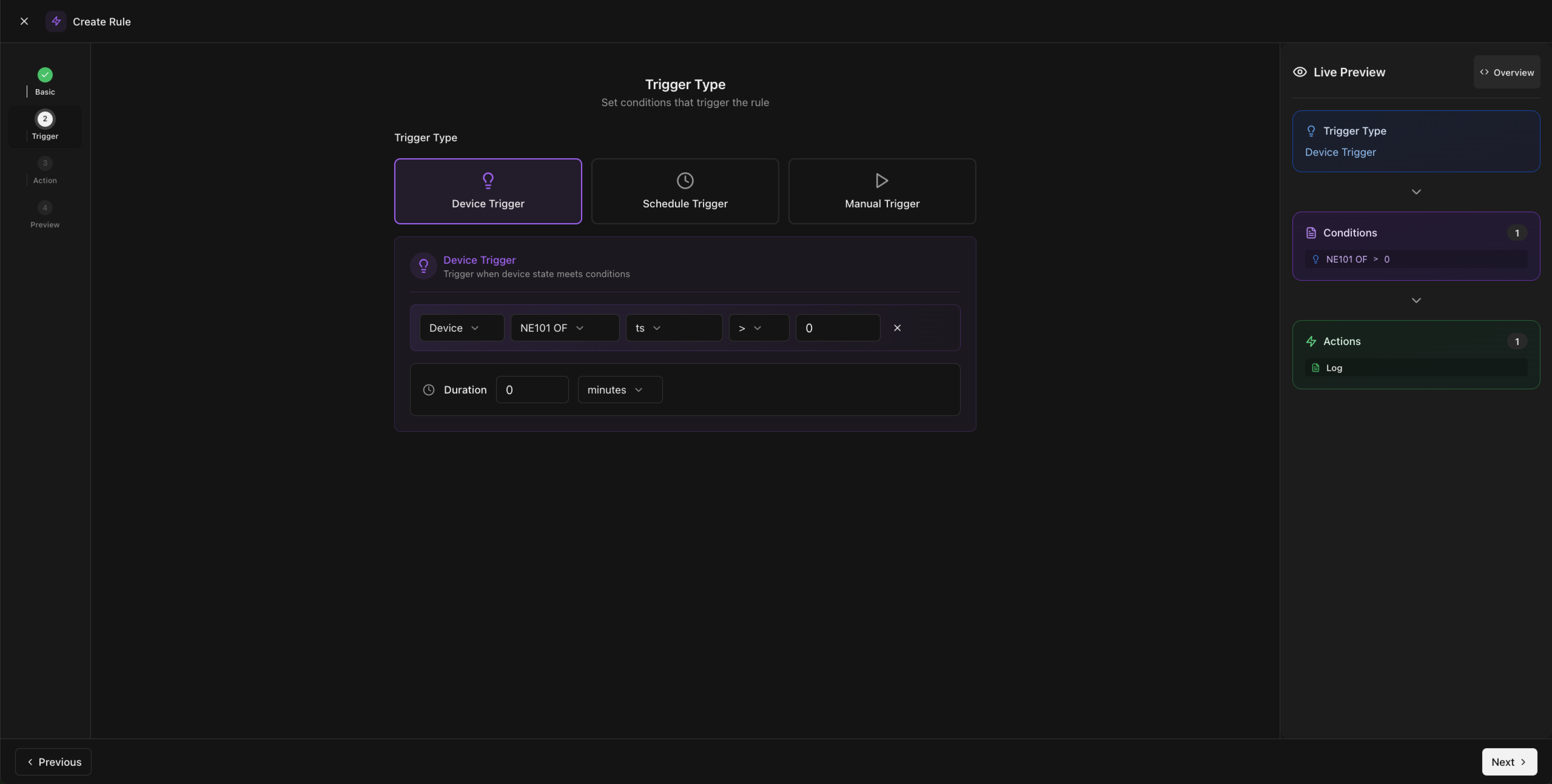
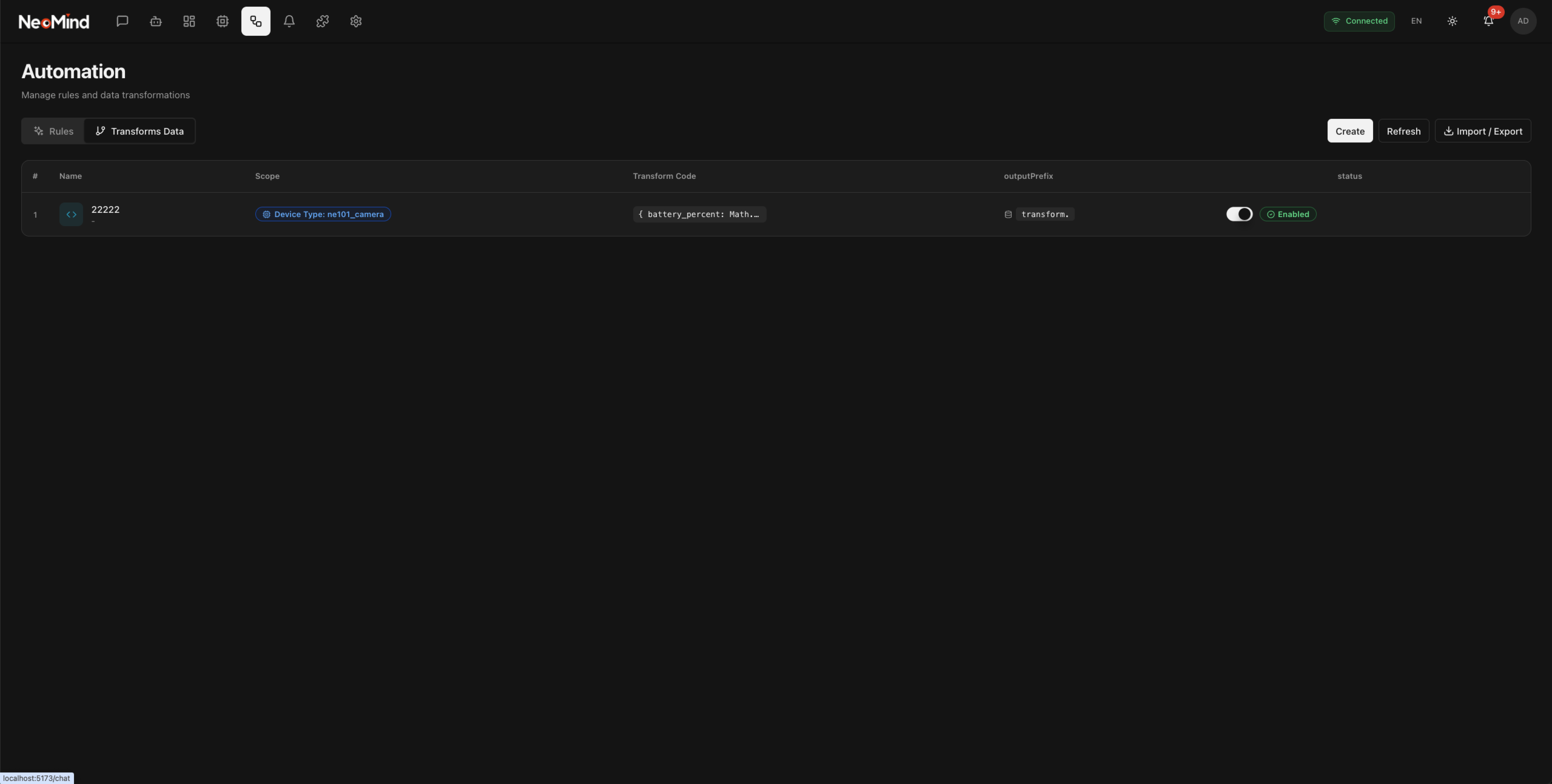
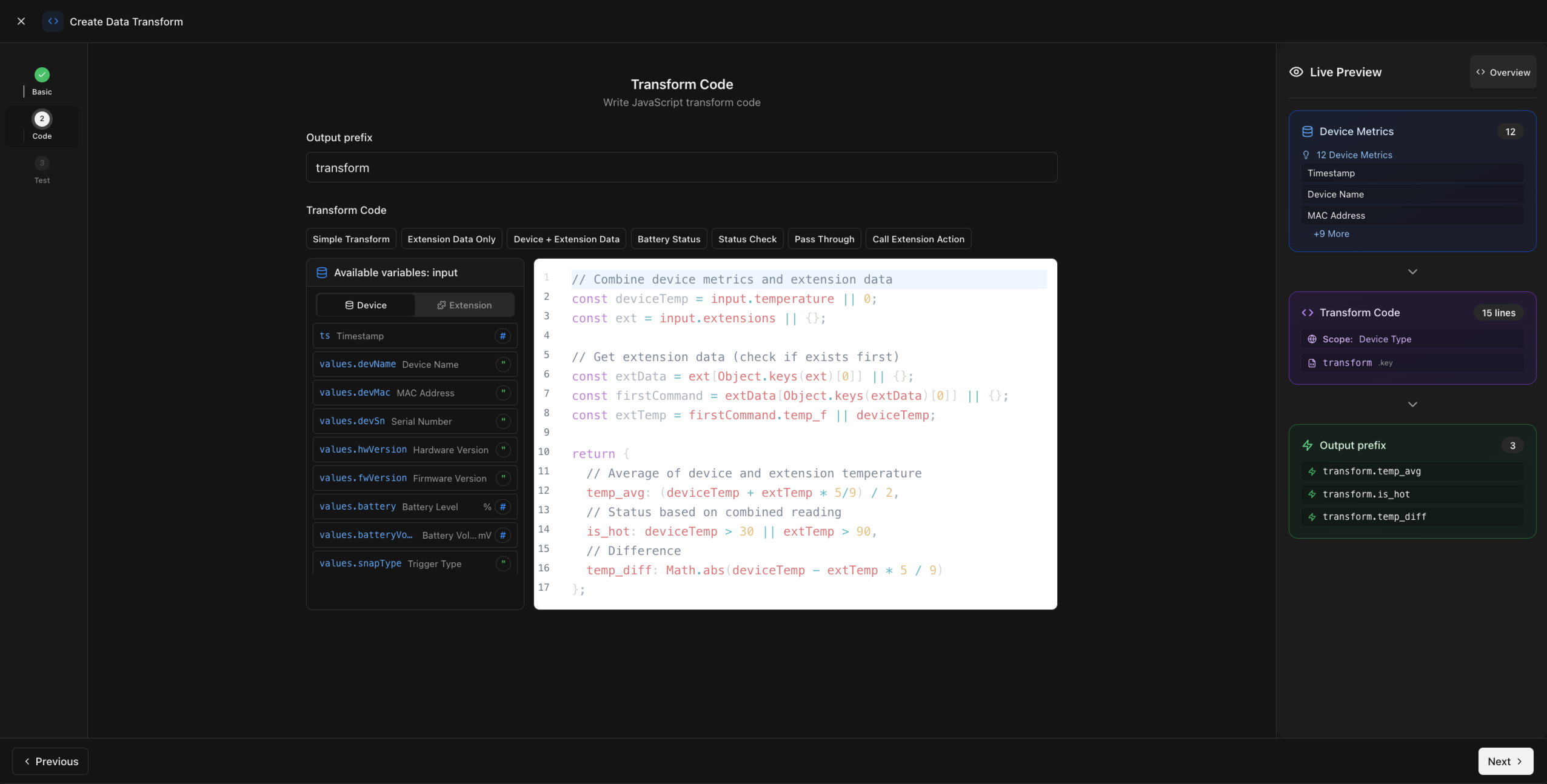
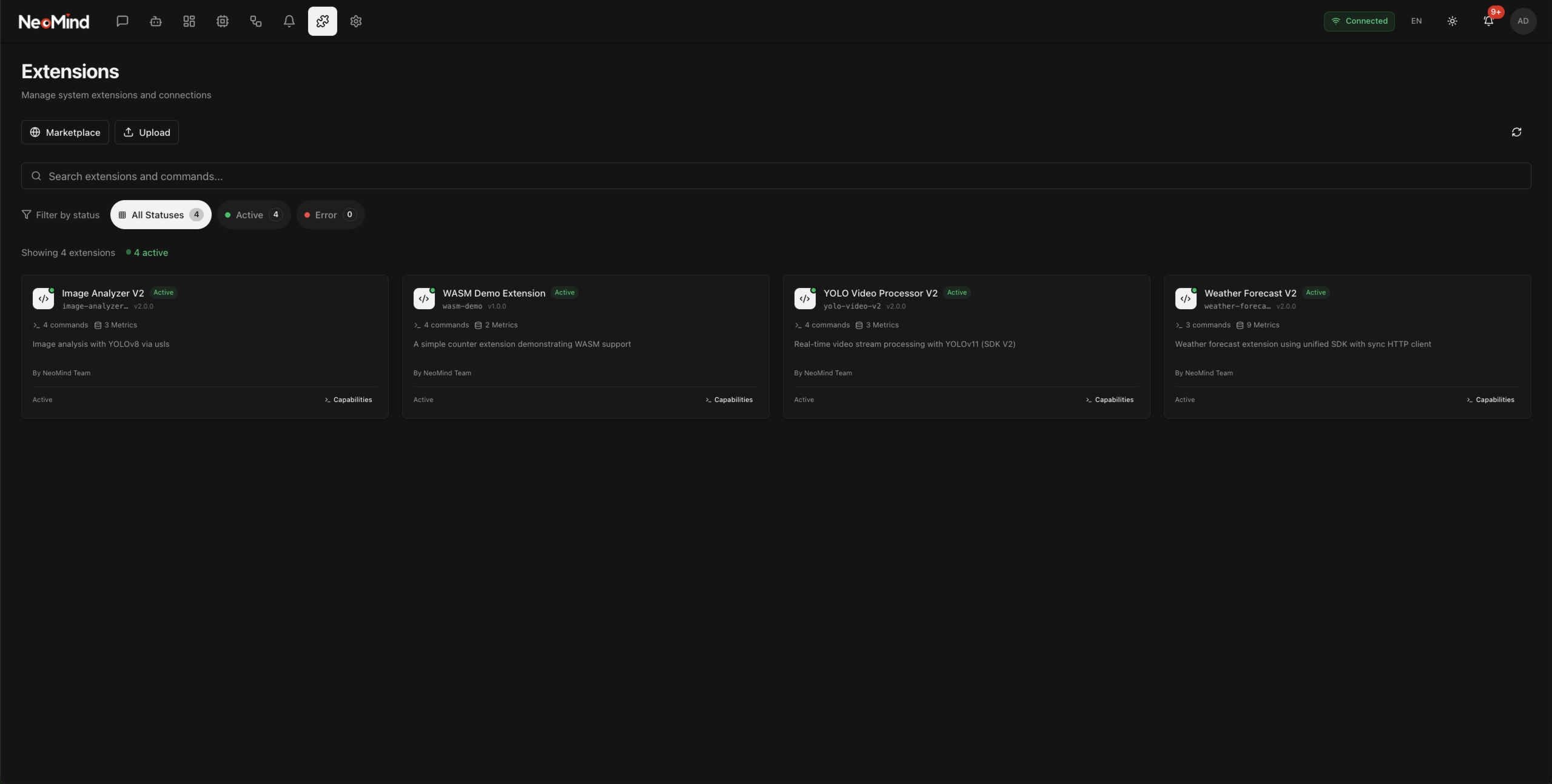
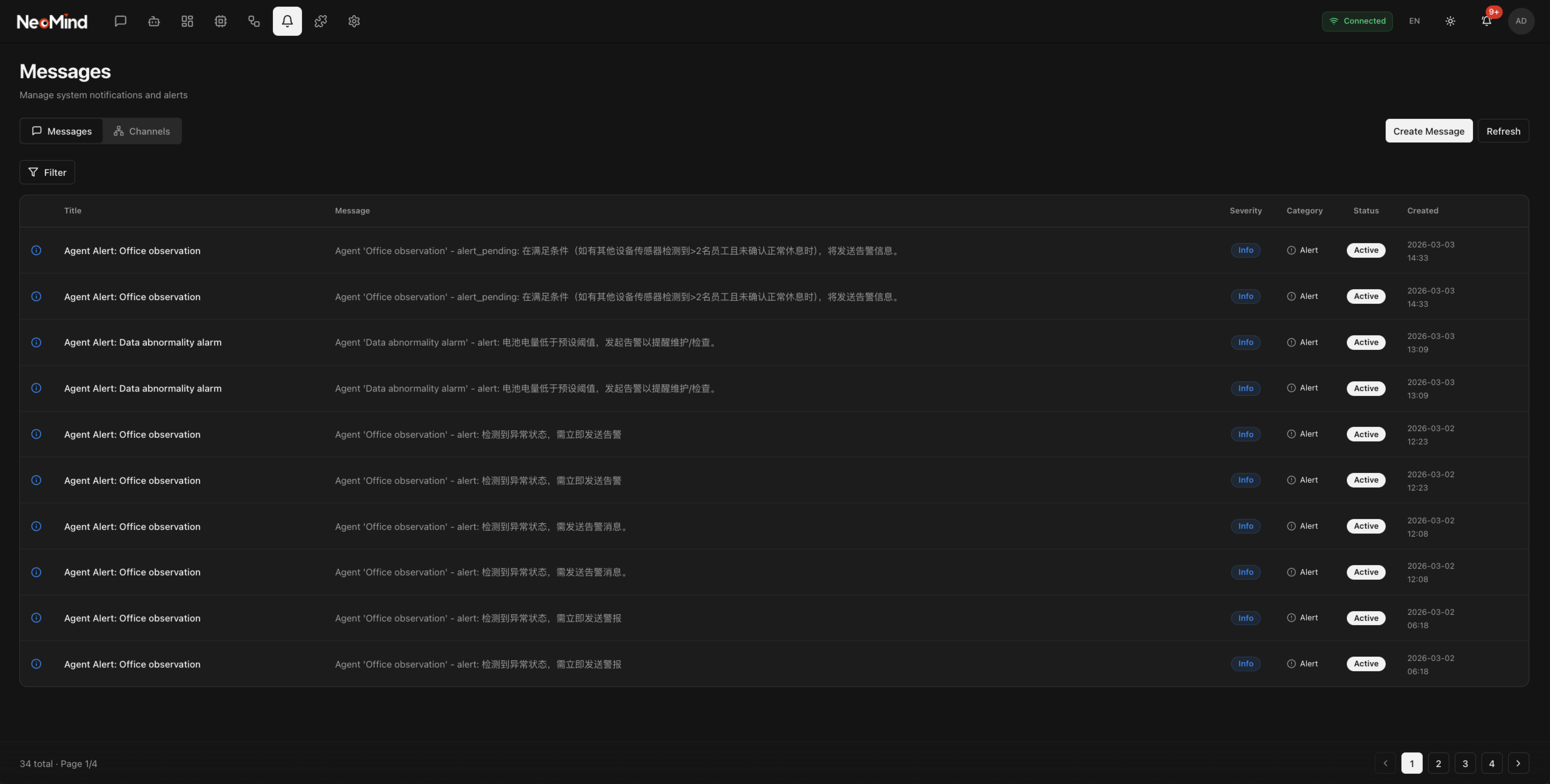
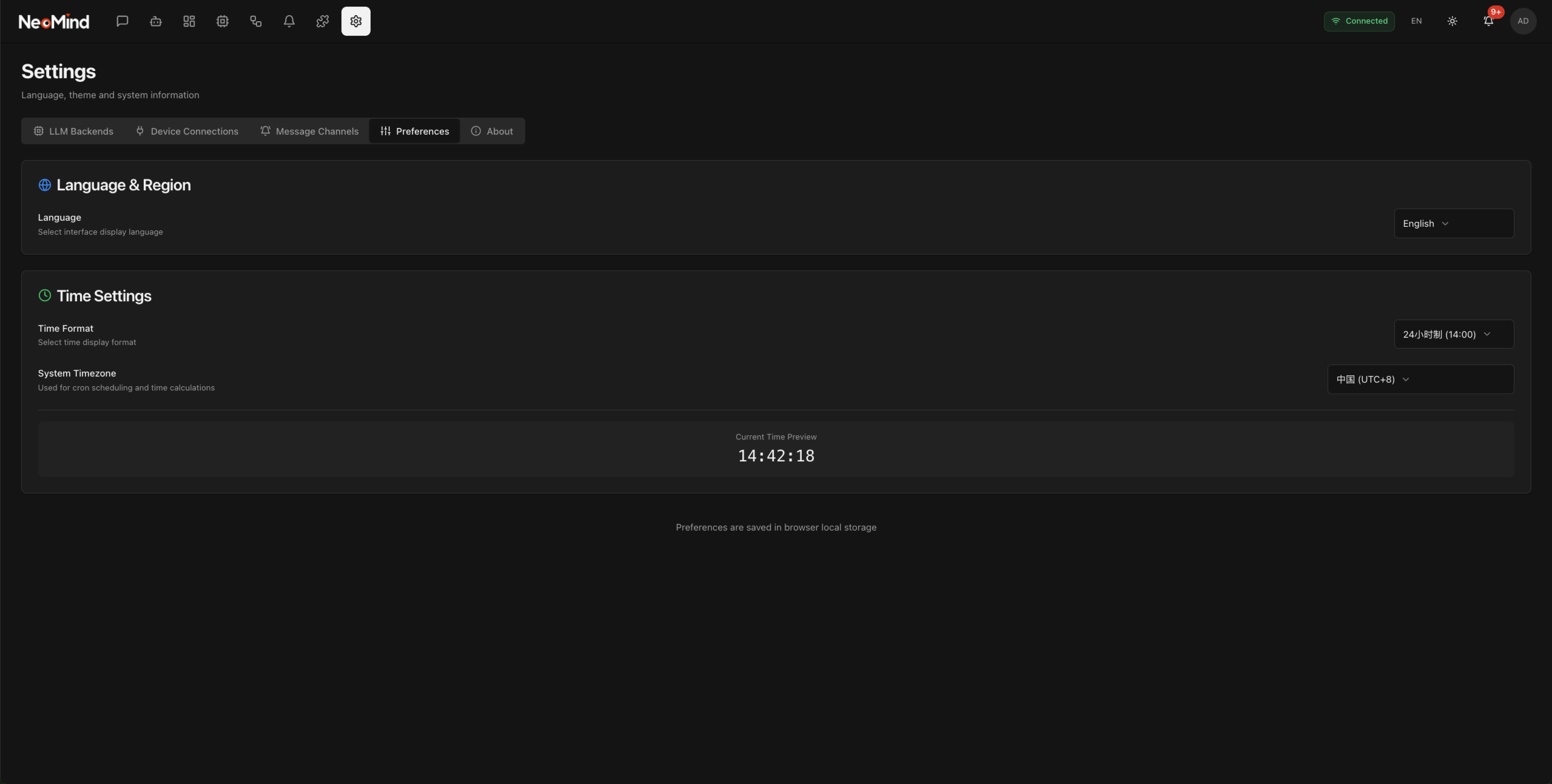
Platform Overview
Modern, responsive interface for desktop and mobile. Dark and light themes supported.
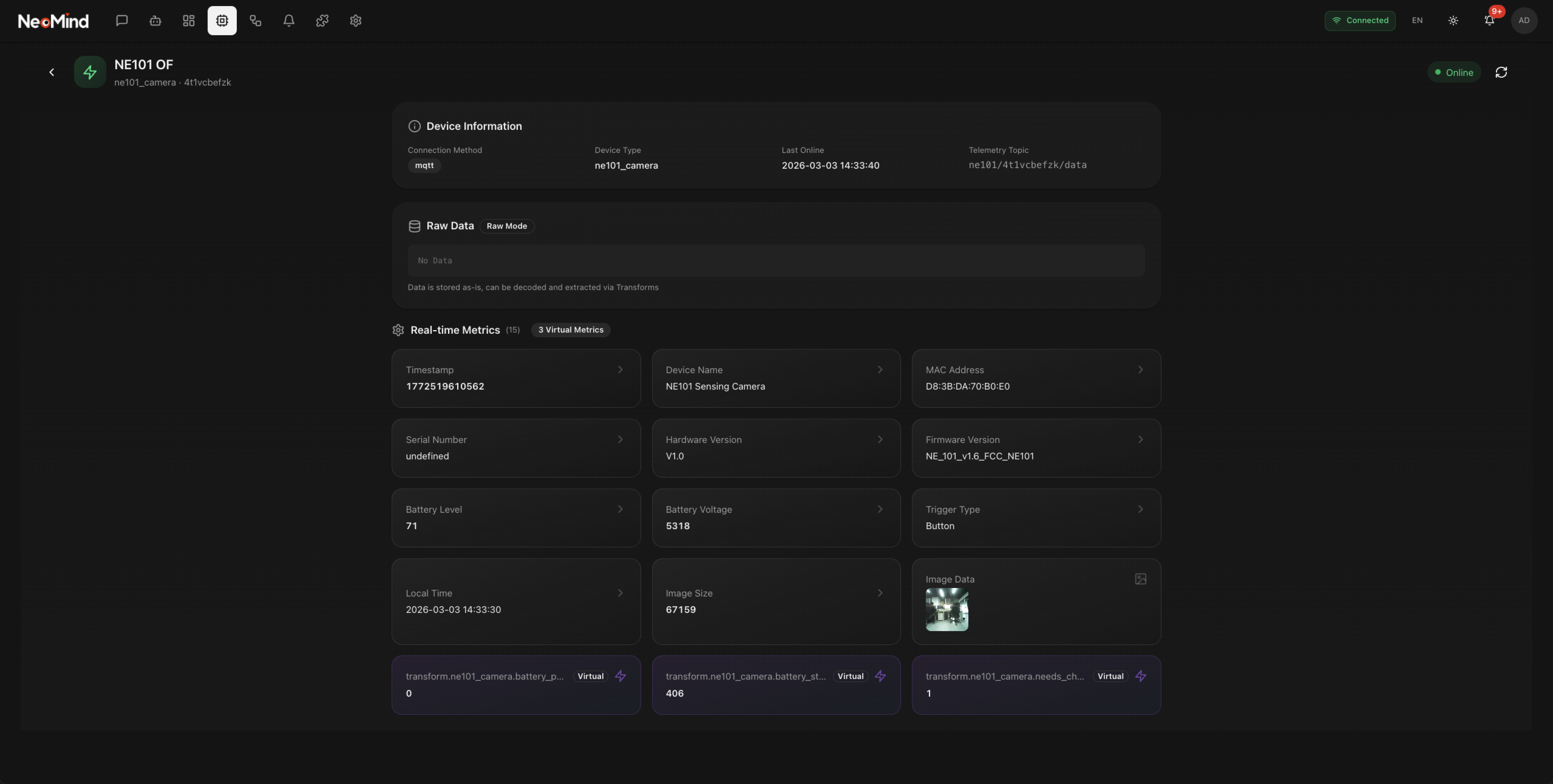
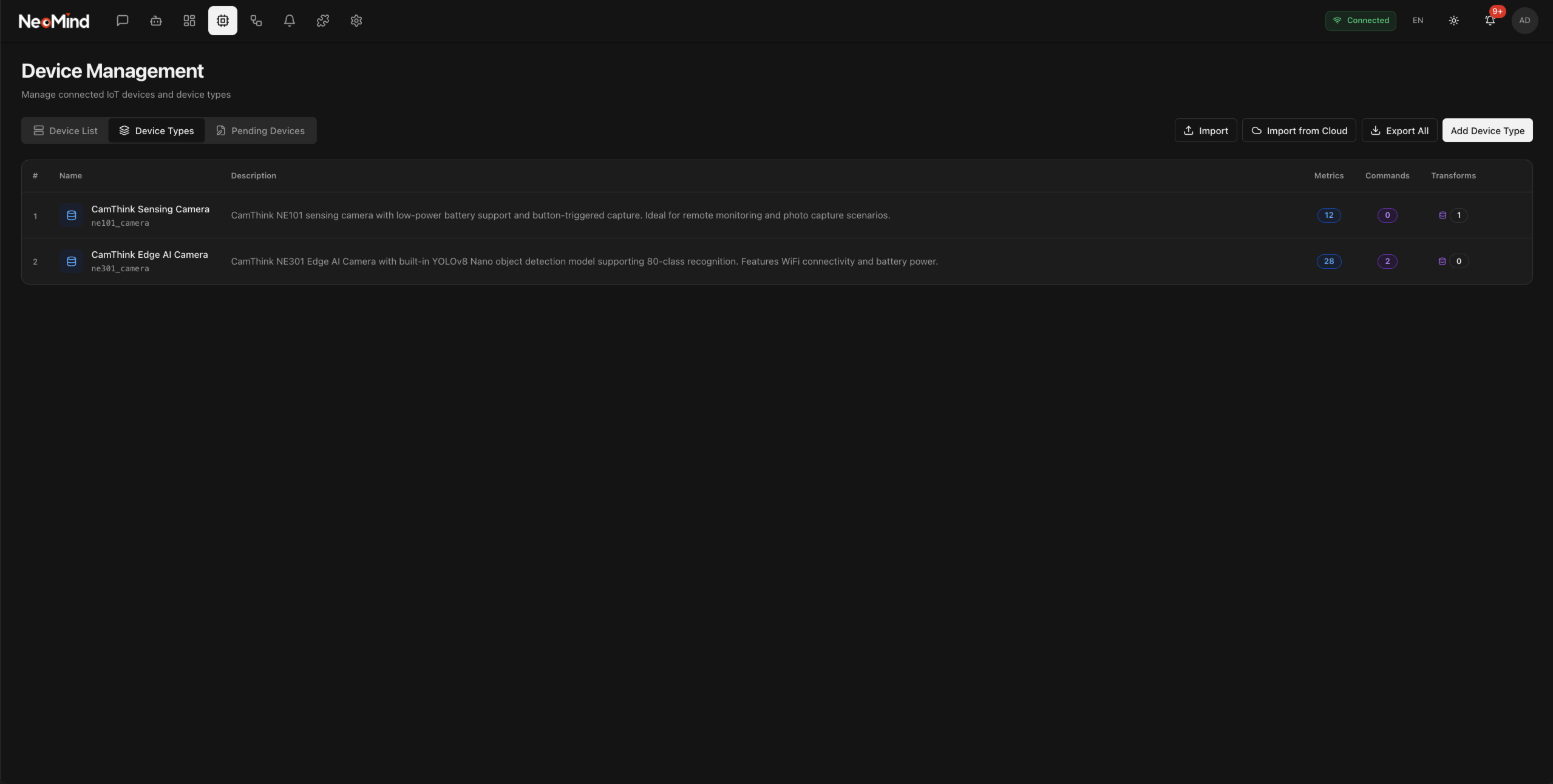
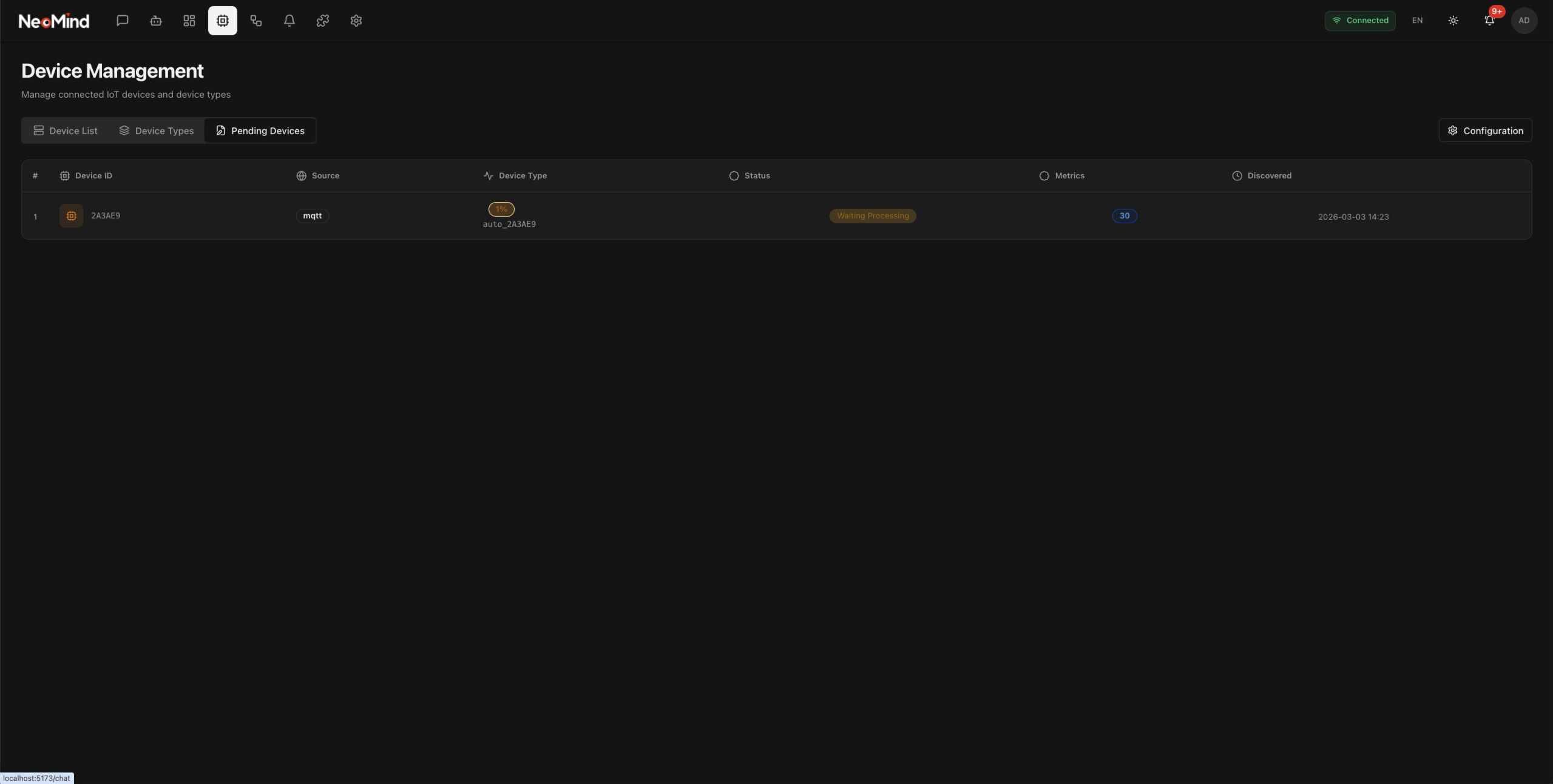
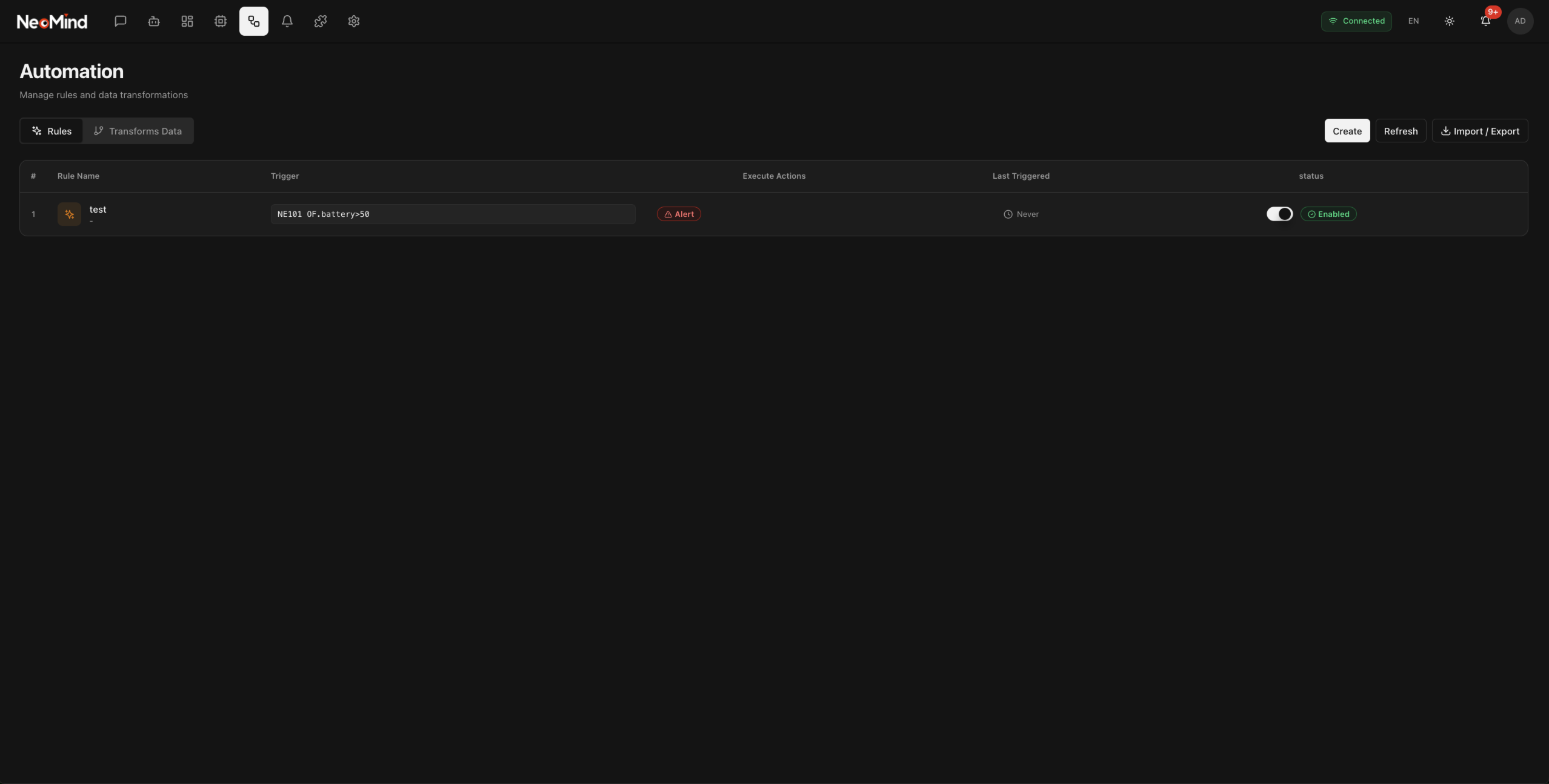
Core Features
Key Capabilities
Built with a modular, event-driven architecture for reliable IoT automation.
LLM as System Brain
Interactive chat interface for querying and controlling devices. AI agents with tool calling capabilities. Execute real system actions through LLM function calling.
Modular Device Integration
MQTT protocol with embedded broker. Automatic device detection and type registration. HTTP/Webhook adapters for flexible integration. AI-assisted device onboarding.
Event-Driven Architecture
Real-time response - device changes automatically trigger rules and automations. Decoupled design via event bus. Multiple transports: REST API, WebSocket, SSE.
Complete Storage System
Time-series storage with redb. Device states and automation execution records. Three-tier LLM memory (short/mid/long-term). Vector search across devices and rules.
Unified Extension System (V2)
Dynamic loading at runtime. Support for Native (.so/.dylib/.dll) and WASM extensions. Extensions use same type system as devices. Sandboxed execution environment.
Desktop Application
Cross-platform: macOS, Windows, Linux native apps. Modern UI with React 18 + TypeScript + Tailwind CSS. System tray for background operation. Built-in auto-update.
Architecture
System Architecture
Event-driven architecture with unified event bus for decoupled component communication.
Desktop / Web UI
React 18 + TypeScript Tailwind CSS + Radix UI Tauri 2.x Desktop
API Gateway
REST API WebSocket SSE OpenAPI Docs
Event Bus
Central message broker for decoupled communication
LLM Agent
Chat Interface Tool Calling Memory System
Devices
MQTT Broker HTTP/Webhook Auto Onboarding
Automation
Rules Engine Data Transforms DSL Parser
Extensions
Native Libraries WASM Modules Sandbox
Storage Layer
Time-Series (redb) State Storage Vector Search LLM Memory
Core Concepts
Unified Type System
Devices and extensions share the same type system using Metrics and Commands.
Metrics
Time-series data points representing sensor readings, state values, or computed measurements.
Example Metrics
Float
Integer
Boolean
String
JSON
Commands
Actions that can be executed on devices or extensions. Supports typed parameters with validation.
Example Commands
{ "power": true } Boolean Parameter{ "value": 25.5 } Float ParameterExtensions
Pluggable modules that extend platform capabilities. Use the same metrics/commands system as devices.
Extension Types
Define custom metrics
Expose commands
Poll data sources
Provide dashboard cards
Sandboxed execution
Features
Built-in Features
Comprehensive tools for monitoring, automation, and data processing.
Device Management
Complete device lifecycle management with automatic discovery.
1Discover
2Onboard
3Monitor
MQTT / HTTP / Webhook Auto Discovery Real-time Monitoring Command Retry
Dashboard
Real-time visualization with customizable widgets and drag-drop layout.
Drag & Drop Real-time Updates Multiple Dashboards Template Library
Rules Engine
Event-driven automation with DSL and natural language creation.
RULE "Alert" WHEN device.cpu > 85 FOR 5m DO send_alert() ENDNatural Language → DSL Condition Triggers Duration Support Execution History
Data Transforms
Process and aggregate data from multiple sources into virtual metrics.
Sensor A + Sensor B + Sensor C Avg Temp
Aggregation Filtering Virtual Metrics Time Windows
Extensibility
AI-Powered Extension Development
Build custom extensions with AI assistance. Our Claude Skill helps you quickly and efficiently develop native or WASM extensions.
my_extension.rs Extension SDK
use neomind_extension_sdk::prelude::*;

struct WeatherExtension;

declare_extension!(
    WeatherExtension,
    metadata: ExtensionMetadata {
        name: "weather.sensor".into(),
        version: "1.0.0".into(),
        description: "Weather data".into(),
        ..
    },
);

impl Extension for WeatherExtension {
    fn metrics(&self) -> &[MetricDefinition] {
        &[MetricDefinition {
            name: "temperature".into(),
            data_type: MetricDataType::Float,
            unit: "°C".into(),
            ..
        }]
    }
}
AI-Assisted Development
Use our Claude Skill to generate extension code. Just describe your needs in natural language.
Native & WASM Support
Build extensions as native libraries (.so/.dylib/.dll) or WebAssembly modules.
Unified Type System
Extensions use the same type system as devices for seamless platform integration.
Dynamic Loading
Load and unload extensions at runtime without restarting the platform.
Sandboxed Execution
WASM extensions run in a secure sandbox with controlled resource access and memory limits.
Try the Claude Extension Skill
Type /neomind-extension create a weather sensor extension in Claude Code to get started.
5-Minute Quick Start
Start Developing in Minutes
Get your first NeoMind extension running with Claude Code
What happens next:
Extension scaffold generated
Rust project structure with SDK pre-configured
Metrics & commands defined
Auto-generated based on your requirements
Ready to compile
Just run cargo build to get your .so file
AI Core
LLM as System Brain
Intelligent automation through natural language with multimodal understanding, tool calling, and persistent memory.
NeoMind AI Agent Architecture
Data Sources & Entities
Devices
Metrics Commands States
Extensions
Native WASM Data
Automation
Rules Transforms Triggers
Input
Chat Vision API
Memory
Short-term Session Knowledge
LLM Agent
Intent Tools Reasoning
Tools
Device Query Rules
Output
Response Action Create
Built-in Tools & Actions
Device Tools
List Devices
Control Device
Query Data
Device Health
Automation Tools
Create Rules
List Rules
NL to Automation
Extension Tools
Extension Data
Extension Commands
Sync States
Metrics & States
Real-time Event Bus
Commands & Actions
Vision-First Design
Multimodal Understanding
NeoMind leverages vision-capable LLMs to understand images, charts, and visual data—perfect for industrial inspection, equipment monitoring, and visual anomaly detection.
Equipment Status Image Analysis
Visual Inspection & Anomaly Detection
Document & Chart Understanding
Video Frame Analysis Support
Recommended Vision Models
qwen3-vl:4b Balanced, 4B params
llama3.2-vision Edge, 11B params
gemma3:4b Edge, 4B params
ministral-3:3b Edge, 3B params
Supports 9+ LLM Backends
Run locally with Ollama or connect to cloud providers
Ollama Edge
OpenAI
Anthropic
Google
xAI
DeepSeek
Qwen
GLM
MiniMax
Custom
Use Cases
Application Scenarios
Built for edge AI developers and industrial IoT applications.
Industrial IoT
Monitor production lines, detect anomalies, and automate quality control with vision AI at the edge.
- Equipment Health Monitoring
- Visual Quality Inspection
- Predictive Maintenance
Smart Buildings
Intelligent building management with natural language control and automated energy optimization.
- Energy Management
- Occupancy Monitoring
- HVAC Automation
Smart Agriculture
Precision agriculture with environmental monitoring and automated irrigation systems.
- Soil & Climate Monitoring
- Crop Health Analysis
- Automated Irrigation
Logistics & Warehousing
Real-time inventory tracking, asset monitoring, and automated warehouse operations.
- Asset Tracking
- Inventory Management
- Environmental Control
For AI & IoT Developers
NeoMind provides a complete development platform for building edge AI applications. Start with our Extension SDK, leverage the Claude Skill for rapid development, and deploy to any edge device.
Extension SDK
Claude Skill
Open Source
Full Documentation
More Features
Built-in Capabilities
Embedded MQTT Broker
Zero-config embedded broker. Connect devices immediately without external infrastructure.
AI Auto-Onboarding
Upload samples and AI automatically generates device types, metrics, and commands.
WASM Sandbox
Sandboxed extensions at ~15KB. Secure, fast, and truly portable.
DSL Rules Engine
Write automation rules in plain English. AI translates intent into actions.
Smart Notifications
Multi-channel alerts with AI-powered summarization and priority routing.
Reliable Commands
Queue-based execution with automatic retry, timeout handling, and status tracking.
Full API Access
REST + WebSocket with interactive OpenAPI docs. Every feature is programmable.
Vector Search
Semantic search across devices, rules, and history. Find anything by meaning.
Tech Stack
Modern Technology
Rust 1.85+
React 18
TypeScript
Tauri 2.x
redb
Axum
Tokio
Tailwind CSS
Deployment
Choose Your Deployment
Multiple deployment options for different use cases.
Desktop App
End-user desktop application. Recommended for most users.
- macOS (DMG)
- Windows (MSI/EXE)
- Linux (AppImage/DEB)
- Includes installer wizard
Linux Server
Standalone server deployment for production environments.
- Single binary
- systemd service
- One-line install script
- Port 9375
Development
Build from source for development and customization.
- Requires Rust 1.85+
- Requires Node.js 20+
- Ollama recommended
- Fully customizable
Quick Start
Get Started in Minutes
Choose your preferred deployment method.
1
Desktop App
Download the latest release for your platform from GitHub Releases.
# Download from Releases page
https://github.com/camthink-ai/NeoMind/releases
macOS .dmg Windows .msi Linux .deb
2
Linux Server
One-line install for server deployment with systemd service.
# One-line install
curl -fsSL https://raw.githubusercontent.com/camthink-ai/NeoMind/main/scripts/install.sh | bash
systemd service Auto-start Port 9375
3
Development
Build from source with Rust and Node.js. Requires Ollama for local LLMs.
# Install Ollama and pull model
curl -fsSL https://ollama.com/install.sh | sh
ollama pull qwen3-vl:2b

# Clone and run
git clone https://github.com/camthink-ai/NeoMind.git
cd NeoMind && cargo run -p neomind
Rust 1.85+ Node.js 20+ localhost:9375
Device Types
Supported Hardware
NeoMind includes built-in device type definitions for seamless integration.
Recommended
CamThink Edge AI Camera
ne301_camera
Edge AI camera with built-in YOLOv8 Nano object detection, supporting 80 classes. WiFi connectivity and battery powered.
Battery Percentage
Detection Count
Inference Time (ms)
Image Data
Capture Sleep
CamThink Sensing Camera
ne101_camera
Low-power sensing camera with battery operation and button-triggered capture. Perfect for remote monitoring scenarios.
Battery
Battery Voltage
Image Size
Need a Custom Device Type?
Create your own device type definitions or contribute to our growing library.
Edge Deployment
Run NeoMind at the Edge
Deploy AI-powered automation on industrial-grade edge hardware. Fully offline, low latency, complete data sovereignty.
Camera
Sensor
PLC
Gateway
Actuator
Extensions
MQTT
Cloud LLM Optional
Local LLM
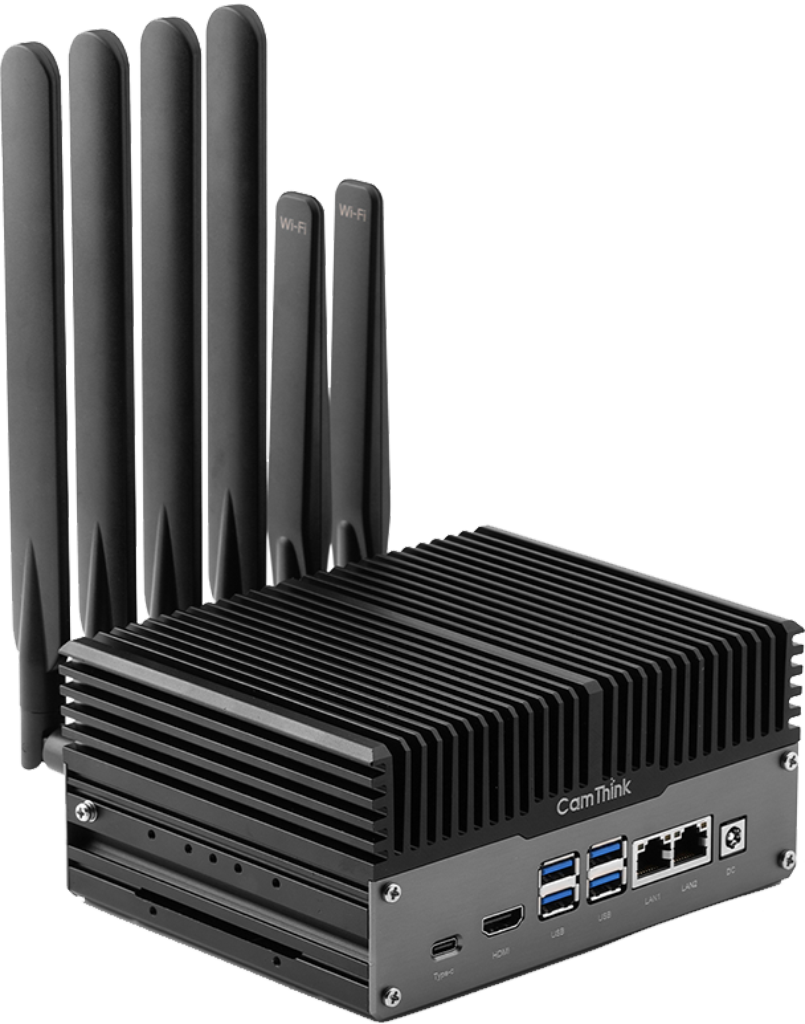
NeoMind LLM + Automation
Fully Offline
LLM inference, MQTT broker, automation—all run on edge. No cloud required.
Sub-100ms Latency
Real-time response for critical industrial automation scenarios.
Data Sovereignty
All data stays on-premise. Meet strict compliance requirements.
Quick Deploy
JetPack 6.0+ with CUDA, TensorRT, Ollama pre-configured.
Recommended
NVIDIA Jetson
Orin NX 16GB
157 TOPS AI compute. Run qwen3-vl:2b locally with full NeoMind stack.
- 1024 CUDA + 32 Tensor cores
- 16GB LPDDR5 for LLM
- -25~60°C industrial grade
x86 Industrial PC + GPU RTX 3060+ for multi-LLM
ARM Raspberry Pi 5 Cloud LLM only
Mac Apple Silicon Development & testing
Extensions
Extension Marketplace
Extend NeoMind with powerful community and official extensions.
Global city weather data and 3-day forecast. Supports temperature, humidity, wind speed, and cloud cover metrics.
Temp (°C) Humidity (%) Wind (kmph) Cloud (%)
Refresh Set City
Stateless streaming extension for single image processing. Supports JPEG/PNG/WebP formats and object detection.
Detection Count Bounding Boxes
Reset Stats
Stateful streaming extension for session-based video processing with YOLO real-time detection.
h264/h265 Sessions
Get Session Info
AssemblyScript WASM extension example. Fast compilation (~1s), small binary (~15KB), 90-95% native performance.
Counter Temperature Humidity
Increment Counter Reset Counter
Build Your Own Extension
Create custom extensions using the Rust SDK or WASM. AI-assisted development via Claude Skill.
FAQ
Frequently Asked Questions
Common questions about NeoMind and edge AI deployment.
NeoMind is an edge-deployed LLM agent platform for IoT automation. It enables autonomous device management and automated decision-making through Large Language Models. You can control devices, create automation rules, and query system status using natural language.
NeoMind supports multiple LLM backends including Ollama (recommended for local deployment), OpenAI, Anthropic Claude, Google AI, xAI (Grok), DeepSeek, Qwen, GLM, MiniMax, and custom OpenAI-compatible APIs. You can easily switch providers as needed.
NeoMind is built with Rust and designed to be lightweight. Basic requirements: macOS 10.15+, Windows 10+, or Linux (modern distributions). For running local LLMs via Ollama, you'll need sufficient RAM (8GB+ recommended), preferably with a GPU for better performance.
Devices can connect via multiple protocols: MQTT (embedded broker), HTTP REST API, and Webhooks. NeoMind includes an embedded MQTT broker so no external broker is needed. Auto-discovery and AI-assisted onboarding make device registration seamless.
The DSL (Domain Specific Language) Rules Engine allows you to write automation rules in a human-readable format. Example: RULE "Alert" WHEN device.cpu > 85 FOR 5m DO send_alert() END. You can also create rules using natural language, and the LLM will translate them to DSL syntax.
Extensions extend NeoMind's capabilities by adding custom metrics and commands. They can be built as native libraries (.so/.dylib/.dll) or WASM modules. Extensions use the same type system as devices and can provide dashboard cards. Use our Claude Skill for AI-assisted extension development.
Yes! Using Ollama as your LLM backend, NeoMind can run completely offline. This is perfect for edge deployments, secure environments, or scenarios where data privacy is critical. All processing happens locally on your hardware.
Yes! NeoMind is licensed under Apache-2.0. The source code is available on GitHub. We welcome community contributions for device types, extensions, and core features.
Get Started with NeoMind
Download NeoMind and start building edge AI applications with LLM-powered automation.