
No products in the cart.
Product Insights
Inside NeoEyes NE503: An Edge AI Camera Architecture for Custom Vision Applications
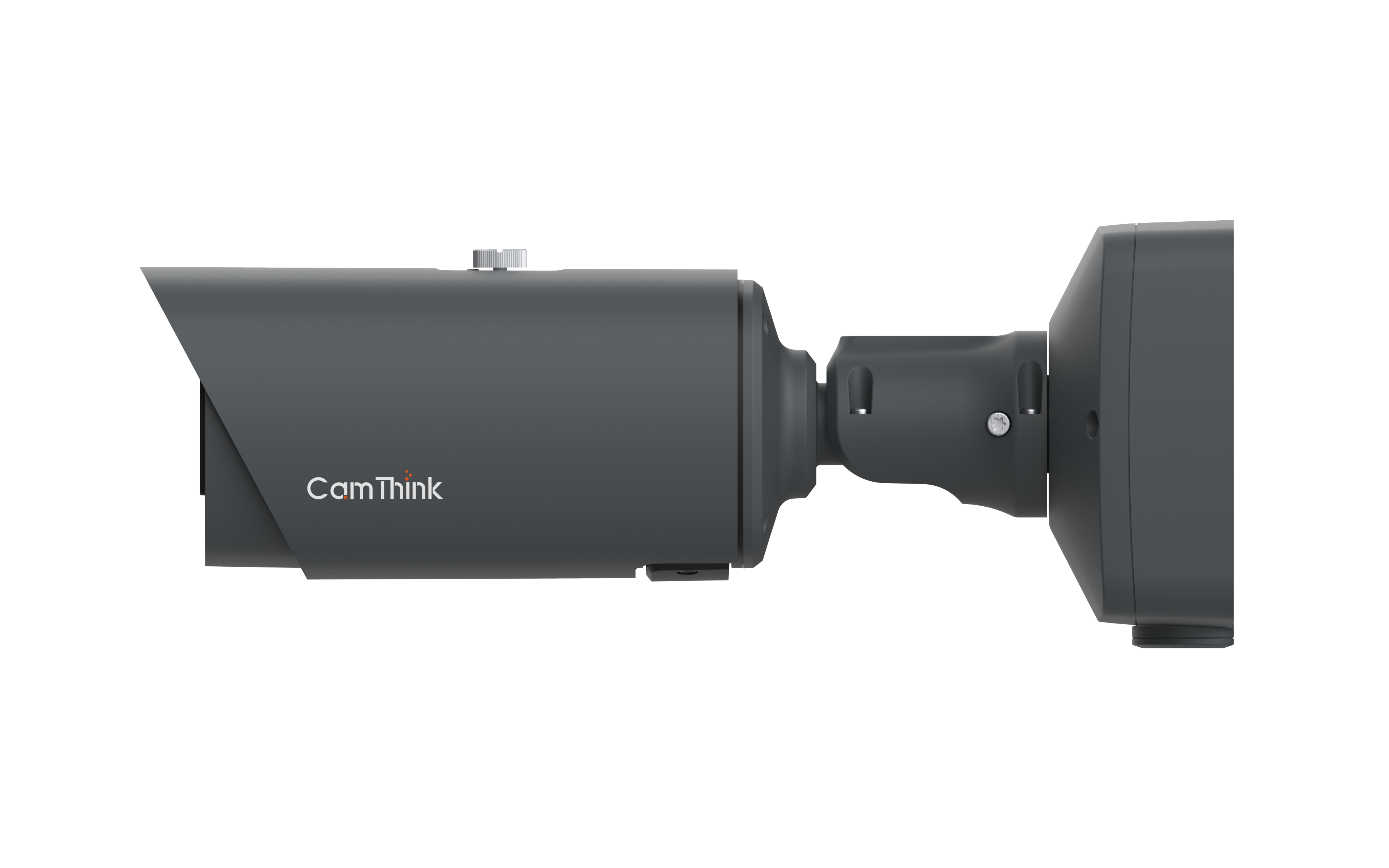
NeoEyes NE503 is a fixed-site edge AI camera platform for teams that need imaging, local inference, containerized application runtime, and structured event output inside one PoE camera endpoint.
NeoEyes NE503 is a fixed-site edge AI camera platform for teams that need the camera to capture, understand, run logic, and output structured results at the endpoint. It is not only a 4K IP camera with AI features added later. NE503 combines imaging, local AI inference, containerized applications, and system integration interfaces inside one PoE camera.
That distinction matters for system integrators, algorithm companies, and OEM teams. Many projects no longer ask a camera to only stream video to a recorder. They ask it to detect a person, read a plate, classify an object, trigger a relay, publish an MQTT event, update a dashboard, or hand results to a business system. In those projects, the camera becomes part of the application architecture.
NE503 is designed for that role: a programmable edge vision node at a fixed site.
What problem does NE503 solve?
NE503 solves the gap between a video-only camera and a full external edge AI server. Traditional IP cameras are good at capture, encoding, and streaming. Edge AI boxes are good at heavier compute and multi-camera aggregation. Between those two sits a common deployment problem: a single high-value camera position needs local AI, custom logic, and structured output without adding another box in the cabinet.
That is the NE503 use case.
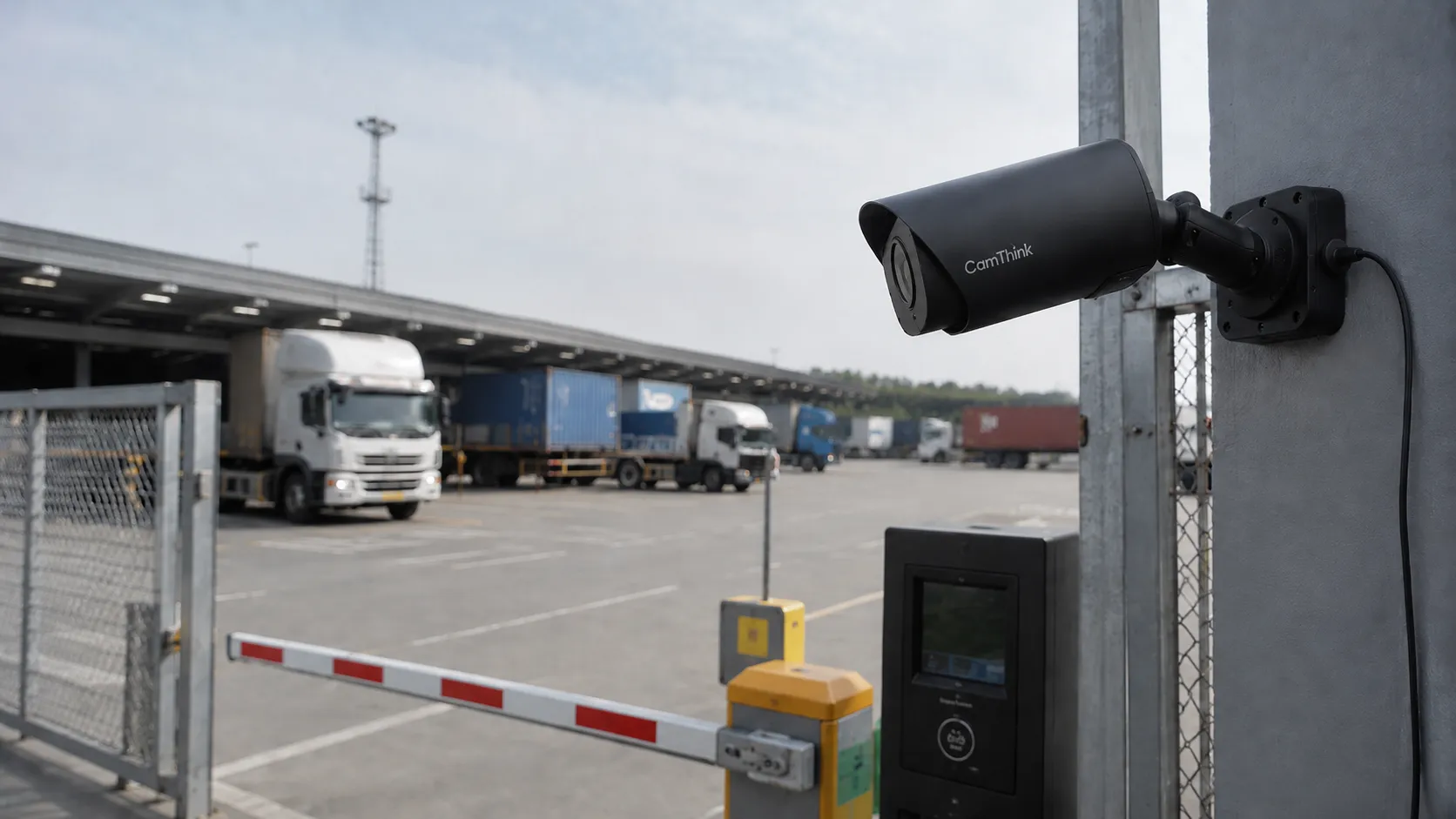
At a gate, a loading dock, a parking entry, an industrial cell, a campus perimeter, or a restricted area, the camera position itself may need to run the workflow. It needs to capture the scene, run AI models locally, apply project-specific logic, and send clean events to the systems that act on them.
For this kind of project, the key question is not “Can the camera record clearly?” The better question is “What can the camera output into my system?”
NE503 architecture in one workflow
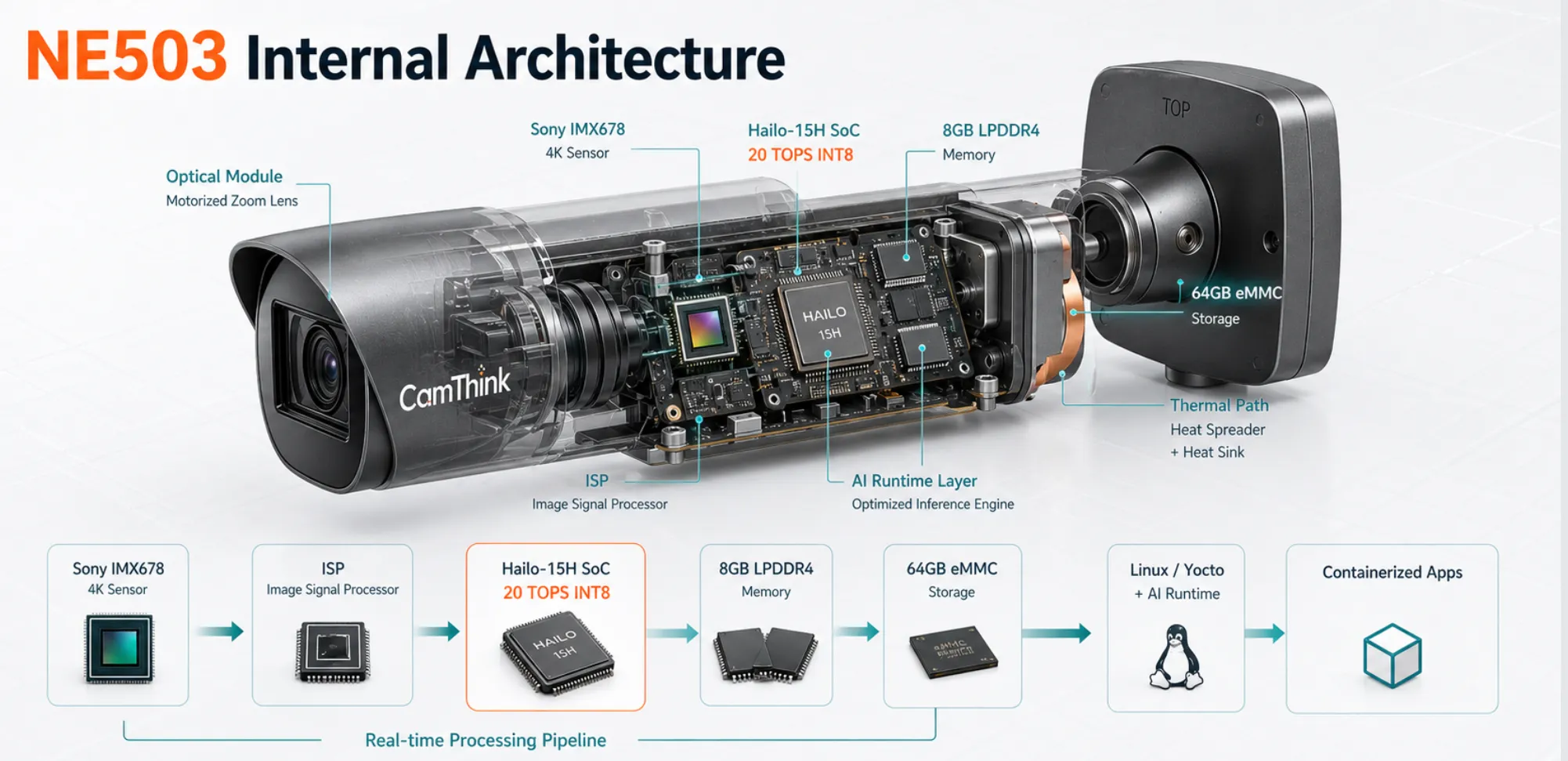
The simplest way to understand NE503 is as a five-layer workflow: visual input, local inference, application runtime, integration output, and field deployment hardware.
NE503 edge AI camera workflow
4K Visual Input
Sony IMX678 and AI-ISP
->
Local Inference
Hailo-15H 20 TOPS
->
App Runtime
OCI containers
->
Events
MQTT, REST, Event Bus
->
Action
VMS, IoT, alarm I/O
Visual input
4K imaging with a Sony IMX678 sensor and AI-oriented image processing.
Local inference
Hailo-15H AI compute with up to 20 TOPS INT8 performance.
Application runtime
Embedded Linux with containerized application deployment.
Integration output
RTSP, REST APIs, Event Bus, MQTT workflows, and hardware I/O.
Each layer matters. A camera with strong AI compute but weak imaging may fail before inference begins. A camera with accurate detection but no structured output may still require manual review. A camera with a fixed analytics menu may not fit an OEM workflow. NE503 is designed to bring these layers together.
Layer 1: visual input for AI recognition
NE503 starts with the image, because AI models depend on the quality of the visual input. The platform uses a Sony IMX678 1/1.8-inch CMOS sensor with 4K UHD output, HDR support, and low-light imaging capabilities. This matters for recognition-heavy tasks such as license plate recognition, face capture, PPE detection, vehicle analysis, object detection, and industrial monitoring.
In real deployments, poor lighting, glare, backlight, lens mismatch, motion blur, or weak night performance can reduce AI accuracy before the model runs. A useful edge AI camera needs imaging that is stable enough for the model, not only attractive to a human viewer.
NE503 pairs the sensor with an AI-oriented ISP pipeline and motorized zoom capability, so teams can tune the field of view for fixed positions such as gates, lanes, entries, perimeter lines, production cells, and loading areas. The practical goal is not “maximum resolution” in isolation. The goal is usable visual evidence plus reliable model input.
Layer 2: local inference with Hailo-15H
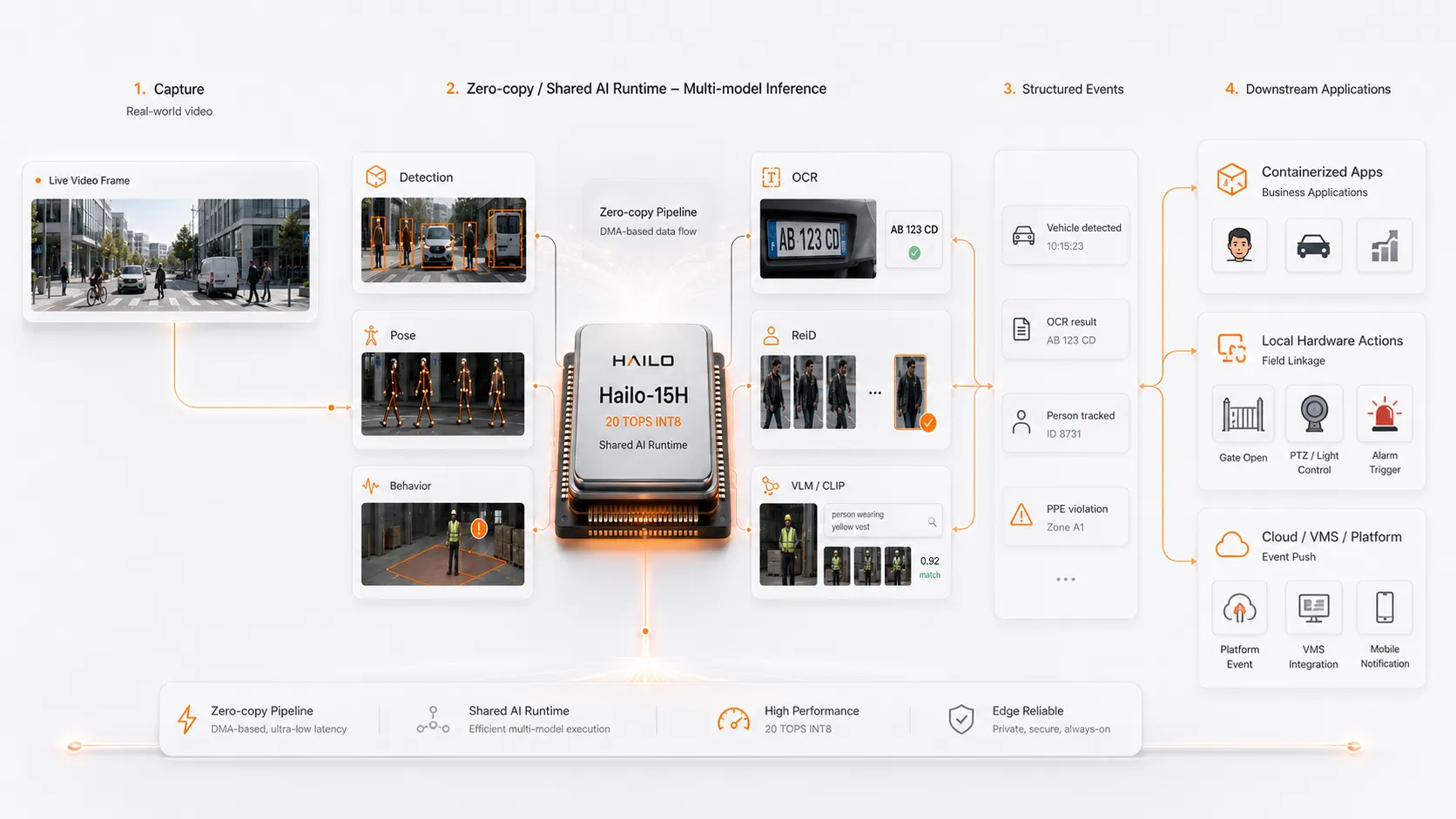
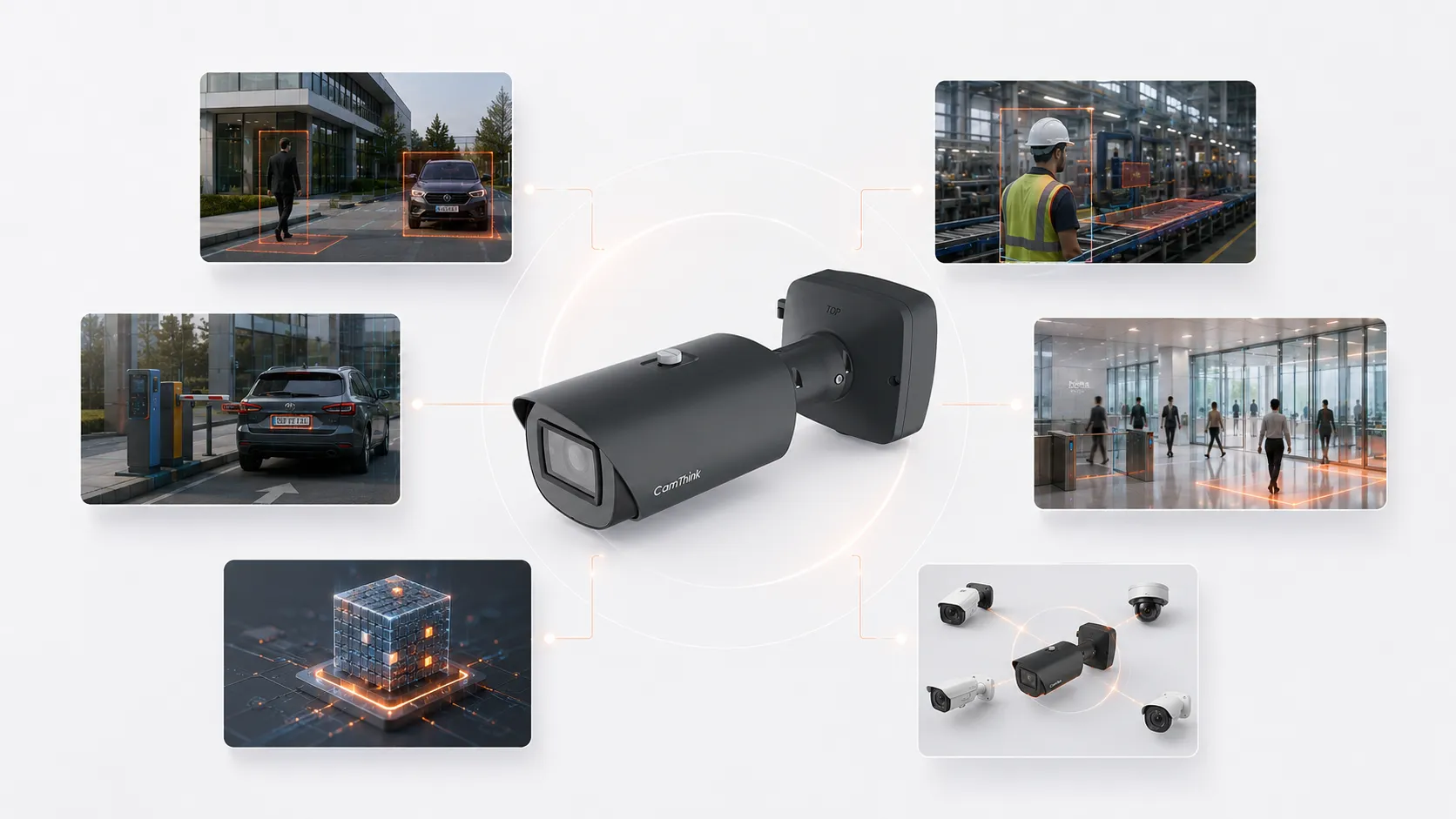
NE503 uses the Hailo-15H system-on-chip and provides up to 20 TOPS of INT8 AI performance for on-device inference. This gives the camera enough compute headroom for real-time edge vision workloads such as object detection, OCR, license plate recognition, face detection and recognition, ReID, pose estimation, behavior analysis, attribute recognition, and custom model pipelines.
Local inference changes the deployment model. Instead of sending every frame to a cloud service or external server, the camera can process video at the capture point and send only the results that matter. This can reduce bandwidth, lower response latency, simplify cabinet hardware, and keep sensitive video closer to the site.
TOPS alone is not the full story. The practical value comes from matching compute with model scheduling, image quality, storage, application lifecycle, and output interfaces. NE503 is not useful because it has one number on the spec sheet. It is useful when that compute becomes part of a complete edge workflow.
Layer 3: containerized applications
The most important software difference is that NE503 is built as an application platform, not only a fixed-function camera. It supports containerized application deployment using an embedded Linux environment, containerd, and OCI-compatible application images.
For algorithm vendors and OEM teams, this is a big difference. A fixed analytics menu is often too rigid. One project may need license plate recognition plus vehicle type classification. Another may need PPE detection with site-specific rules. Another may need OCR, line crossing, object counting, and event filtering before data enters an existing platform.
With a containerized model, application teams can package model logic, pre-processing, post-processing, event filtering, and business rules as deployable units. Updates can be managed more cleanly than firmware-level customization, and third-party applications can be isolated from the base device software.
This makes NE503 a better fit for teams building repeatable vertical products. They can treat the camera as a field-deployable runtime for their own vision application, not only as a device that exposes vendor-defined AI functions.
Building a camera-side AI workflow? NE503 is designed for teams that need custom model logic, event filtering, and system integration at the camera endpoint.
Layer 4: structured event output
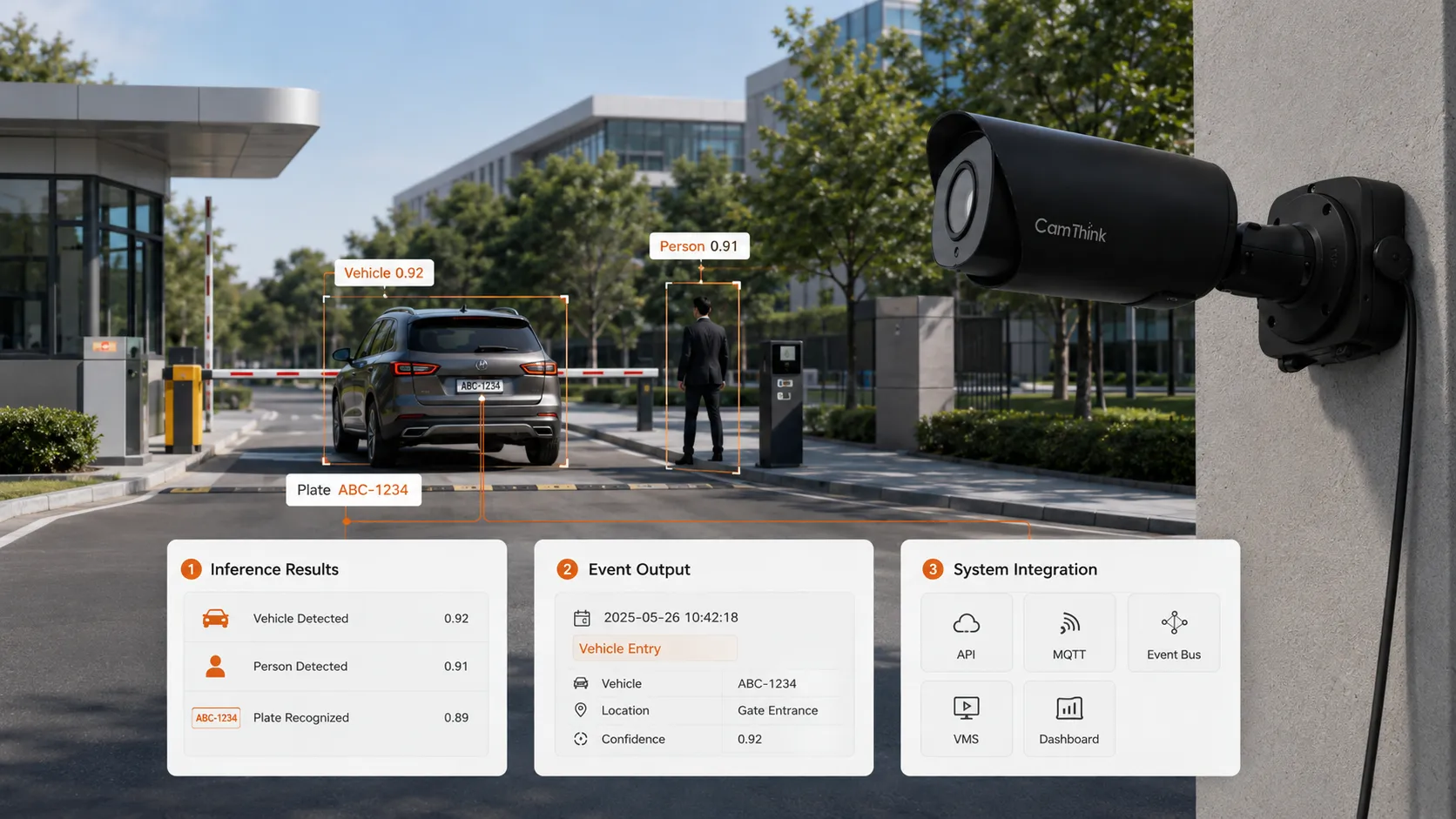
The main output of a modern AI camera should not be video alone. NE503 can still provide video streams for monitoring and recording, but the higher-value output is structured information: event type, object class, confidence score, timestamp, device identity, bounding box, and action status.
This is what lets the camera participate in software systems.
A VMS may need RTSP video for evidence. An IoT platform may need MQTT messages. A backend system may need REST API access. A local automation system may need an alarm output. An industrial device may need RS-485. A security installation may need Wiegand or alarm I/O. NE503 is designed to connect camera-side inference with these downstream systems.
This is the core shift from “watching video” to “using vision data.” Once AI results become machine-readable events, they can be routed, filtered, logged, displayed, searched, and used to trigger physical actions.
Layer 5: field deployment hardware
NE503 is built for fixed-site deployment where stable power and networking are available. It supports IEEE 802.3at PoE so power and data can run through one Ethernet cable. It also supports 12 V DC input for installations that use separate power infrastructure.
The device is positioned for outdoor and industrial sites, with IP67 protection, IK10 impact rating, and a -40 C to +60 C operating range in current product materials. These details matter because many AI camera pilots fail not because the model is impossible, but because the installed device cannot survive the environment, cable plan, mounting position, lighting, or maintenance model.
NE503 also includes local storage and expansion options, including onboard eMMC, TF card expansion, and application-focused device interfaces. For integrators, these details reduce the number of extra field components required to prove a pilot.
Who should evaluate NE503?
NE503 is a strong fit for teams building fixed-site AI vision systems where the camera must do more than stream video.
System integrators
Use NE503 when a camera endpoint must produce events for security platforms, parking systems, access control, industrial systems, or dashboards.
Algorithm vendors
Use NE503 when model logic and post-processing should run inside a deployable camera rather than a development board or server.
OEM teams
Use NE503 as a field-ready AI camera platform for a branded or vertical application.
AIoT platforms
Use NE503 when the platform needs visual events, not raw video streams, and MQTT, REST, or event-driven integration is required.
Technical evaluators should evaluate NE503 when they need to answer concrete questions: Can it run our model? What event data does it output? How does it connect to our backend? Can it trigger local hardware? What happens if the network is unstable?
When NE503 is not the right fit
NE503 is not the right product for every camera position. If the project only needs low-cost recording and live view, a traditional IP camera may be enough. If the site is battery-powered, solar-first, or event-triggered with long sleep periods, a low-power NeoEyes camera such as NE101 or NE301 may be a better fit. If the project requires heavy multi-camera aggregation, generative AI, or GPU-heavy workloads, an edge AI box such as NeoEdge NG4500 may be the better architecture.
Positioning note
NE503 is strongest when the camera is fixed, powered, networked, and responsible for local AI inference plus system output. It is not a replacement for every CCTV device, and it is not a battery camera.
The right use case is a high-value camera position where local intelligence reduces system complexity.
NE503 PoC checklist
Before starting a pilot, teams should define the workflow rather than only the camera specification.
| Question | Why it matters |
|---|---|
| What event should the camera output? | Prevents the pilot from becoming only a video demo. |
| Which model or models must run locally? | Defines AI performance and runtime requirements. |
| What image conditions must the model handle? | Forces lens, lighting, mounting, and night tests early. |
| What systems consume the results? | Clarifies RTSP, MQTT, REST, Event Bus, or hardware I/O needs. |
| What is the required response time? | Determines whether local inference is necessary. |
| What happens when the network is degraded? | Tests local storage, local actions, and retry logic. |
| Who owns the application update process? | Clarifies container, model, and firmware lifecycle. |
| What proves success? | Converts a demo into measurable project criteria. |
A good NE503 pilot should finish with more than a working preview window. It should finish with a repeatable event pipeline: camera input, local inference, application logic, structured output, downstream action, and a clear path to deployment.
Conclusion
NeoEyes NE503 is best understood as a programmable edge AI camera endpoint. Its value comes from the combination of 4K imaging, Hailo-15H local inference, containerized application runtime, structured event output, and fixed-site deployment hardware.
For teams building custom vision AI applications, this combination reduces the distance between model development and field deployment. The camera can capture the scene, run the model, apply local logic, and send results into the systems that need to act.
If your project only needs recording, NE503 may be more than you need. If your project needs the camera to become part of an automated AI vision workflow, NE503 is the right kind of platform to evaluate.
FAQ
Is NE503 only an IP camera with built-in analytics?
No. NE503 should be understood as an edge AI camera platform. It still supports video workflows, but its main value is local inference, containerized applications, structured event output, and integration with other systems.
Can NE503 run custom AI models?
Yes. NE503 is designed for custom AI application deployment through a containerized architecture. This is useful for algorithm vendors, OEM teams, and integrators who need model logic and post-processing beyond a fixed vendor analytics menu.
What systems can NE503 connect to?
NE503 can fit into video, IoT, enterprise, and field automation environments. Typical integration paths include RTSP video, REST APIs, Event Bus workflows, MQTT event publishing, alarm I/O, RS-485, and other device-level interfaces depending on the deployment.
Does NE503 remove the need for an edge AI box?
For some fixed single-camera positions, yes. NE503 can reduce the need for a separate AI box by running inference and application logic inside the camera. For heavy multi-camera aggregation, large models, or GPU-intensive workloads, a dedicated edge AI box such as NG4500 may still be the better architecture.
Is NE503 suitable for battery or solar deployment?
NE503 is designed for fixed-site, always-on deployments with PoE or DC power. For low-power, battery-first, event-triggered, or solar-first sites, NeoEyes NE101 or NE301 may be a better fit.
What should I prepare before requesting an NE503 demo?
Prepare the target scene, model or task, event output requirement, integration target, mounting distance, lighting condition, and success criteria. This helps CamThink engineers recommend the right lens, workflow, and pilot setup.