Barrier-free parking systems need more than a license plate camera. They need a field device that can capture the plate, run local AI, produce a clean parking event, and hand that event to payment, dashboard, enforcement, and customer service systems.
Many parking operators still solve this with a three-piece hardware stack: a standalone ANPR camera, a custom edge compute box, and a 4G/5G router. That stack can work. The problem starts when the operator needs to install it across hundreds of entrances, exits, retail sites, municipal lots, hotels, hospitals, and transport hubs.
An all-in-one ANPR edge AI camera is meant to reduce that field complexity. It moves the recognition workflow closer to the lane and turns the camera into a system endpoint, not only a video source.
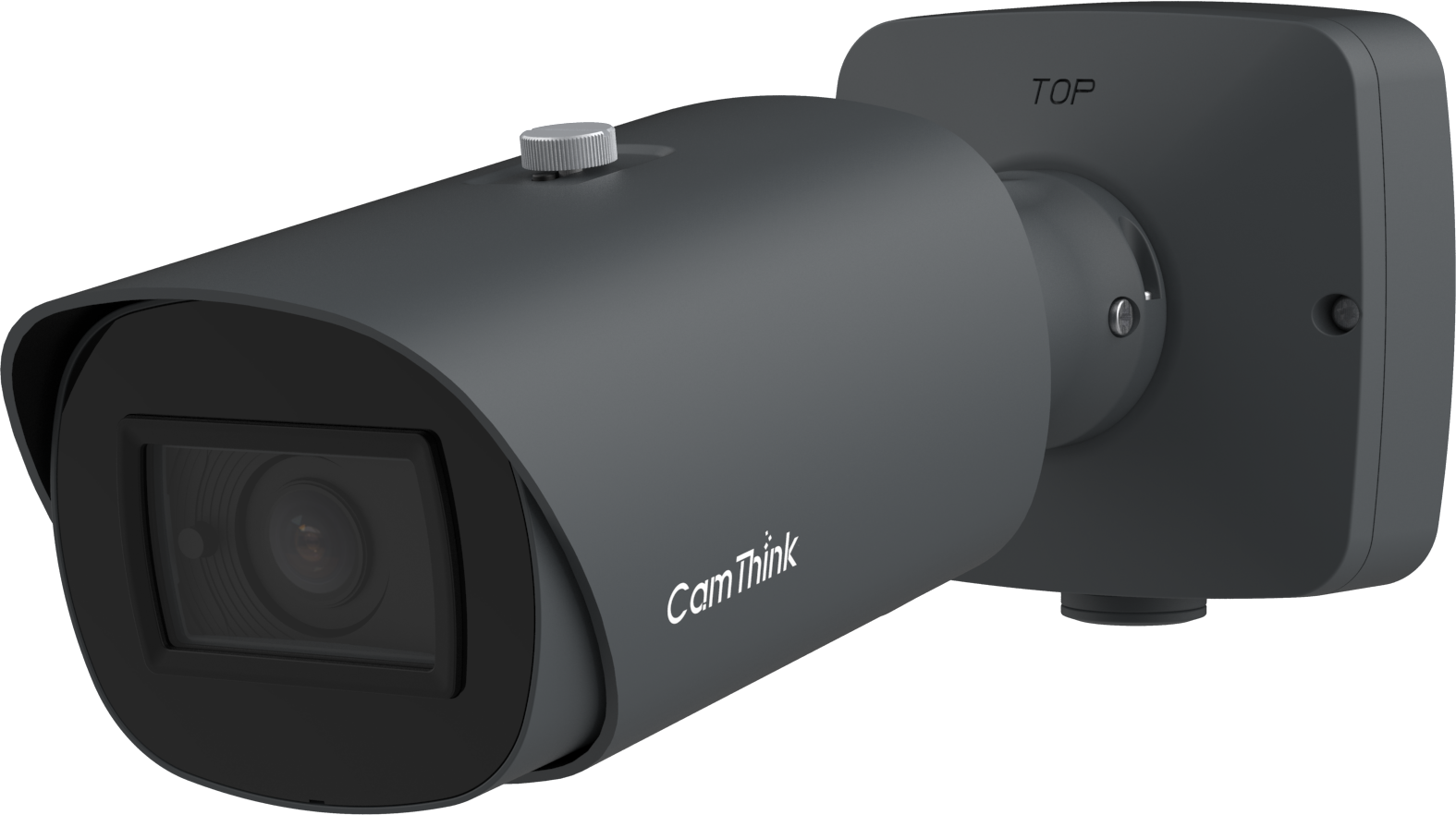
NeoEyes NE503 is relevant for this discussion because it already combines a 4K imaging system, Hailo-15H local AI compute, containerized applications, RTSP video, Event Bus, MQTT, REST API, PoE, and outdoor deployment hardware in one AI IPC platform. The standard NE503 is a PoE/DC device today. If a parking platform needs integrated 4G/5G in the same box, that belongs in a customization discussion rather than a standard product claim.
Why barrier-free parking stresses camera hardware
Barrier-free parking depends on reliable vehicle events. A car enters, the plate is captured, the system creates a parking session, and the driver pays through an app, online checkout, automatic payment, or a kiosk. At exit, the system must match the plate again and decide whether the session is valid.
That sounds simple until the site is real. Plates arrive at different angles. Headlights create glare. Rain, darkness, snow, reflective plates, dirty plates, and tight lane geometry all affect capture quality. Some sites have LAN, some need cellular. Some operators need short retention and privacy controls. Some need event data to flow into an API hub, pricing engine, enforcement process, dashboard, and display system.
For this kind of project, the camera is part of a parking operations platform. It must produce dependable machine-readable events, not only footage.
The three-piece stack works, but it scales badly
A common hardware stack for advanced parking systems looks like this:
This architecture gives engineering teams flexibility. It also creates more things to install, power, secure, update, and diagnose. Every extra box adds another firmware lifecycle, cable plan, support script, and failure point.
For a small pilot, that may be acceptable. For a parking platform rolling out many sites, the hardware stack becomes a scaling problem.
What an integrated ANPR edge AI camera must include
An integrated parking camera should combine four functions in one field device.
Integrated lane endpoint
INPUT
Recognition-grade imaging
Sensor, lens, ISP, mounting, and lighting support reliable plate capture.
EDGE
Local AI and app runtime
ANPR model, post-processing, retry rules, and privacy logic run near the lane.
OUTPUT
Structured parking event
Plate, timestamp, lane, confidence, evidence reference, and action state go to the backend.
First, it needs recognition-grade imaging. The plate has to be readable under mixed light, vehicle motion, and outdoor conditions. Sensor, lens, shutter, ISP, mounting height, plate distance, and illumination matter before the model runs.
Second, it needs local AI processing. Parking operators should not have to stream every frame to a server just to know whether a vehicle entered or exited. Local inference can reduce bandwidth, latency, and backend load.
Third, it needs an application runtime. A parking platform may have its own ANPR model, plate normalization rules, confidence thresholds, privacy handling, retry logic, and country-specific plate formats. A fixed camera menu rarely covers that.
Fourth, it needs structured output. The parking platform needs plate text, timestamp, camera ID, lane ID, direction, confidence, image evidence reference, and event state. RTSP video is useful for review, but the business system runs on events.
Where NeoEyes NE503 fits today
NeoEyes NE503 fits the integrated ANPR discussion because it is already built as an edge AI camera platform rather than a video-only IPC.
AI compute
Hailo-15H, 20 TOPS INT8, Cortex-A53 x 4
Imaging
Sony IMX678, 1/1.8 inch 4K CMOS, 8-32 mm AF zoom
Application runtime
Embedded Linux, containerd, OCI application deployment
Integration
RTSP, Event Bus, MQTT, REST API, Web console, aipc-cli
Power and network
PoE 802.3at or DC 12V, 100M LAN
Field rating
IP67, -40 C to +60 C operating range
The software base matters as much as the hardware. NE503 uses embedded Linux with a containerd runtime for OCI application deployment. That allows parking software teams or ANPR algorithm vendors to package recognition logic, post-processing, event filtering, and integration code as applications instead of waiting for firmware-level customization.
The current standard power and network model is PoE 802.3at or DC 12V, with 100M LAN. That fits fixed parking entrances, garages, campuses, retail sites, and municipal lots where Ethernet or PoE installation is acceptable. It does not mean the standard NE503 already includes cellular. For an all-in-one device with built-in 4G/5G, the right next step is a customization discussion with CamThink rather than a standard product assumption.
Trying to simplify the hardware at each parking lane? CamThink can help compare a standard NE503 evaluation with a custom production configuration when the field device needs to carry more of the lane-side stack.
Event output matters more than video alone
A barrier-free parking backend does not need every frame. It needs a trusted event.
A useful camera-side event can look like this:
parking.vehicle.entry event example
The exact schema will differ by platform. The principle does not: the camera should output a small, verifiable event that the backend can route into pricing, payment, dashboard, and enforcement workflows.
NE503 supports this pattern through local inference, Event Bus, MQTT-style messaging, REST API, and containerized applications. The camera can still provide RTSP streams for evidence or operator review, but video should not be the only integration path.
Privacy starts at the lane edge
Barrier-free parking systems handle sensitive operational data: license plates, timestamps, entry and exit records, and sometimes payment-linked events. For platform operators, privacy is not only a compliance topic. It affects customer trust, data retention rules, and how much raw video the backend needs to receive.
This is one reason edge AI matters. When recognition and event generation happen inside the camera, the parking platform can receive structured outputs instead of relying on continuous video upload for every decision. That can support a cleaner data-minimization strategy: send the event fields the backend needs, keep evidence images only when policy requires them, and avoid treating raw video as the default integration layer.
The final privacy policy still belongs to the parking operator and its software platform. NE503 does not replace that policy. It gives teams a device architecture that can make the policy easier to implement at the lane edge.
When to bring customization into the conversation
For parking platforms, customization should not start with a long feature list. Every operator has different lanes, network conditions, backend rules, rollout volume, and maintenance habits. No blog post can define every hardware option for that.
When to ask about customization
Bring customization into the conversation when the buyer wants to reduce the camera, compute box, and router stack into one field device, needs cellular inside the unit, wants ANPR logic or backend connectors preloaded, or has a repeatable rollout where housing, mounting, branding, and production packaging matter.
If the standard NE503 platform is close to what a parking system needs, but the field device has to absorb more of the lane-side hardware stack, CamThink can discuss a custom production configuration around that project.
When this architecture is not the right fit
An all-in-one ANPR edge AI camera is not always the best answer.
If a site already has a strong cabinet, local server, multiple existing cameras, and stable network infrastructure, a separate edge AI box may still be more flexible. If the project only needs basic recording, a standard IP camera may be enough. If the camera must run for months on battery or solar power, NE503 is not the right hardware class. It is an always-on, fixed-site AI IPC.
NE503 makes the most sense when the parking endpoint needs local AI, custom application logic, reliable imaging, structured output, and a cleaner field installation than a separate camera, compute box, and router stack.
Conclusion
Barrier-free parking platforms should evaluate camera hardware as part of the full parking event pipeline. The useful question is not “Can this camera read a plate?” The better question is “Can this device produce the event our parking system needs, at the installation scale we plan to support?”
NeoEyes NE503 gives parking and access control teams a strong base for that conversation: 4K imaging, Hailo-15H local AI, containerized applications, RTSP video, Event Bus, MQTT, REST API, PoE, and outdoor hardware. For integrated 4G/5G, preloaded ANPR workflows, or a production configuration, the next step is a project discussion with CamThink.
FAQ
Is NE503 a ready-made parking management system?
No. NE503 is an edge AI camera platform. It can run local AI applications and output structured events, but parking management, payment, pricing, enforcement, and customer service workflows belong to the parking platform or system integrator.
Can NE503 replace a Jetson box in an ANPR parking project?
For some single-lane or fixed camera endpoints, yes. NE503 has 20 TOPS INT8 AI performance and can run containerized applications on the camera. For heavy multi-camera aggregation or large GPU workloads, a separate edge AI box may still be the better architecture.
Does the standard NE503 include 4G or 5G?
No. The current standard NE503 is designed around PoE 802.3at or DC 12V with Ethernet. Integrated 4G/5G should be treated as a customization requirement and discussed with CamThink for projects that need cellular inside the field device.
What data should an ANPR edge camera send to a parking backend?
At minimum, it should send plate text, timestamp, device ID, lane ID, direction, confidence, event type, and a reference to evidence images. Some platforms also need vehicle class, country hint, session ID, backend acknowledgment status, and retry state.
Why use containers on an ANPR camera?
Containers let parking software teams deploy their own recognition model, plate formatting rules, event filters, and backend integration logic without turning every change into a firmware project. That is useful when the parking operator owns the software platform.
When should a team ask about CamThink customization support?
Customization support makes sense when the standard NE503 is close to the required device, but the project needs a production configuration for a repeatable rollout.
Related hardware
Hardware fit for this use case
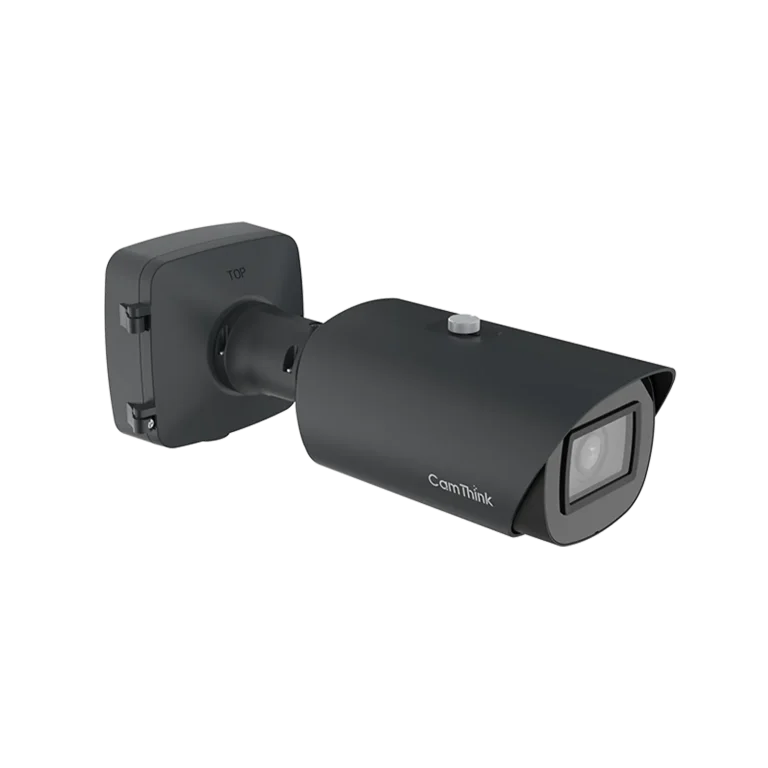
Edge AI camera platform
NeoEyes NE503
Fixed-site AI IPC for local inference, containerized ANPR applications, RTSP video, and structured event output.
HH
Harry Hua
CamThink Technical Director, 10+ years in technical solution design
Harry works with system integrators, OEM teams, and AIoT platform builders on edge vision hardware architecture, product selection, and deployment planning.
Connect on LinkedIn
Planning an integrated ANPR hardware roadmap?
Tell CamThink where the standard NE503 platform fits and where the lane-side device needs to take on more responsibility. We can help separate a standard evaluation from a custom production configuration discussion.