
No products in the cart.
APPLICATION · Deployment Guide · Integrator
NE301 Edge AI Camera Outdoor Deploying Guide: Power, Connectivity, and Fleet Management
How do you deploy an edge AI camera where there is no power, no network, and no
infrastructure?
This guide focuses on infrastructure-constrained deployments, where power and network availability are not
guaranteed. Waste bin monitoring is used as a reference scenario, but the framework applies broadly to any
remote and off-grid edge AI deployment.
Outdoor Edge AI Starts With Constraints
Indoor deployments have it easy: mains power at every point, stable WiFi, controlled temperature. Outdoor deployments do not. The brief says deploy cameras at the site.” What it often leaves out: the site has no electrical infrastructure within 50 metres, cellular signal varies by 3–4 bars depending on weather, and ambient temperatures swing from −20°C in winter to +45°C in summer.
The NE301 is engineered for this operating profile. Its STM32U073 power controller manages µA-level deep sleep, the IP67-rated enclosure handles dust and sustained water immersion, and the modular communication design lets you choose WiFi, LTE 4G, or PoE independently of the rest of the hardware. This guide works through each layer of the outdoor deployment stack in sequence.
6.1µA
Deep sleep standby current — enables years of battery operation
IP67
Dust-tight + sustained water immersion to 1m / 30 min — NE301 standard enclosure
−20°C to +50°C
Operating temperature range — rated for extreme outdoor environments
Power Source Selection
The NE301 supports four power input paths: AA battery tray (4×AA, ships standard), USB Type-C (5V DC), solar panel via dedicated input interface, and PoE (available on the NE301 PoE variant). Each has a distinct operational profile and maintenance implication.
AA Battery
(4×AA)Default
Capacity~1,750 mAh
4×/day WiFi6.7 years
10×/day WiFi2.1 years
4×/day LTE3.7 years
10×/day LTE1.1 years
Solar Panel
InterfaceDedicated input
CamThink panel10W (Q2 2026)
RuntimeIndefinite*
BackupBattery buffer
Min. sun~2h / day est.
USB-C / PoE
USB-C input5V DC
PoE (NE301 PoE)802.3af/at
CableSingle RJ45
Data + powerOne cable
Battery neededNo
Battery Life at Real Monitoring Frequencies
Data sourced from CamThink’s NE301 Battery Life documentation — lab-measured under optimal low-power configuration.
| Capture Frequency | Mode | Daily Power (mAh) | Battery Life (4×AA) |
|---|---|---|---|
| 1× / day | WiFi | 0.36 | 13.3 years |
| 3× / day | WiFi | 0.79 | 6.1 years |
| 4× / day | WiFi | 0.71 | 6.7 years |
| 10× / day | WiFi | 2.29 | 2.1 years |
| 1× / day | LTE Cat-1 (Global) | 0.57 | 8.4 years |
| 4× / day | LTE Cat-1 (Global) | 1.28 | 3.7 years |
| 10× / day | LTE Cat-1 (Global) | 4.42 | 1.1 years |
| 4× / day | LTE Cat-1 (N. America) | 1.33 | 3.6 years |
Highlighted rows reflect typical low-frequency monitoring patterns in distributed outdoor deployments. Low temperatures reduce effective battery capacity, plan conservatively in sub-zero environments.
☀️ Coming Q2 2026 — CamThink 10W Solar Panel
A dedicated 10W solar panel for NE301 is in development and accepting pre-orders. Connects via the NE301 solar input interface with battery buffer for operation through low-light periods. Contact us to discuss technical requirements.
Connectivity Selection: WiFi, LTE 4G Cat-1, and PoE
All three NE301 variants share identical AI inference specs, IP67 enclosure, and power management. The only difference is how the device connects to your network.
WiFi 6 (Standard)
Most power-efficient
Standard: 802.11ax (WiFi 6)
Range: ~50m @ 4 Mbps (open area)
Power / capture: 0.214 mAh
SIM required: No
Monthly cost: $0
Best for: Within WiFi range of existing AP infrastructure. Highest battery
efficiency — choose WiFi whenever coverage allows.
LTE Cat-1
No WiFi required
Variants: GL912 (Global) / NA915 (N. America)
Coverage: Wherever cellular network reaches
Power / capture: 0.428 mAh (GL912)
SIM required: Yes (standard nano-SIM)
Monthly cost: ~$3–5 / device (IoT SIM)
Best for: remote or urban bins outside WiFi coverage. Standard IoT SIM plans
(50–100MB/month) are sufficient at 4–10× daily frequency.
PoE (NE301 PoE variant)
Fixed infrastructure
Standard: 802.3af / 802.3at
Cable: Single Cat5e/Cat6 RJ45
Power + data: One cable run
Battery needed: No
AI specs: Identical to WiFi/LTE variants
Best for: fixed locations with existing Ethernet infrastructure — waste rooms, loading
docks, factory floors. Eliminates battery maintenance entirely.
WiFi HaLow (NE101 only)
Long-range IoT
Standard: 802.11ah
Range: Up to ~1km (low data rate)
Available on NE301: Not currently
Available on: NE101 (optional module)
Use case: Long-range event capture nodes
WiFi HaLow is available on NE101 for long-range, low-power scenarios. Check the NE301
product page for latest availability updates.
Selection Rule
Start with WiFi whenever coverage allows — lowest power draw, zero recurring cost. Use LTE Cat-1 for bins beyond WiFi range. Use PoE when mains power and Ethernet are already at the location and you want to eliminate battery maintenance entirely.
IP67 Enclosure: What It Protects Against
IP6X (dust): Completely dust-tight under any conditions — covers fine particulate in industrial, construction, and high-traffic urban environments.
IPX7 (water): Sustained immersion to 1m for 30 minutes. Heavy rain, splash, temporary flooding, and high-humidity environments are well within this class. Does not cover continuous high-pressure water jets (IPX9K) or permanent submersion beyond 30 minutes.
Operating temperature: −20°C to +50°C. Note that battery capacity decreases at low temperatures — at −20°C, effective alkaline AA capacity drops approximately 25–35% compared to room temperature. Use lithium AA cells for cold-climate deployments (they retain ~85–90% capacity at −20°C).
🛠 Long-Term Seal Maintenance
IP67 seals are rated at time of manufacture. For 5-year+ deployments in direct UV/sun exposure, schedule periodic gasket inspection at battery replacement visits. CamThink’s modular design allows front/middle/rear assemblies to be serviced independently without replacing the full unit.
Mounting Options
The NE301 enclosure includes standard mounting holes compatible with CamThink’s bracket range. Six bracket types cover common outdoor installation configurations — all compatible with both NE301 and NE101.
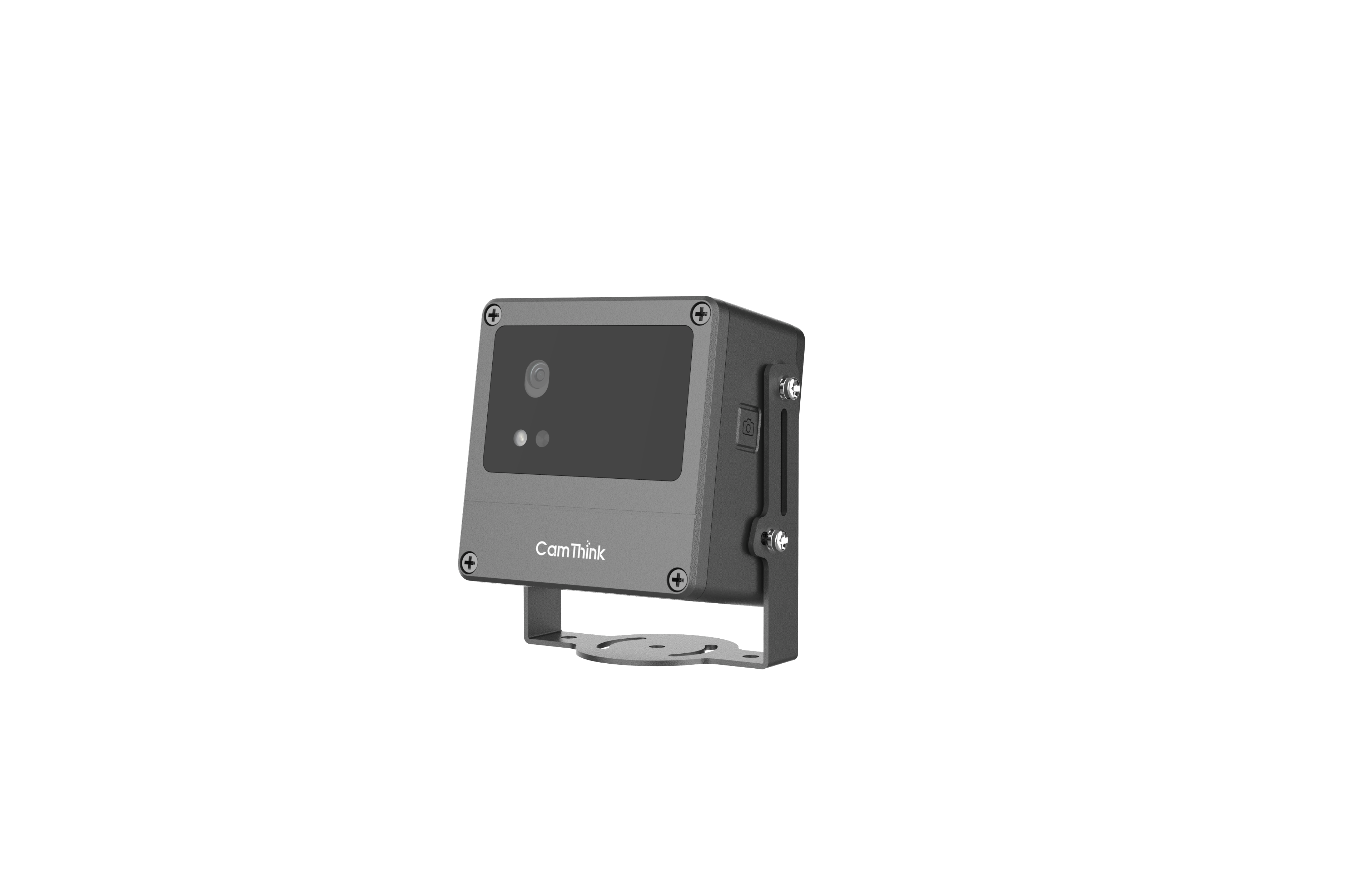
Based Mount
Standard base bracket included with the device. Versatile foundation for multiple
mounting scenarios.
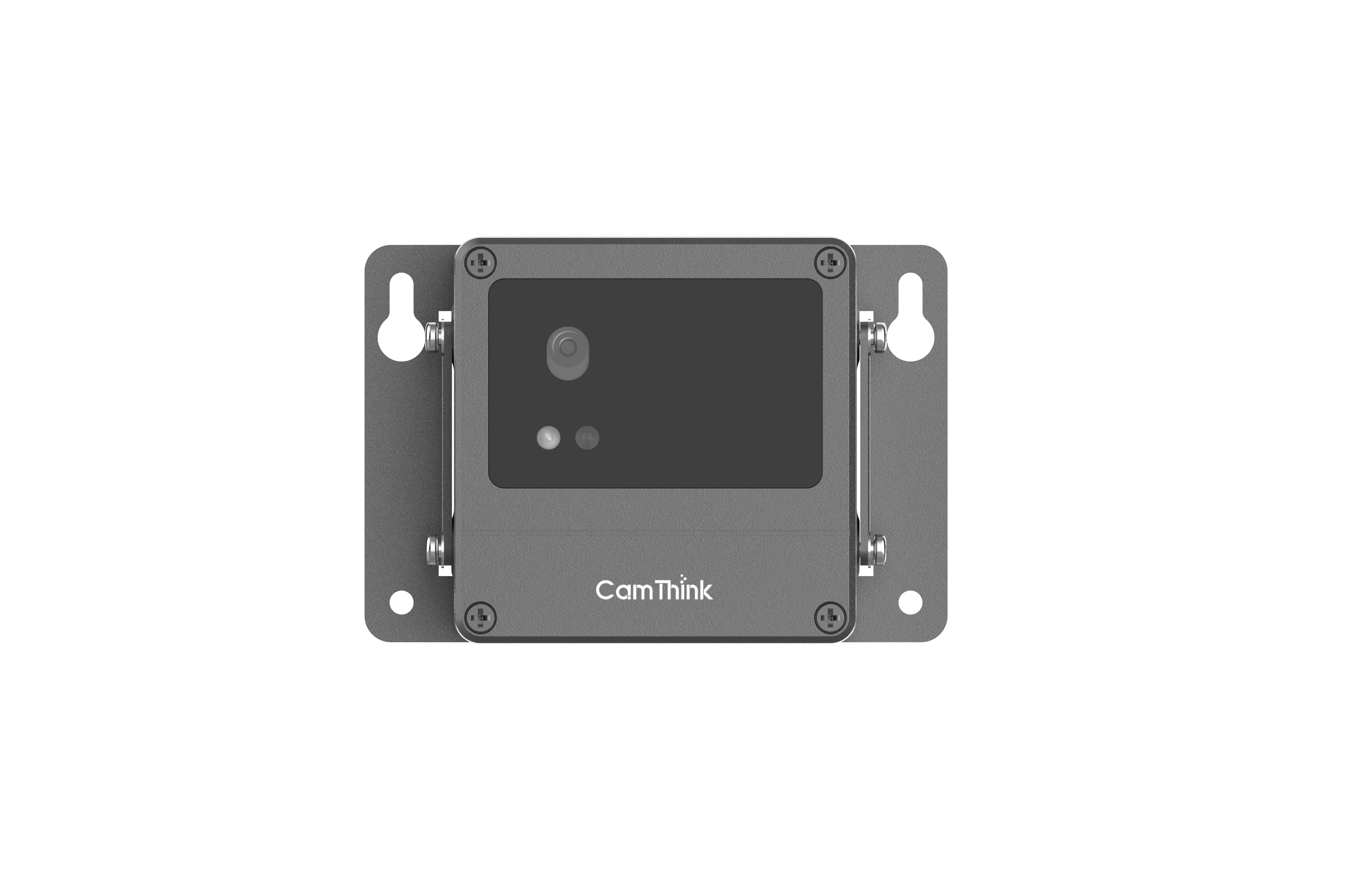
Wall Mount
Fixed angle on wall or flat surface. Standard for indoor and outdoor fixed installations.
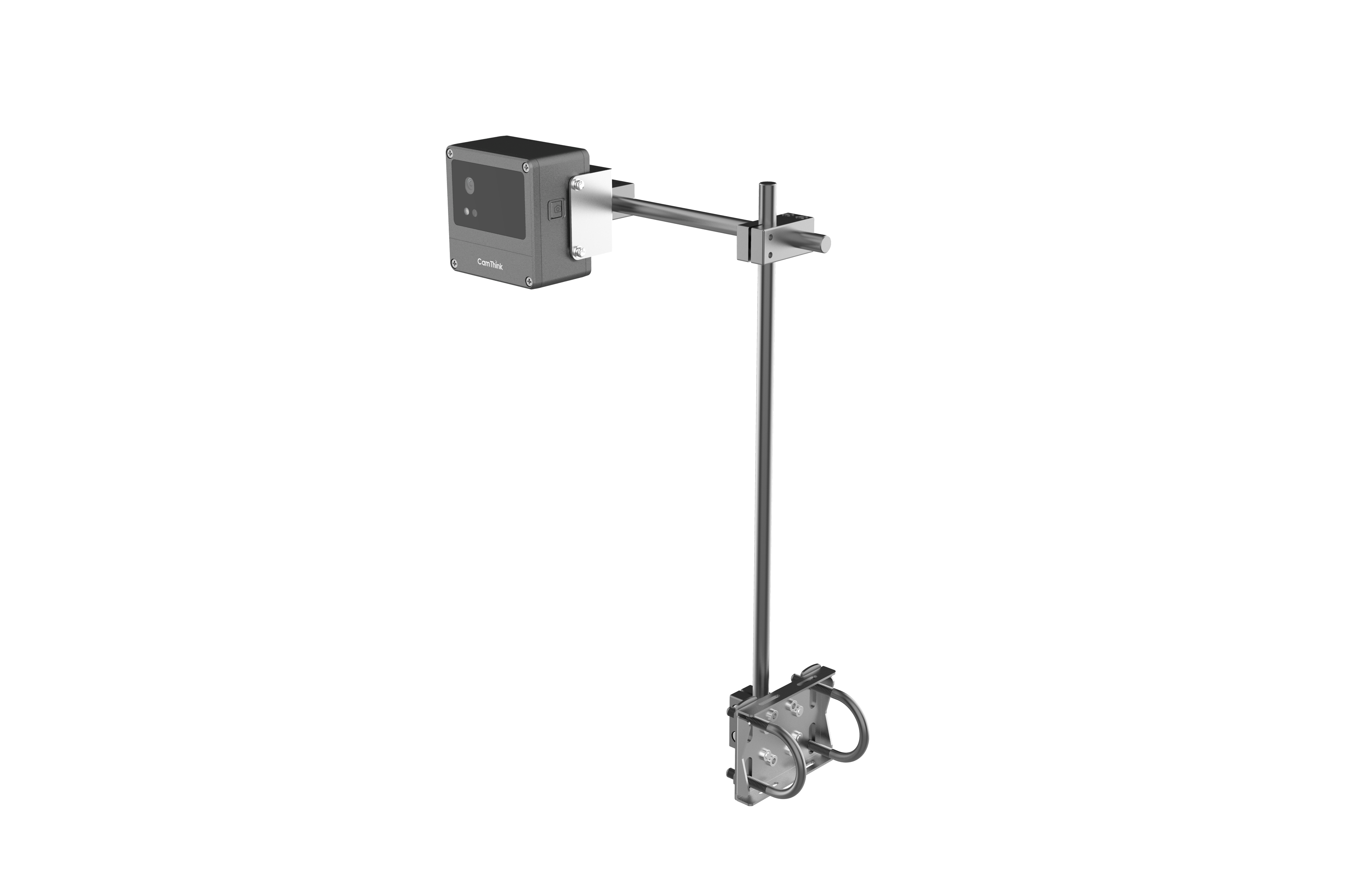
Pole Mount
Clamps to vertical poles, lamp posts, or sign posts. Adjustable viewing angle.
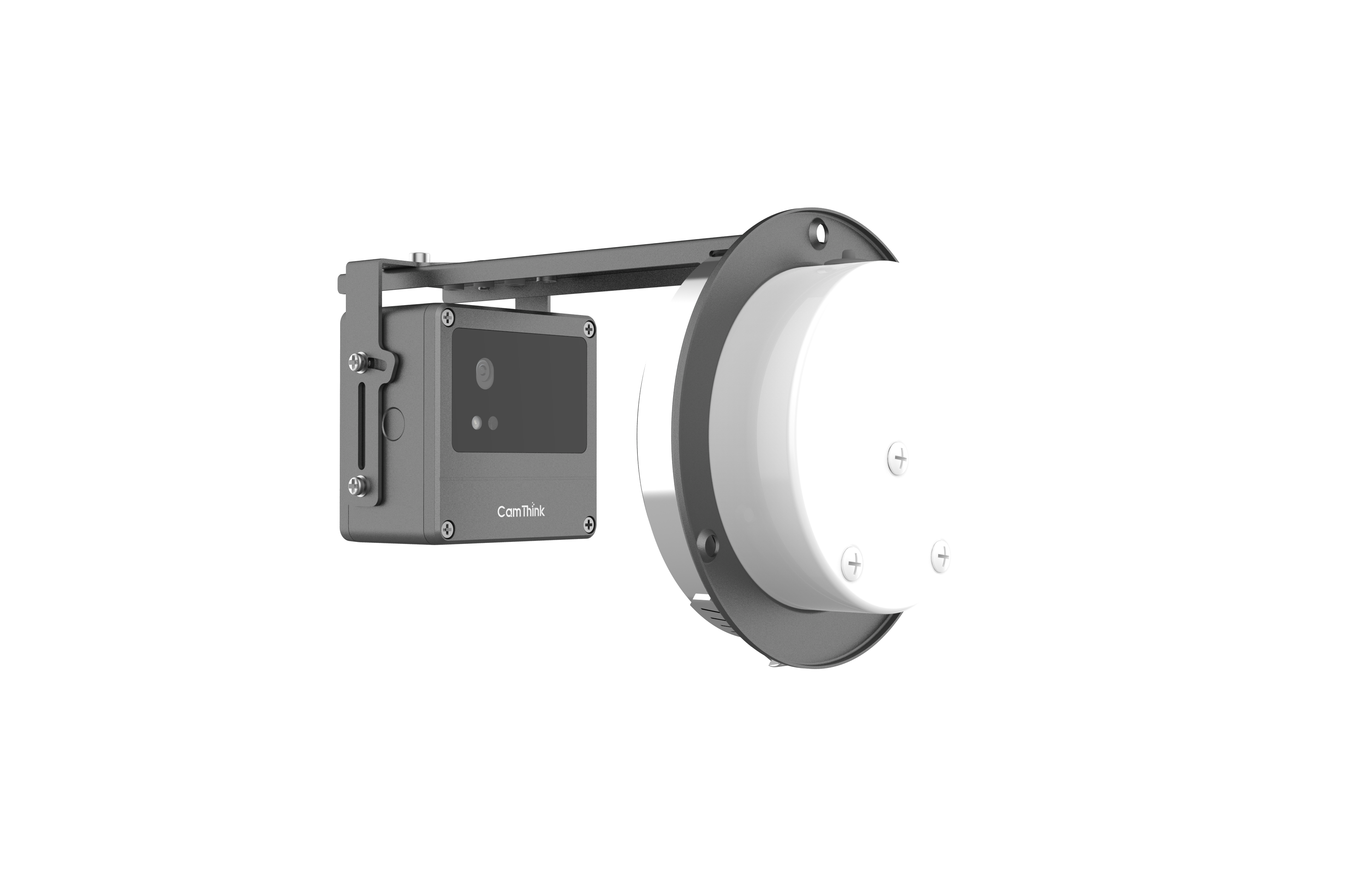
Metering Mount
Designed for meter reading scenarios. Compact bracket for panels and narrow surfaces.
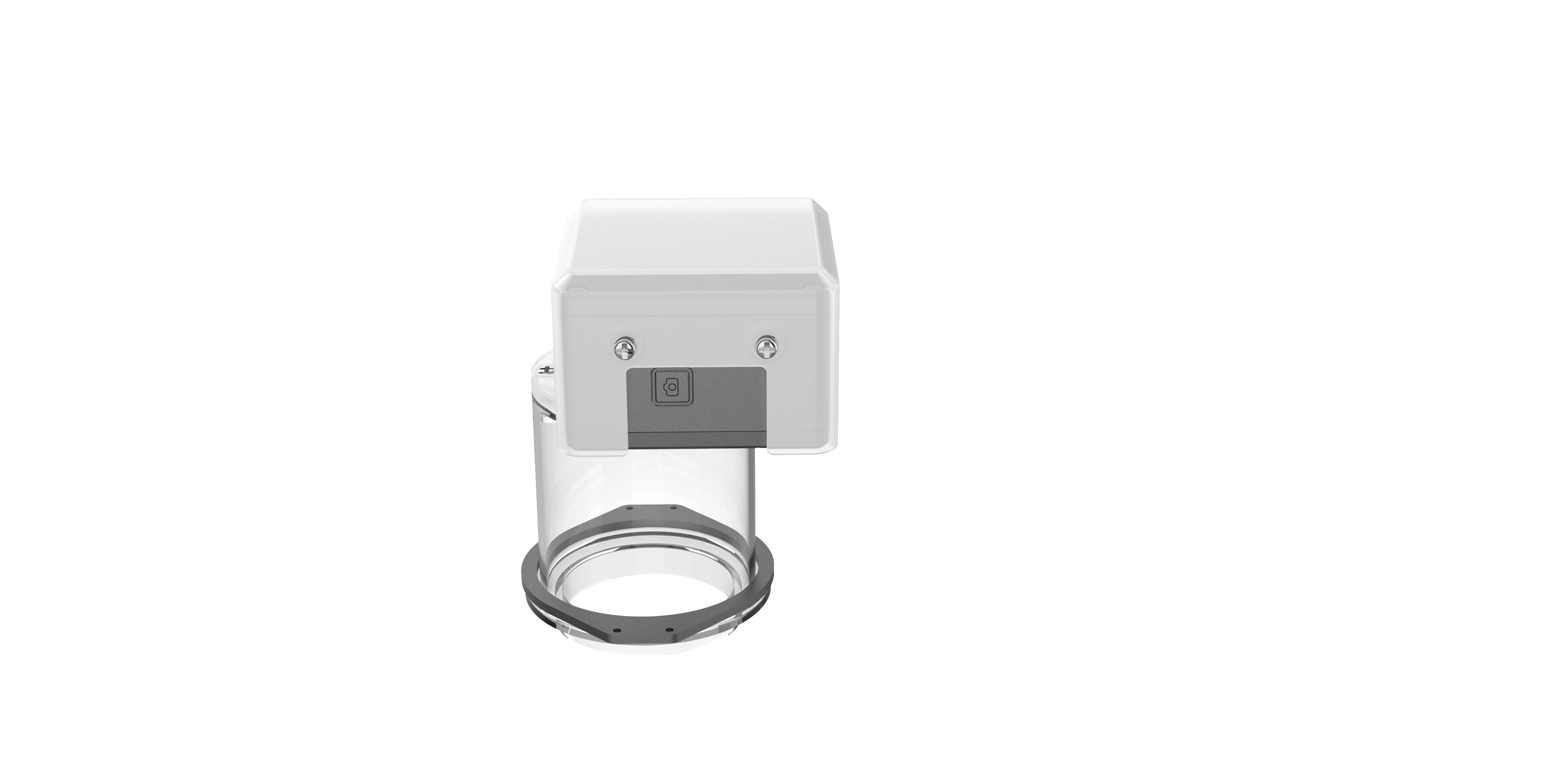
Metering Mount (3D Print)
3D-printable meter bracket variant. Print files available — no physical product sold.
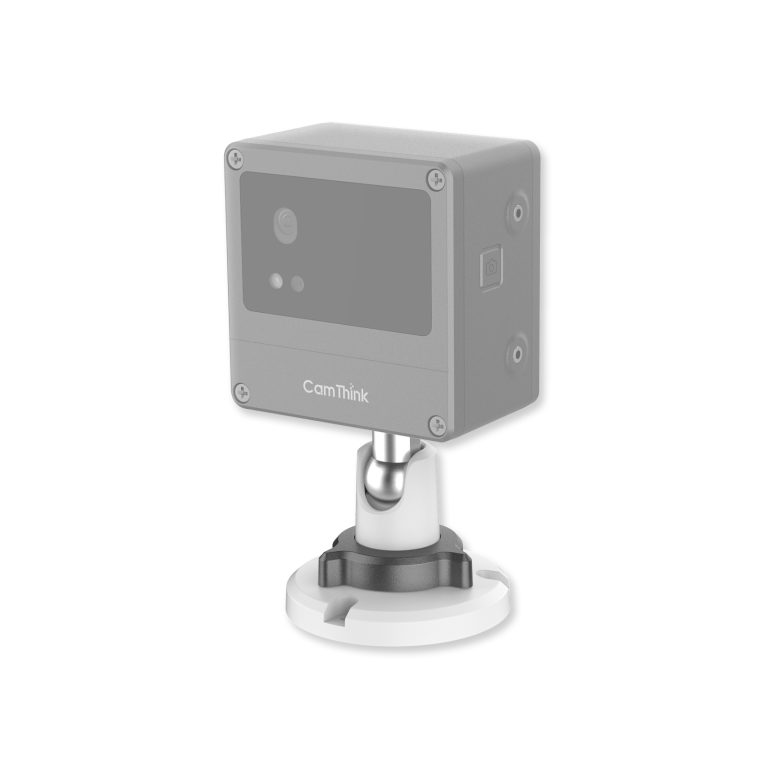
Ball Mount
Full 3-axis ball joint rotation for precise angle adjustment in any direction.
Browse all mounting bracket options →
Fleet Management: OTA Updates and Health Monitoring
Every NE301 MQTT payload includes device health telemetry — battery percentage, signal strength (RSSI),
firmware version — alongside the inference result. Your backend receives this data on every capture event at no
additional cost. Build a threshold alert: if battery_pct < 20 across devices in the same zone,
trigger a maintenance visit dispatch before any unit goes offline.
🛠 Health Monitoring Pattern
Subscribe to camthink/{client}/bin/# and write battery_pct and
signal_rssi fields to a time-series store. A query — “show devices where battery_pct < 20 and
last_seen < 48h” — gives your field team a prioritised maintenance list without any additional device-side
software.
OTA Firmware and Model Updates
The NE301 supports OTA firmware and model updates over WiFi or LTE — applied without physical access. For
fleets of 20+ units, stage updates to 10–15% of devices first, monitor for 24–48 hours, then roll out to the
full fleet. Confirm completion by monitoring the fw_version field in each device’s MQTT payload.
Configuration Decision Matrix
Scenario
WiFi (Battery)
LTE (Battery)
PoE
Urban bins, WiFi AP within 50m
Parks, commercial districts
✓ Recommended
△ Works, higher cost
✗ No infrastructure
Remote bins, no WiFi
Rural, construction, nature reserves
✗ No coverage
✓ Recommended
✗ No infrastructure
Indoor waste rooms / loading docks
Mains power + Ethernet available
△ Works
△ Unnecessary cost
✓ Recommended
High-frequency monitoring (10×+/day)
High-traffic hubs, near-real-time
✓ 2.1yr battery
△ 1.1yr battery
✓ No battery limit
Sub-zero environments (−20°C)
Northern climates, cold storage
△ Use lithium AA cells
△ Use lithium AA cells
✓ No battery concern
FAQ
How long does the NE301 last on AA batteries at a typical bin monitoring frequency?
At 4 captures per day over WiFi, approximately 6.7 years on a 4×AA set
(~1,750 mAh). At 10× per day WiFi, 2.1 years. LTE Cat-1 at 4× per day: approximately
3.7 years. These are lab-measured values. See the full NE301 Battery Life documentation for all frequencies and modes.
Does IP67 handle sustained heavy rain and high humidity?
Yes. IP67 covers complete dust-tight protection and water immersion to 1m for 30 minutes
— heavy rain, splash, condensation, and high-humidity environments are well within this class. For
direct-sun installations over 5+ years, schedule periodic gasket inspection at battery replacement visits.
Can I mix WiFi and LTE units in the same fleet?
Yes. Both publish to the same MQTT topic structure with identical payload schemas. Your
backend identifies each device by
device_id, not by connectivity type. Fleet management
operations — health monitoring, OTA updates — work identically across both variants.What’s the data payload size? Will standard IoT SIM plans cover it?
A standard MQTT payload without image attachment is under 1KB. The image file (~80–120KB
JPEG) is only transmitted if your backend explicitly requests it. At 10 captures per day with no image
upload, data consumption is under 4MB per device per month — well within standard IoT SIM plans of
50–100MB/month.
Does the NE301 support sending images directly to a private HTTPS server?
Standard firmware supports MQTT and HTTP POST natively. Direct HTTPS image push to
private endpoints (S3, SFTP, custom HTTPS) is not in the current standard firmware but is within the open
firmware architecture — integrators can implement this on the open firmware base. This is also on CamThink’s
development roadmap. Contact us to discuss roadmap status and custom firmware options.
How do I estimate battery life in cold climates below 0°C?
Alkaline AA cells lose approximately 25–35% effective capacity at −20°C vs. room
temperature. Apply a 0.7 reduction factor to Wiki estimates for consistent sub-zero operation — so the
6.7-year WiFi/4× estimate becomes approximately 4.7 years. Lithium AA cells retain ~85–90% capacity at −20°C
and are the recommended choice for cold-climate deployments.
🛠 Technical Resources
Battery Life Documentation
Full power consumption data for all frequencies and modes
NE301 Quick Start
Power-on to first MQTT payload in under 2 hours
MQTT Integration Guide
Payload schema including battery_pct and signal_rssi health fields
CamThink Developer Center
Software stack, edge pipelines, webhooks, and device twin integration
GitHub — Open Firmware
Open source firmware, 3D-printable enclosure files
Discord Community
Field deployment questions, power configuration advice
Planning an outdoor deployment?
Tell us your site type, capture frequency, connectivity constraints, and whether solar is required — we’ll recommend the right NE301 variant and power configuration.
About the Author
Harry Hua
Technical Manager
at CamThink AI
Harry specializes in edge AI infrastructure and hardware deployment strategy. With extensive experience configuring autonomous systems for harsh outdoor environments, he bridges the gap between software inference capabilities and physical integration. Harry frequently consults with system integrators to optimize power, connectivity, and fleet management architectures for large-scale municipal and industrial deployments.