What Does Production-Ready Edge AI Mean?
A production-ready edge AI system performs its intended task on representative site data and keeps doing so when inputs, networks, power, storage, and software processes stop behaving perfectly. Model accuracy is one requirement. The system must also meet measured targets for end-to-end latency, throughput, recovery, observability, update safety, and maintenance.
A proof of concept usually answers a narrower question: can a model produce useful results on selected clips or images? That result matters, but it does not establish how the complete pipeline behaves after weeks of changing light, camera drift, packet loss, storage pressure, or software updates. Treat the PoC as evidence for one decision, then define the remaining production decisions explicitly.
There is no defensible universal percentage for how many edge AI PoCs fail to reach production. The useful point is qualitative and testable: projects stall when teams validate the model but leave the operating system around it undefined.
Why Good Models Still Fail at the Site
The model sees the output of a physical and software pipeline. A change in lens focus, mounting angle, exposure, compression, decoder behavior, crop logic, or image scaling can alter that input before inference starts. A benchmark on exported files may therefore overstate what the deployed camera stream can support.
Start with the real video path. Record camera model, lens, field of view, mounting position, codec, resolution, frame rate, bitrate, keyframe interval, transport, decoder, color conversion, resize method, and model preprocessing. Preserve difficult samples such as glare, rain, night scenes, occlusion, motion blur, crowded views, and partial targets. These samples should become part of the acceptance set rather than being treated as exceptions after deployment.
Production criteria also need a business definition. An intrusion system may care about missed people inside a marked zone and nuisance alarms from shadows. A quality-inspection system may care about defect recall at line speed. Aggregate model accuracy hides those differences. Measure the errors that change the downstream action.
Accelerator TOPS describes a compute ceiling under defined numeric precision and operating conditions. It does not include camera ingest, video decode, image conversion, tracking, business rules, database writes, message delivery, evidence encoding, or the memory pressure created by concurrent services. Two systems with the same model can have different capacity because their streams and surrounding software differ.
Freeze a workload sheet before selecting hardware. Include the number of concurrent streams, codec, resolution, frame rate, inference sampling rate, model artifact, batch size, tracker, retention policy, output payload, and any user interface or secondary service running on the node. Benchmark one representative stream on the target runtime, then increase load while measuring GPU, CPU, memory, decode utilization, storage throughput, temperature, power mode, and end-to-end latency.
Use sustained tests rather than a short peak result. Thermal stabilization, log growth, memory leaks, fragmented streams, and queued messages often appear after the first demo has finished. Keep operating headroom for retries, updates, temporary camera bursts, and future model changes.
Failure Modes Need an Explicit Response
Production systems fail in ordinary ways: an RTSP camera stops responding, timestamps jump, a cellular link disappears, DNS fails, a disk fills, a container crashes, or the device loses power during an update. The design should state what the node does in each case and what an operator can see remotely.
For camera loss, define reconnect timing, backoff, alert thresholds, and whether stale frames can enter inference. For network loss, decide which events queue locally, how much evidence is retained, when data expires, and how delivery resumes without duplicates. For storage pressure, set quotas and deletion order before the filesystem reaches a critical state. For service crashes, use health checks and bounded restart behavior rather than an endless restart loop.
Observability should expose the few signals that explain system health: stream state, last frame time, inference rate, queue depth, disk use, temperature, memory pressure, model version, application version, and last successful upstream delivery. A green process indicator is not enough if the process is running but no fresh frames reach the model.
If you need to turn these checks into a hardware and software test plan, ask CamThink to review the workload and deployment constraints before fixing the production configuration.
Treat the Release as More Than a Model File
A reproducible edge AI release includes the model artifact, labels, thresholds, preprocessing, runtime version, container image, device configuration, camera settings, event schema, and migration instructions. If any of those parts changes without version control, a rollback may restore the model while leaving the system behavior different.
Use staged rollout. Update a lab device first, then a small field group, and expand only after health and output checks pass. Keep the previous working release available. A rollback procedure should cover application containers, model assets, configuration, and data schema compatibility.
Store a compact regression set with expected outputs. It should contain normal scenes, difficult scenes, and known failure cases from the target environment. Run it after model conversion, runtime upgrades, camera-setting changes, and container updates. This catches pipeline regressions that a checksum or successful deployment message cannot reveal.
Use a Production Readiness Matrix
A readiness review works better when every claim has an observable test and an owner. The following matrix is a starting point. Targets must be set from the application and site rather than copied from a generic benchmark.
| Area | Evidence to collect | Example pass condition |
|---|
| Input | Representative streams and difficult scenes | Required targets remain visible at the model input |
| Model | Versioned regression results by condition | Agreed error limits pass on the acceptance set |
| Performance | Latency, throughput, resource and thermal logs | Sustained workload meets targets with headroom |
| Recovery | Camera, network, process, disk and power tests | Node recovers or raises an actionable alert |
| Updates | Staged deployment and rollback record | Previous release can be restored predictably |
| Operations | Health signals, access controls and runbook | Operator can diagnose common faults remotely |
Where NeoEdge NG4500 Fits
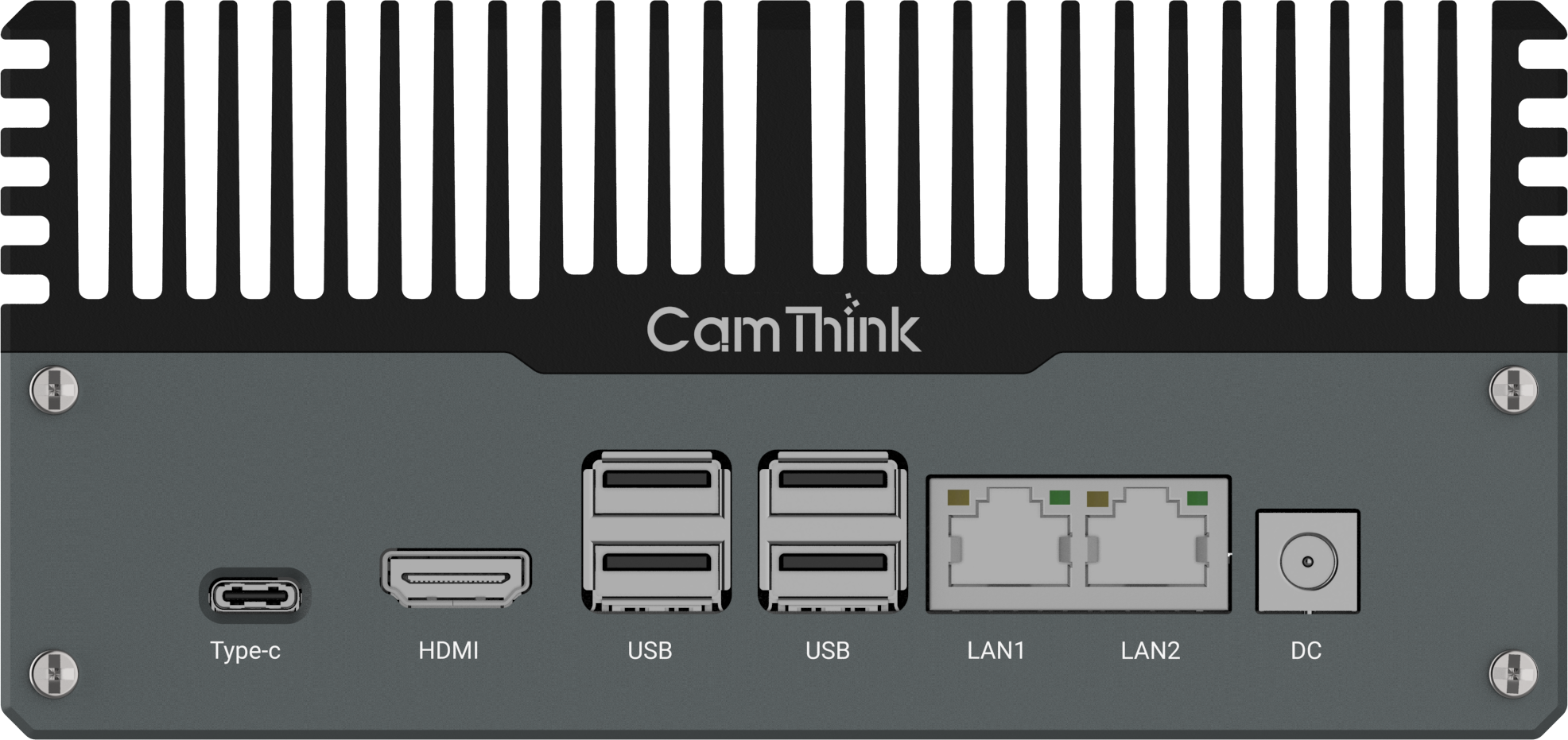
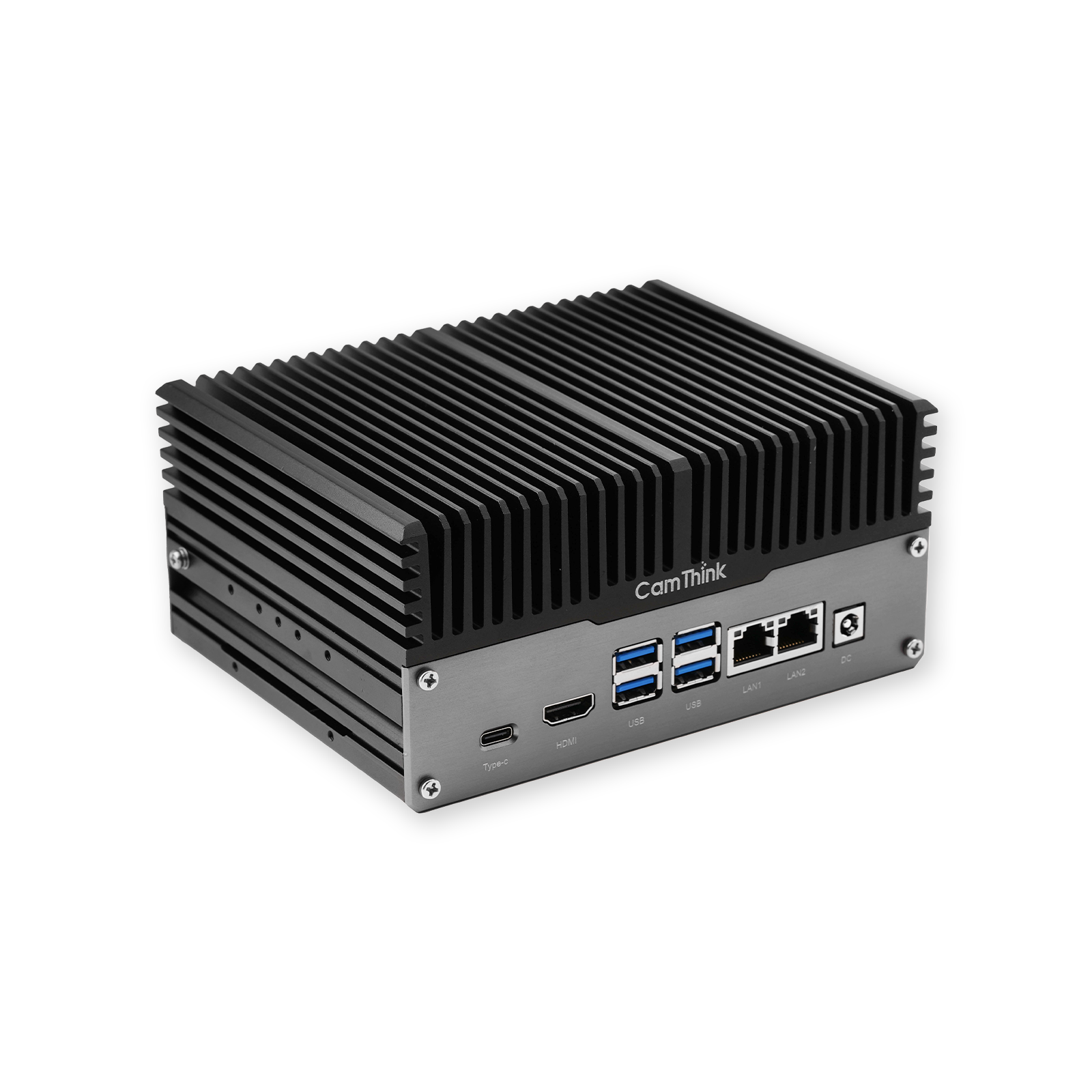
NeoEdge NG4500 is an industrial edge computer based on NVIDIA Jetson Orin Nano or Orin NX modules. Current product documentation lists 4 GB, 8 GB, and 16 GB memory configurations. Standard AI performance ranges from 20 to 100 TOPS, while documented INT8 Super mode values range from 34 to 157 TOPS depending on the installed module and power mode.
The platform provides two Gigabit Ethernet ports, four USB 3.1 ports, serial interfaces, CAN, digital input and output, M.2 NVMe options, and expansion for Wi-Fi or cellular modules. Its software path includes JetPack 6.0 or later, CUDA, TensorRT, DeepStream, Docker, and common AI frameworks. These capabilities make it suitable for multi-stream vision pipelines, local services, and applications that need the Jetson software ecosystem.
NG4500 does not remove the need to benchmark. The chosen Jetson module, memory size, power mode, decode workload, model precision, storage, enclosure airflow, and ambient temperature all affect sustained capacity. Select the configuration after measuring the actual pipeline. Standard hardware can serve as the evaluation starting point; application-specific hardware and integration requirements should be reviewed before a larger rollout.
Define the Acceptance Test Before Deployment
Write the acceptance plan before the final hardware purchase. Use representative cameras and site data, then run the intended release for long enough to expose thermal, storage, network, and recovery behavior. Record the environment and software versions so the result can be repeated.
Accuracy criteria should name the target classes, zones, conditions, and allowed error types. Performance criteria should cover end-to-end event latency, sustained stream count, dropped frames, and resource headroom. Reliability criteria should cover restart, camera reconnect, offline operation, queued delivery, storage limits, and rollback. Operations criteria should confirm remote health visibility, log retention, access control, update ownership, and a maintenance procedure.
A project is ready to move beyond the PoC when those tests pass on the complete system, not when a model demo looks convincing. The output of the readiness review should be a recorded configuration, measured results, known limits, and a release that the operations team can recover and update.