
No products in the cart.
Application
Why NE101 Works as a Non-Contact Meter Reading Capture Node
Most non-contact meter reading projects run into trouble before OCR is even involved — the field capture layer breaks down first. This article explains why NexAscent, a Singapore IoT integrator, chose CamThink NE101 as the image capture node for their MeterOCR workflow on PUB water meters: battery-powered, 4G-independent, no meter modification required.
The Field Layer Is Where Non-Contact Meter Projects Break
When system integrators take on a meter digitization project, the OCR algorithm is rarely the hard part. Most teams either build their own or source it from a specialist — the recognition logic is a solved problem at this point. What consistently stalls deployments is the step before OCR: getting a reliable, consistent image out of the field in the first place.
The three constraints that appear in nearly every legacy meter installation create a specific hardware problem:
No power access
Meters in underground pits, outdoor enclosures, or sub-metered locations rarely have a convenient power outlet. Running a cable means added civil works and cost.
No customer network
Relying on the end customer’s Wi-Fi or LAN creates a support dependency you don’t control. Signal quality, firewall rules, and password changes become your maintenance problem.
Cannot touch the meter
Regulatory requirements, utility provider rules, or lease agreements often prohibit any physical modification to existing meters. Any attachment or wiring directly to the meter body is out.
These three constraints together define a very specific hardware brief: the capture device must be self-powered, independently connected, and physically non-invasive. Generic IoT cameras and smart meter retrofit kits solve only one or two of these at a time. A purpose-built low-power capture node addresses all three.
What NexAscent Needed — and What They Chose

Figure: NE101 mounted in front of PUB water meter enclosure, Singapore building site
NexAscent is a Singapore-based IoT solution provider focused on smart building and facility management. Their product MeterOCR is a proprietary OCR-based workflow that digitizes readings from existing water meters using image analysis — validation, anomaly flagging, and reporting are handled entirely on their platform.
The project brief came from a commercial building operator who needed accurate water consumption data to meet ESG reporting requirements under Singapore’s PUB framework. The core constraint was non-negotiable: PUB incoming water meters cannot be replaced, modified, or physically contacted under Singapore’s utility regulations.
NexAscent’s hardware requirement checklist mapped directly to the three field constraints described above:
-
1
Non-contact image capture
Mount the camera in front of the meter face. Zero physical contact with the meter body. No brackets that attach to the meter itself.
-
2
Independent 4G upload
Images must reach MeterOCR without depending on the building’s Wi-Fi or LAN. The hardware needed its own SIM-based uplink so NexAscent retained full control of the data path.
-
3
Battery-powered scheduled capture
No power wiring to the meter location. The device needed to wake on a schedule, capture a high-quality image, upload it, and return to deep sleep — self-sufficiently.
NexAscent selected CamThink NeoEyes NE101 as the capture node. The NE101 handles scheduled image acquisition and 4G LTE upload. MeterOCR receives the images and handles all OCR processing, validation, and reporting on NexAscent’s side.
For PUB compliance, we couldn’t touch or modify the water meters. NE101 solved this — non-contact capture, independent 4G upload, no gateway wiring. It integrated cleanly with our MeterOCR workflow.
NexAscent
IoT Solutions Provider, Singapore
How NE101 Fits into an OCR Workflow
NE101 is a capture node, not an inference engine. Understanding this distinction is important before scoping a meter reading project around it.
NE101 is built on an ESP32-S3 — a microcontroller chosen for ultra-low power consumption, not AI compute. It does not have an NPU or the processing headroom to run OCR models locally. What it does well is the job that precedes inference: waking up reliably on a schedule, capturing a high-resolution 5MP image, and transmitting it to wherever the OCR processing lives.

NE101 integration workflow with MeterOCR platform
In the NexAscent deployment, the workflow had three steps:
Step 1 — Scheduled capture (NE101)
NE101 wakes from deep sleep at a configured interval, captures the meter face image, and uploads it via 4G LTE to NexAscent’s endpoint. The device then returns to deep sleep.
Step 2 — OCR + validation (MeterOCR)
NexAscent’s MeterOCR platform processes the incoming image, extracts the digit reading, runs validation checks, and flags any image quality issues for review.
Step 3 — Reporting (NexAscent dashboard)
Validated consumption data is aggregated into the building management reporting workflow for ESG compliance and operational tracking.
Open integration
NE101 pushes images to an HTTP/HTTPS endpoint or MQTT broker of your choice. There is no requirement to use CamThink’s NeoMind platform — you bring the OCR system, NE101 provides the image stream.
This separation of concerns matters for integrators who already have an OCR stack. NE101 is not a closed appliance — it is a hardware component that feeds into your existing pipeline. If your project evolves to require on-device OCR inference at the capture point (for example, to reduce data transfer on a cellular budget), CamThink NE301 with its Neural-ART NPU can run the OCR model locally without sending images upstream.
Building a meter reading or visual inspection solution? NE101 can serve as the field capture layer for your existing OCR or monitoring workflow.
Discuss Your Project →Field Deployment Constraints You’ll Actually Encounter
NE101 fits the brief for non-contact meter reading — but a few physical and operational factors determine whether it fits your specific deployment. These are the constraints that come up in real integration projects.
| Constraint | Detail | Notes for Integrators |
|---|---|---|
| Capture distance | 8cm–400cm (depends on lens module) | Choose from 60° FOV (15cm/400cm) or 120° FOV (8cm/300cm) OV5640 modules based on meter face size and deployment distance. |
| Image resolution | 5MP OV5640 sensor · Interchangeable lenses | Sufficient for standard rolling-digit and LCD meter faces. Choose from 60° or 120° FOV OV5640 modules based on meter face size and distance. Test with your specific meter type during PoC. |
| Lighting | Built-in fill light · Four modes | Daytime outdoor: typically fine. For underground pits or enclosed boxes without ambient light, NE101’s built-in fill light with Automatic mode ensures reliable capture. Learn fill light setup → |
| Connectivity | 4G LTE Cat.1 (optional module) | Cat.1 handles 1–5 MB image uploads reliably. Check local carrier band support. Wi-Fi and Wi-Fi HaLow modules are also available if cellular is not preferred. |
| Battery life | Depends on capture frequency and connectivity | Use the CamThink battery life calculator to estimate runtime for your specific schedule. Deep sleep current is ≤6.1 µA; active window per capture is typically 5–15 seconds. |
| Weather protection | IP67 rated, –20°C to +50°C | Suitable for outdoor installation and rain protection. IP67 means dust-tight and protected against temporary immersion (1m depth, 30min). Underground flood-prone pits or locations with prolonged submersion risk need an additional enclosure. |
| Not a fit | High-speed rotating dial meters | If the meter dial rotates faster than the capture interval can track (e.g. very high-flow industrial meters with rapid dial spin), scheduled imaging will miss intermediate readings. Pulse output or continuous streaming is a better fit. |
On battery life: NE101’s ESP32-S3 enters deep sleep between captures with a standby current of ≤6.1 µA. At 4–6 captures per day via 4G, real-world deployments report multi-year operation on standard lithium packs — but the exact figure is sensitive to signal strength, image compression, and transmission retries. Use the battery life calculator to model your specific schedule before committing to a battery configuration.
What This Looks Like for Your Next Project
The NexAscent deployment is a water meter use case, but the underlying hardware pattern — battery-powered scheduled capture + independent 4G uplink + open image delivery — applies wherever a physical gauge, counter, or dial needs to be read remotely without infrastructure changes.
Integrators have used this same NE101-based capture architecture for gas meters, electricity sub-meters, industrial pressure gauges, level indicators, and building automation panel displays. The common thread: the asset cannot be touched, there is no reliable power or network at the location, and the downstream analytics system already exists.
If your deployment grows beyond a handful of nodes and you need to aggregate image streams from multiple capture points before OCR processing, a gateway-based architecture using NeoEdge NG4500 can consolidate feeds from multiple NE101 units and run inference centrally — reducing per-node cost while keeping data on-premise.

NE101 + NG4500 scaled deployment reference
Hardware
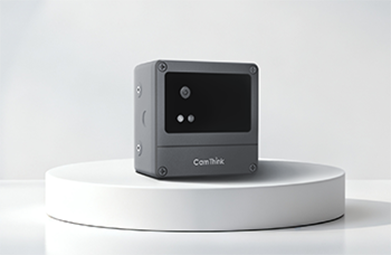
NeoEyes NE101
Ultra-low-power event-triggered capture camera. ESP32-S3 · 5MP · IP67 · Battery-powered · Wi-Fi / 4G LTE / Wi-Fi HaLow · Deep sleep ≤6.1 µA
From $69.90
Frequently Asked Questions
Does NE101 have built-in OCR capability?
No. NE101 is a capture and transmission node built on ESP32-S3, which does not have the compute headroom to run OCR models. Its role in a meter reading system is to produce a consistent, high-quality image and deliver it to wherever OCR processing occurs — your platform, a cloud endpoint, or an on-premise server.
If you need on-device OCR inference without sending images upstream, NeoEyes NE301 includes a 0.6 TOPS Neural-ART NPU and can run digit recognition models directly on the camera.
How does NE101 deliver images to my OCR system?
NE101 supports HTTP/HTTPS push to a configurable endpoint and MQTT publish to a broker. After each capture event, the device transmits the image and a metadata payload (timestamp, device ID, capture parameters) to the destination you configure. There is no mandatory use of CamThink’s NeoMind platform — you specify the target endpoint in the device configuration.
Wi-Fi, 4G LTE Cat.1, and Wi-Fi HaLow connectivity modules are all available depending on your site’s network environment.
Is the image quality consistent enough for OCR processing?
NE101 uses a 5MP OV5640 sensor. At typical meter reading distances (15–40 cm), this provides sufficient resolution for standard rolling-digit and LCD meter faces. Image quality is consistent across captures because the device wakes, stabilizes, and captures from a fixed mount position.
Factors that affect downstream OCR accuracy include ambient lighting (especially in enclosed or underground locations), meter face condition (dirt, condensation), and lens selection. A short PoC with your specific meter type and environment is the most reliable way to validate image quality before scaling.
How long will the battery last in a scheduled capture deployment?
Battery life depends on capture frequency, connectivity module, signal strength, and battery capacity. NE101’s deep sleep current is ≤6.1 µA, and each active capture-and-transmit cycle typically takes 5–15 seconds.
Use the CamThink battery life calculator to model your specific configuration. As a reference point, Wi-Fi deployments at 10 captures per day report 3+ year battery life; 4G LTE deployments with lower capture frequency report similar ranges depending on signal conditions.
Can I configure the capture schedule remotely after deployment?
Yes. NE101’s capture schedule and upload parameters can be updated remotely via MQTT command or through CamThink’s NeoMind management platform (OTA configuration). You do not need physical access to the device to change capture frequency or endpoint settings after initial deployment.
How long does it take to go from hardware delivery to first image upload?
For an experienced IoT integrator, initial configuration (Wi-Fi or 4G credentials, capture schedule, upload endpoint) via the NE101 web UI typically takes under 30 minutes per device. The first image upload can be achieved the same day the hardware arrives.
Scaling to multiple nodes using NeoMind’s fleet management tools allows batch configuration — schedule, endpoint, and firmware settings can be pushed to groups of devices without per-device manual setup. Full documentation is available at wiki.camthink.ai.
Does image data go through CamThink’s cloud servers?
No. NE101 sends images directly to the HTTP/HTTPS endpoint or MQTT broker you configure. CamThink does not intercept, store, or process image data in transit. For deployments with data privacy or sovereignty requirements, the image path from device to your OCR platform can be entirely on-premise or within your own cloud environment.