Can NE503 Become Part of Your AI Camera Product or System?
Yes, if your project needs intelligence at a fixed camera point and the camera itself must capture the scene, run the AI model, apply business logic, and send results to a VMS, platform, PLC, dashboard, relay, or business system. In that case, NE503 should be evaluated as an Edge AI camera product platform, not as a generic camera spec or a one-time demo.
A useful NE503 evaluation is not a camera unboxing exercise. It proves whether a trained model, a camera-side application, event output, and the customer system can work together as one deployable AI camera product or system component.
A good evaluation answers the buyer question: can this NE503 test unit become part of our product, site system, or repeatable deployment?
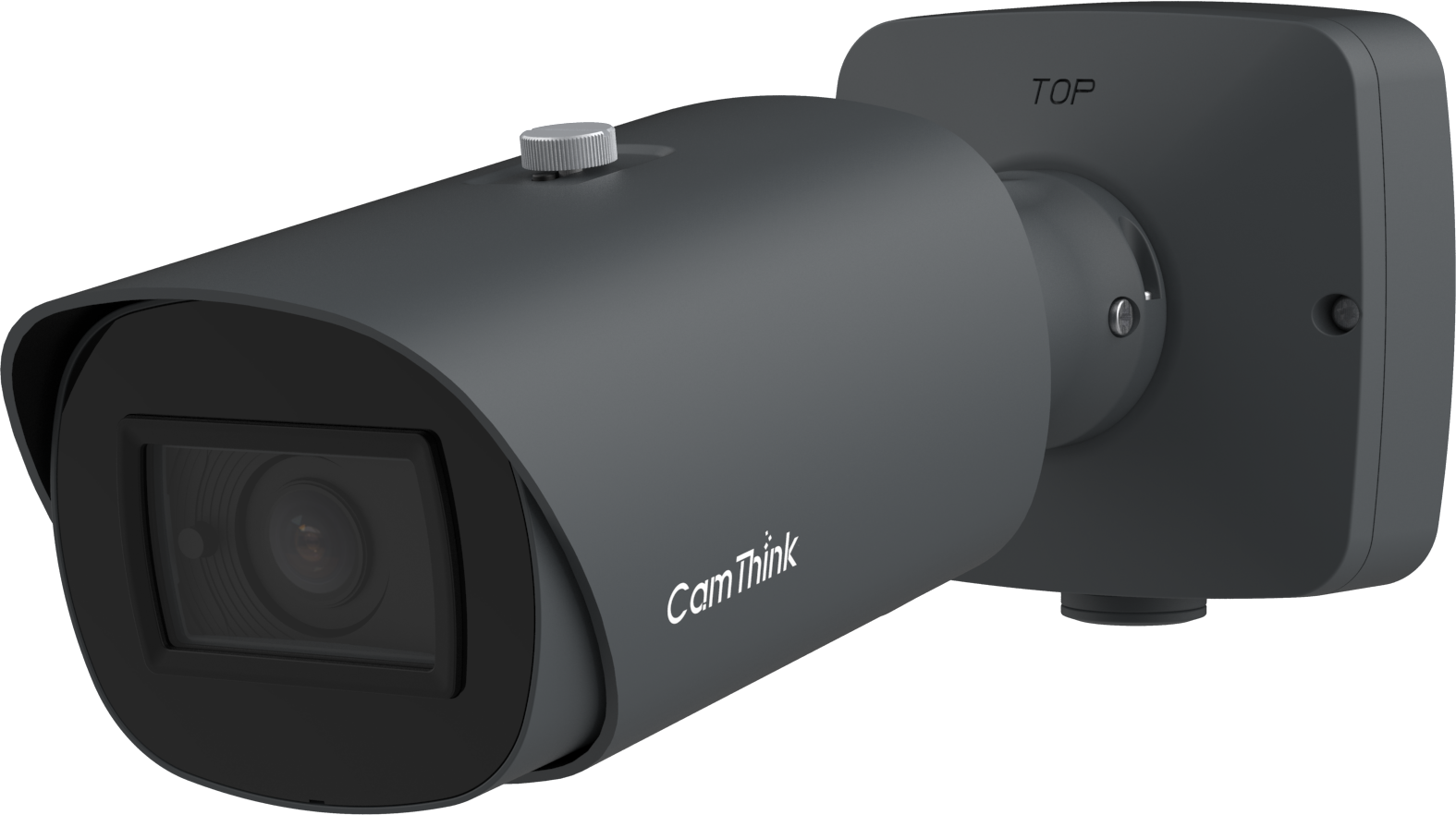
NE503 is strongest when the project needs an integrated point solution. The device combines 4K imaging, Hailo-15H acceleration, application deployment, local inference, video output, event output, and field interfaces in one AI IPC. The evaluation should therefore focus on the last mile: model packaging, camera runtime, event output, site behavior, and the next scaling decision.
Start with the Project Output
Before loading a model, define what the project needs to receive when the camera sees something important. For many NE503 projects, the output is not a raw detection box. It is a useful business event such as a person entering a restricted zone, a missing safety helmet, an occupancy change, or a machine state that should trigger another system.
Write the desired output as a simple chain:
- The camera observes the scene from the intended position.
- The model produces inference results on the camera.
- The application filters, combines, or times those results into an event.
- NE503 sends the event by MQTT, REST API, Event Bus, alarm output, or another agreed interface.
- The VMS, platform, PLC, dashboard, relay, or business system receives the event and performs the expected action.
This output-first view keeps the PoC honest. A model that looks good on a laptop is not enough. An event that never reaches the customer system is not enough either. NE503 should be evaluated as a camera platform that turns vision AI into site-level action.
Prove the Model Path
The first proof point is that the model can enter the NE503 deployment path. For Hailo-15H projects, this usually means starting from a trained model, exporting or preparing an intermediate format such as ONNX, compiling for the Hailo target, and registering the final model asset for use by the camera application.
This guide does not need to repeat the full YOLO conversion workflow. CamThink already documents that path in the Custom YOLO article and uses a verified safety helmet detection app as a concrete example. In this evaluation page, the question is simpler: can the model you care about become an asset that NE503 can load and call inside a camera application?
| Model Check |
What to Prove |
Useful Evidence |
| Model format |
The trained model can be prepared for the NE503 Hailo-15H runtime path. |
Source model version, exported artifact, compiled artifact, and model registration record. |
| Class logic |
The classes, labels, confidence thresholds, and filtering rules match the project output. |
Label map, threshold settings, sample frames, and expected event examples. |
| Runtime call |
The camera application can call the model and receive inference results continuously. |
Application logs, runtime status, sample result payloads, and observed stability during the test window. |
The goal is not to prove every final accuracy number on day one. The goal is to remove the first deployment risk: the model is no longer only a research artifact. It is part of a camera-side application path.
Prove the Camera Application
NE503 is an open Edge AI camera platform because it can run custom application logic on the device, not only because it has an AI accelerator. The second proof point is that the application can own the logic between inference and output.
In practical projects, this application layer is where much of the value appears. A safety helmet model becomes a PPE compliance event. A person detector becomes a loitering rule only after time, zone, and direction logic are applied. An occupancy model becomes useful only when the application publishes the count or state change in a format the customer system can use.
If your evaluation already has a model, sample footage, expected event examples, and an integration target, ask CamThink to review your NE503 evaluation plan before turning the PoC into a field test.
The application check should include deployment, startup behavior, error handling, logs, configuration, and basic maintenance. If the project will require ODM changes, customer-specific thresholds, new output payloads, or a private model, this gate is where those needs become visible in a controlled way.
Prove System Output
The third proof point is that useful results can leave the camera in the form the project expects. NE503 can participate in different output patterns, including RTSP video output for viewing and event output through software or field interfaces such as MQTT, REST API, Event Bus, Alarm IN/OUT, and RS-485 depending on the project design.
This matters because many customers do not buy an AI camera to watch another demo screen. They buy it so a rule, dashboard, access system, alarm chain, or operations workflow can react faster at the edge.
| Output Path |
Best Use in an Evaluation |
What Success Looks Like |
| RTSP video output |
Visual confirmation, VMS viewing, and site review. |
The system can view the camera stream while the AI application runs. |
| MQTT or REST API |
Structured event delivery to a platform, dashboard, middleware, or business system. |
The receiving system gets the event fields needed for action, audit, and rule handling. |
| Event Bus |
Application-level event exchange on the device or within the camera software stack. |
The app publishes and consumes events in a maintainable way. |
| Alarm output or RS-485 |
Field action, relay trigger, industrial device linkage, or local site control. |
The physical or control-side action happens after the AI condition is met. |
A strong evaluation captures both the camera-side evidence and the receiving-side evidence. Save the event payload, timestamp, camera state, receiving system log, and the action result. That record is often what helps engineering, purchasing, and site operations agree that the next step is justified.
Prove the Installed Camera Point
Model and integration checks should eventually meet the real camera position. NE503 is an AI IPC, so the scene, mounting height, lens choice, lighting, field of view, object size, weather exposure, and network path all affect the final project confidence.
This is where NE503 differs from a generic edge box evaluation. The camera is not only a compute node. It is also the image source. A useful field test confirms that the same device can capture the scene, run the application, and send the output from the installed point.
For outdoor or industrial deployments, include enclosure and installation constraints in the evaluation. NE503 is positioned as a robust fixed-site AI camera with IP67 and IK10 hardware protection, but the actual site still decides whether the mounting, cable path, power, network, and maintenance access are right for scale.
What to Record in the Evaluation
The evaluation record should be short enough to use, but specific enough to support a scaling decision. The best format is a compact evaluation record with evidence attached to each proof point.
| Evaluation Area |
Record This |
Why It Matters |
| Model |
Model version, labels, thresholds, compiled artifact, and test samples. |
Prevents confusion between model accuracy, deployment format, and app behavior. |
| Application |
App package, configuration, startup status, logs, and observed runtime behavior. |
Shows that the AI logic can live on the camera, not only in a lab notebook. |
| Output |
Event payload, protocol, receiving system response, alarm action, and timestamps. |
Connects camera intelligence to the workflow that creates business value. |
| Site |
Mounting position, field of view, lighting, network, power, and environmental notes. |
Turns a device PoC into a deployment decision. |
| Support scope |
What CamThink provides, what the customer provides, and what still needs ODM or integration work. |
Keeps commercial, engineering, and system integration expectations aligned. |
This record does not need to be long. It needs to make the next decision easy: continue with NE503, adjust the model or application, plan an ODM change, or route the project to another architecture.
When NE503 Is the Right Fit
NE503 is the right evaluation target when the project wants to place AI at a new or critical camera point and keep capture, inference, application logic, and event output close together. This is common when the site needs low-latency local response, privacy-aware edge processing, custom AI logic, or a single integrated device instead of a camera plus separate compute box.
It is also a strong fit when the customer is building a product or repeatable solution around the camera itself. For these customers, NE503 is not just a security camera. It is an open AI IPC platform that can carry a private model, run customer application logic, and connect the resulting events to a larger system.
When Another Architecture Fits Better
Some evaluation requests should not become NE503 articles or NE503 projects. If the main requirement is to keep a large number of existing IP cameras and add centralized multi-channel AI analysis from their RTSP streams, an edge AI box such as NG4500 is usually the more natural starting point.
If the project is a remote low-power event camera deployment, NE101 or NE301 may fit better. If the need is device orchestration, rules, dashboards, and data unification across many sites, NeoMind belongs in the architecture discussion. The evaluation should route the buyer to the product shape that matches the job, rather than forcing every camera system into one device category.
Evaluation FAQ
Do we need a finished model before evaluating NE503?
No. A finished model helps, but the evaluation can also start with a representative model, sample footage, and clear event requirements. The key is to know what the final application should output.
Is this evaluation the same as training a model?
No. Training proves whether a model can learn the target. NE503 evaluation proves whether the model, camera application, event output, and site conditions can work as a deployable edge camera system.
Can NE503 connect to an existing VMS or customer platform?
Yes, when the project output is designed for that system. Common evaluation paths include RTSP viewing and structured event delivery through interfaces such as MQTT, REST API, Event Bus, alarm output, or serial control depending on the project requirements.
Should we use NE503 to analyze many existing IPC streams?
That is usually not the first NE503 use case to evaluate. If the goal is to keep many installed cameras and add centralized multi-channel analytics, start the architecture discussion with an edge AI box such as NG4500.