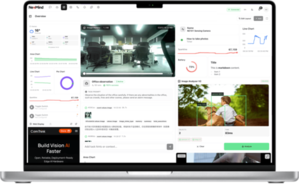
Retail video analytics becomes operational when another system can understand and trust the result. A box around a person is useful during model development. A store platform needs a durable event that identifies the location, camera, zone, time, event type, evidence, and processing version.
This is the integration architecture: cameras and edge applications observe the scene; an event layer normalizes those observations; POS, VMS, IoT, and operations systems consume the fields they need. Keeping those responsibilities separate gives each consumer a stable event contract instead of a direct dependency on one model’s raw output.
Start with Store, Camera, Zone, and Event Identity
An event should refer to stable business objects. Assign a camera ID separately from its IP address, and give each checkout or aisle zone a durable identifier outside the analytics application’s polygon definition. Those identifiers remain meaningful when an address changes, an application is updated, or a camera is replaced.
| Identity | Purpose | Design Note |
|---|
| store_id | Routes an event to the correct site and time zone | Use the retailer’s stable site identifier |
| camera_id | Links analytics to video and device operations | Keep it separate from IP address and RTSP URL |
| zone_id | Names a checkout, aisle, entrance, or service area | Version the geometry when the layout changes |
| event_id | Supports deduplication and audit | Generate once and preserve through retries |
| model_version | Explains which logic produced the event | Record model and application configuration |
Also store the mapping between business time and device time. A UTC event timestamp is useful, but store teams often investigate by local trading hour. Preserve the site time zone as configuration instead of rewriting the original observation time.
Normalize Camera and Analytics Events
Raw inference results may contain bounding boxes, class labels, confidence values, or track identifiers. Consumers usually need a smaller business event such as queue_threshold_entered, aisle_activity, occupancy_updated, or service_zone_dwell. A normalization service can convert model-specific output into a stable contract.
The following illustrative contract shows normalized retail fields. It is separate from the CamThink device API response:
Illustrative normalized retail event
Use explicit event names and typed values. Avoid putting the entire meaning inside a free-text message. The contract should distinguish an instantaneous observation from a state transition, because repeated occupancy updates and a single threshold-entered event have different delivery and alerting behavior.
Align Video Time with POS Transactions
Treat POS correlation as a candidate match between a video event and a transaction. The systems need compatible clocks, a mapping between camera zones and terminals, and a defined time window. If several terminals share one view, timestamp proximity alone may be ambiguous.
Separate correlation from identity
A correlation record can state that event A is a candidate match for transaction B, along with the rule and score used. Keep both source records so the match can be reviewed when a transaction is delayed, a receipt is reopened, or the visible service moment differs from the POS completion time.
- Synchronize devices and monitor clock drift.
- Preserve source timestamps and ingestion timestamps.
- Map terminal, lane, and camera zone identifiers explicitly.
- Define how refunds, voids, suspended transactions, and offline POS batches are handled.
- Keep customer identity out of the design unless the use case truly requires it and the deployment has an approved basis.
Connect VMS, POS, and IoT Consumers
Different consumers should receive different payloads. A VMS may need an event marker and an evidence time range. A POS analytics service may need store, terminal, event type, and correlation metadata. An IoT platform may need a compact state or alert for a dashboard, message broker, light, or local controller.
| Consumer | Primary Need | Preferred Integration Pattern |
|---|
| VMS | Searchable event plus video evidence | Event marker, clip reference, or platform-specific API |
| POS or retail data platform | Time-aligned business correlation | API, message bus, or batch stream with stable identifiers |
| IoT platform | State, alarm, or device action | MQTT or platform gateway after normalization |
| Store operations | Actionable alert with context | Workflow service, dashboard, or notification layer |
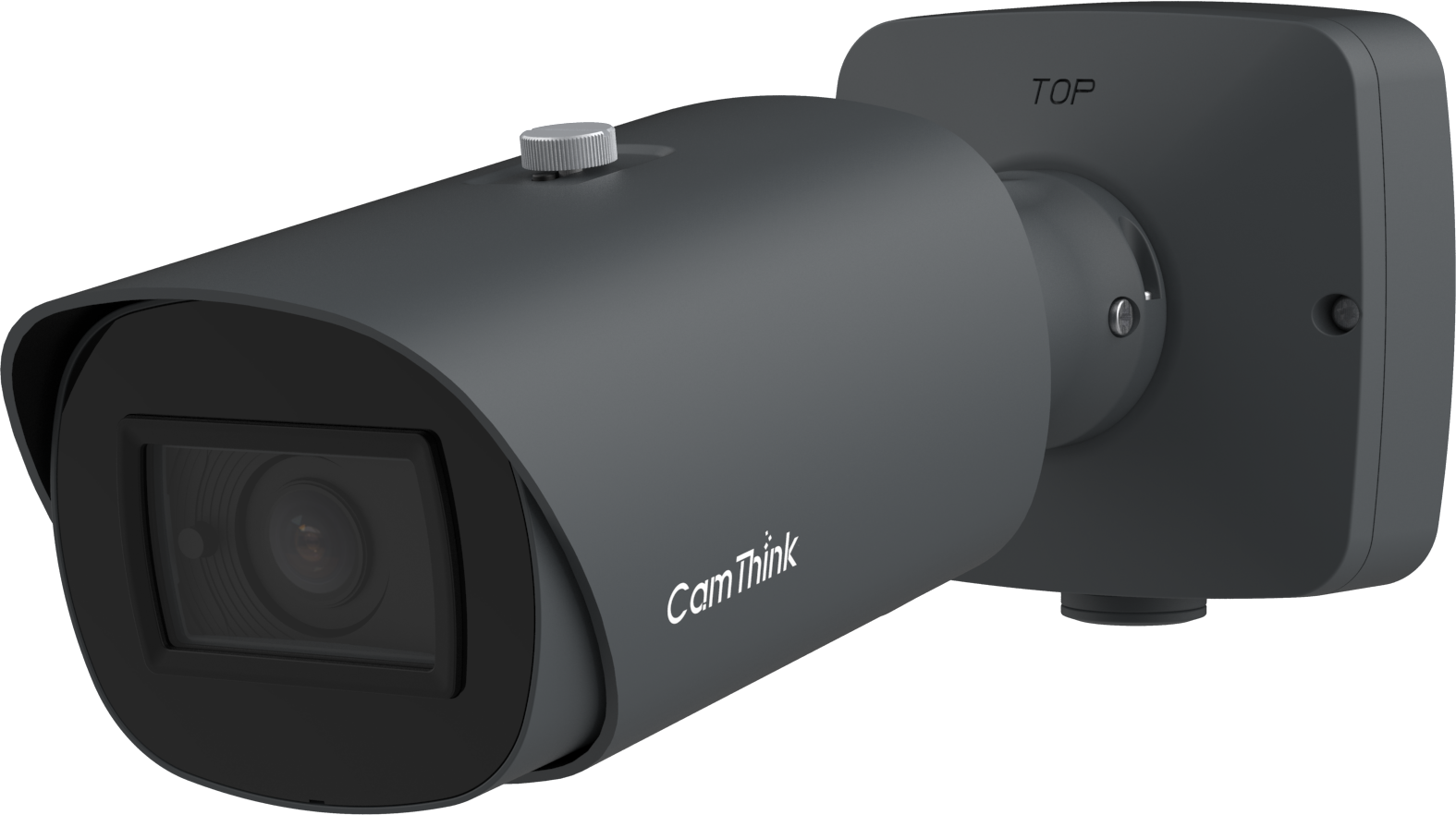
CamThink NE503 has a platform Event Bus for application and inference events. External systems can use its REST or WebSocket endpoints; MQTT delivery requires a bridge that subscribes to the Event Bus and forwards selected messages. NE503 also provides RTSP video integration, but the current product documentation states that generic VMS connection is through manual RTSP rather than ONVIF discovery.
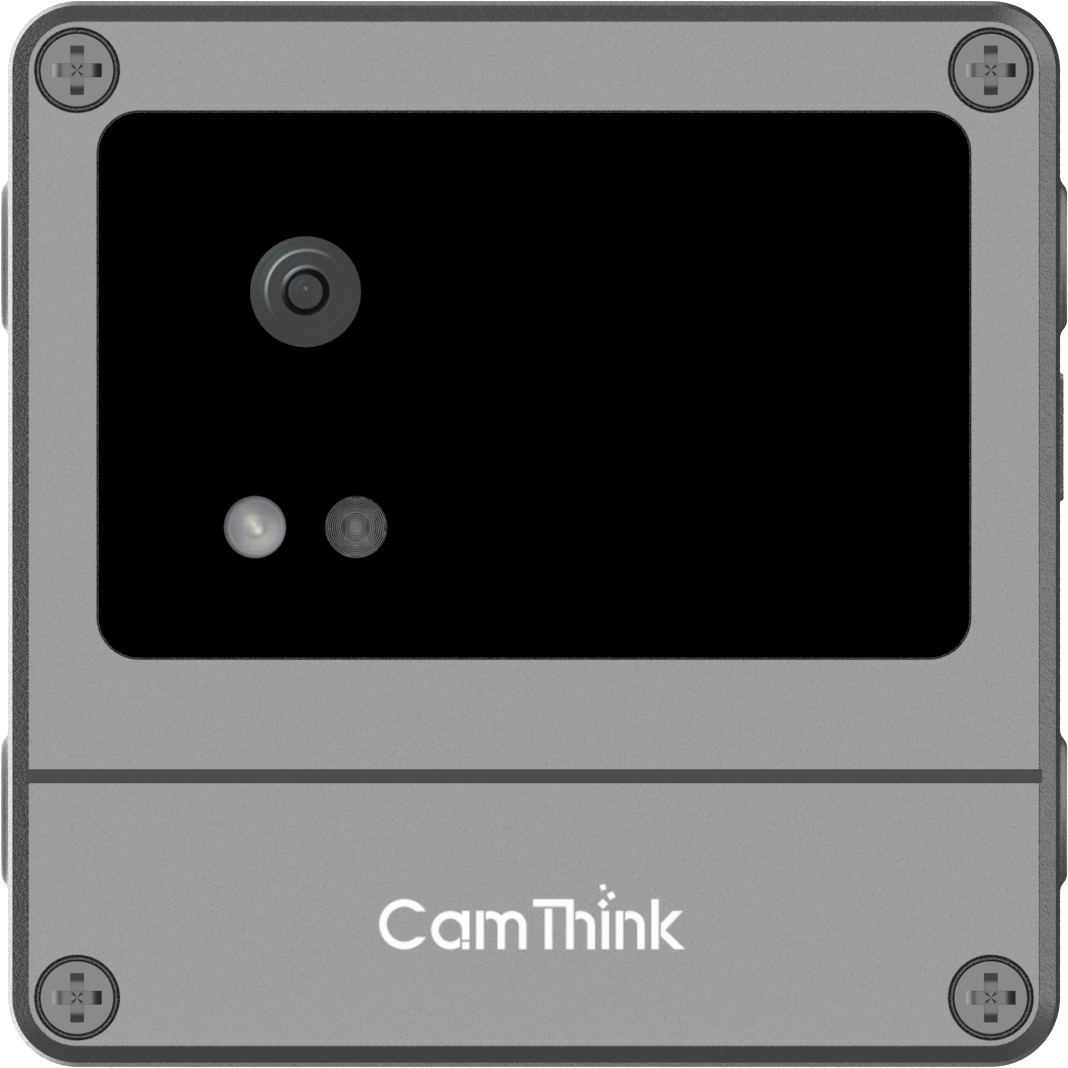
CamThink NE302 fits compact, continuously powered retail terminals that need local inference and device-level result delivery. It can send inference or capture results through MQTT/MQTTS or Webhook and provide video through RTSP or RTMP.
In this architecture, NE302 is a source device. A downstream normalization service adds the retailer’s stable store, camera, zone, and event identifiers before routing the result to POS, VMS, IoT, or operations systems. Local capture records and upload retry help retain triggered results during temporary receiver outages, while the normalization layer handles end-to-end event IDs, deduplication, and audit.
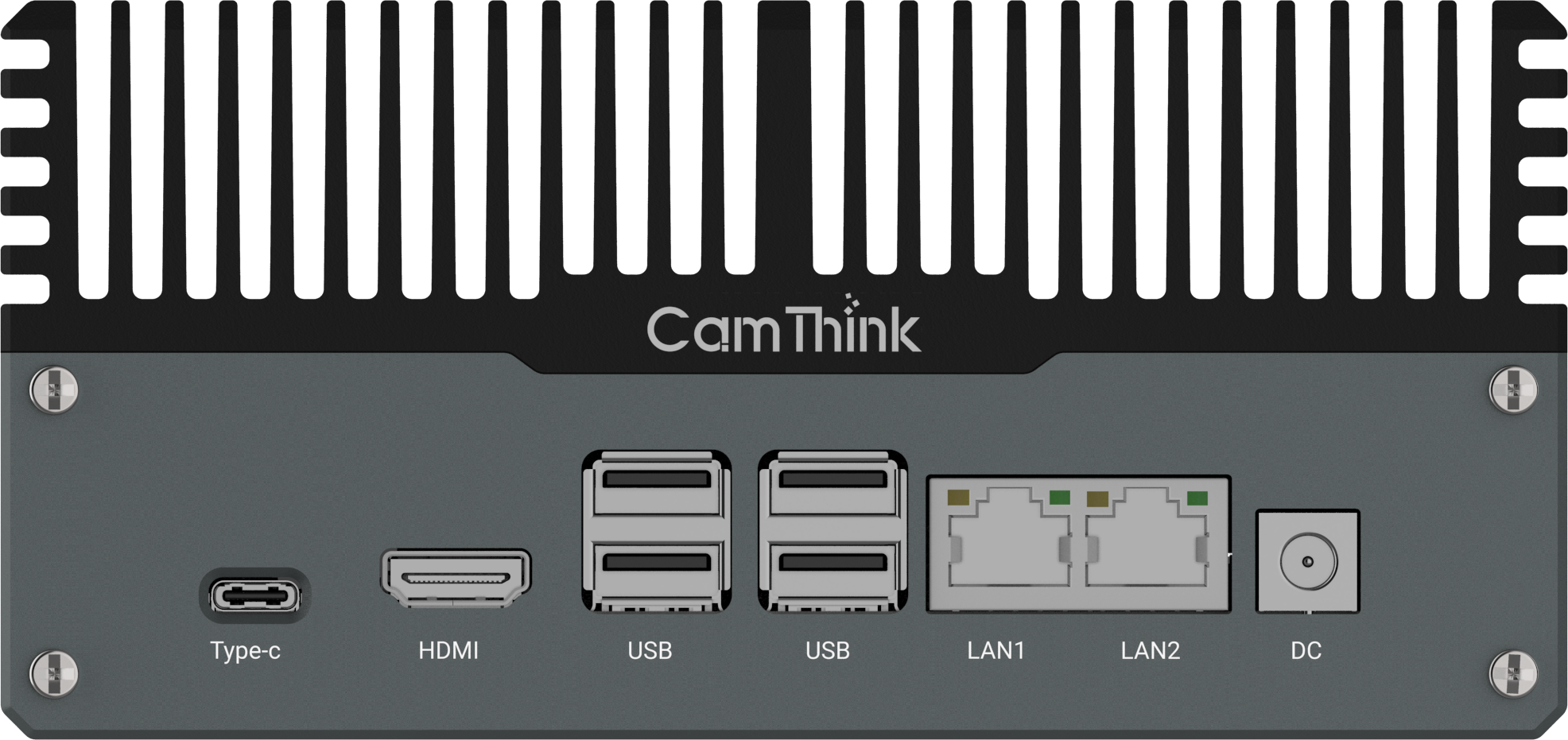
CamThink NG4500 fits a site gateway pattern where existing camera streams and several analytics pipelines need local compute. Its Jetson Orin platform supports JetPack, TensorRT, and DeepStream workflows. Application teams can use the integration layer to define the normalized retail event contract, connector behavior, credentials, and consumer-specific mapping.
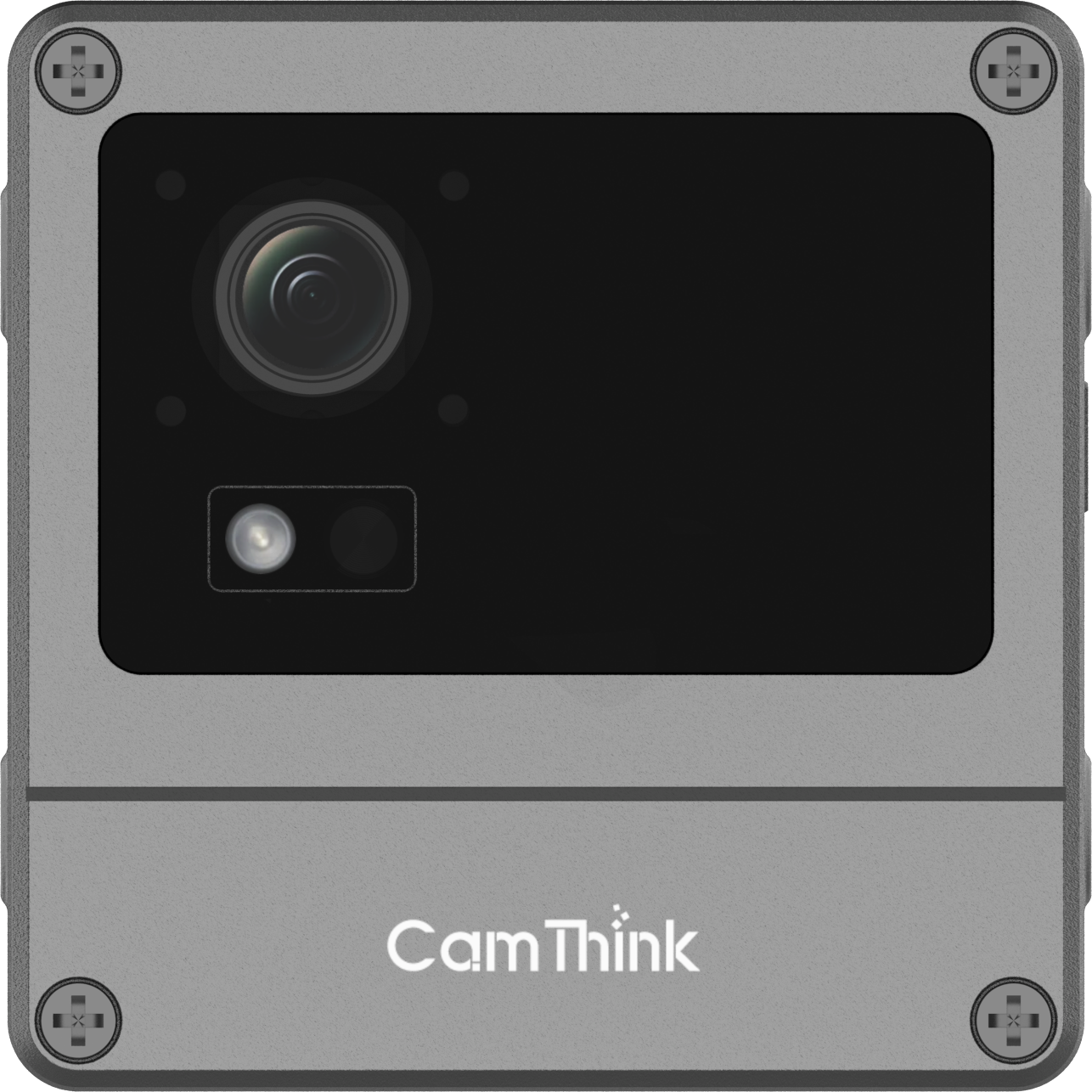
NE301 and NE301 PoE provide another lightweight camera-side path when modular triggers, outdoor installation, or PoE connectivity matter more than compact device integration. Like NE302, they are source devices in this architecture, with downstream normalization shaping the shared retail event contract.
If you can provide a sample source event and the target platform’s required fields, ask CamThink to review the edge integration path.
Design Retry, Deduplication, and Audit
Network delivery can fail after the receiver stores an event but before the sender receives confirmation. Retrying is correct, but it can create duplicates. Consumers should therefore treat event_id as an idempotency key, and senders should preserve that identifier across attempts.
A practical delivery record includes the event ID, destination, attempt number, first observation time, last attempt time, response status, and final disposition. Use bounded retries with backoff, then move undelivered events to a review queue rather than retrying forever. If order matters, define it per store or device instead of assuming one global sequence across every site.
Exactly-once language often hides several failure cases. Design for at-least-once delivery, explicit deduplication, and an audit trail that explains what each destination received.
Handle Offline Stores and Multi-Site Aggregation
A store should have a clear operating mode when the WAN is unavailable. Local inference may continue, while normalized events are queued with storage limits and retention rules. Route time-sensitive actions, such as a queue alert to store staff, through the local system so they continue during a central connection outage.
When connectivity returns, the gateway can forward events in controlled batches. The central platform should accept late data without treating it as a current alert. Preserve observed_at separately from received_at so dashboards and reports do not shift an earlier store condition into the recovery period.
For multi-site deployment, configuration deserves the same discipline as software. Store mappings, zone versions, model versions, destination credentials, and retention policies should be visible and auditable. Moving from pilot to fleet requires versioned configuration in place of hand-edited mappings.
Protect Evidence Access and Test End to End
Keep evidence references access-controlled, time-limited, and logged according to the retailer’s policy. Send the smallest event payload required for the consumer, and define separate retention for structured events, snapshots, and clips.
- Generate a known event at a named camera and zone.
- Verify device time, event time, and central receipt time.
- Interrupt the network and confirm local buffering and later delivery.
- Repeat delivery and confirm the consumer deduplicates the event.
- Open the VMS evidence reference with an authorized account.
- Test POS ambiguity, including nearby transactions and delayed completion.
- Update a zone or model version and verify that the change appears in the audit record.
The integration is ready for a wider pilot when the complete chain is observable: source event, normalized contract, delivery attempt, consumer response, evidence access, and store action. Model output starts that chain; delivery and use create the operational result.