Choose the Deployment Route Around Your Application
If your team has a working Jetson prototype and needs a small number of site-ready systems, a complete edge AI box is a useful next purchase. It brings the compute module, enclosure, power input and external connections into one product. A custom carrier-board route becomes more attractive when the mechanical design, interfaces or expected production volume justify the development effort.
The distinction starts with the hardware you own. NVIDIA separates developer kits used for development and testing from modules intended for production systems. A production module still needs a carrier board and the rest of the product around it. That leaves a real purchasing choice for teams with working software. The module can become part of your own hardware design, or it can arrive inside a complete computer. NVIDIA’s Jetson FAQ
For example, a team that has already demonstrated a camera analytics application may need to put the same workflow in an equipment room. Its next problem is how to mount, power, connect and maintain that computer. Choosing an enclosure and carrier board moves those responsibilities into your project. Choosing a complete system moves much of that assembly into the hardware purchase, while your team keeps the application.
Compare What Each Hardware Purchase Includes
Compare complete deliverables before comparing prices. The useful unit is one installed system that can run the intended application at the site. That includes storage, power conversion, mounting, external connections and the software image used to operate it.
| Purchase | Good Starting Point | Work Your Team Takes On |
|---|
| Jetson developer kit | Developing software and measuring an initial workload | Moving the prototype to a production hardware configuration and validating that configuration |
| Production module and carrier board | A product with specific physical or interface requirements | Enclosure, power, thermal design, storage, assembly and system integration |
| Complete industrial edge AI box | Deploying an existing application at a fixed site | Selecting the ordered configuration, installing the application and qualifying the site workflow |
A complete box is particularly useful when a project needs recognizable interfaces at the enclosure and a repeatable assembly. The custom route gives an OEM control over packaging and board design. A fair comparison puts the same storage capacity, input devices, software workload and maintenance expectations into both proposals. Otherwise a low initial component price can hide work that appears later in the pilot.
Let the Site Connections Shape the Computer
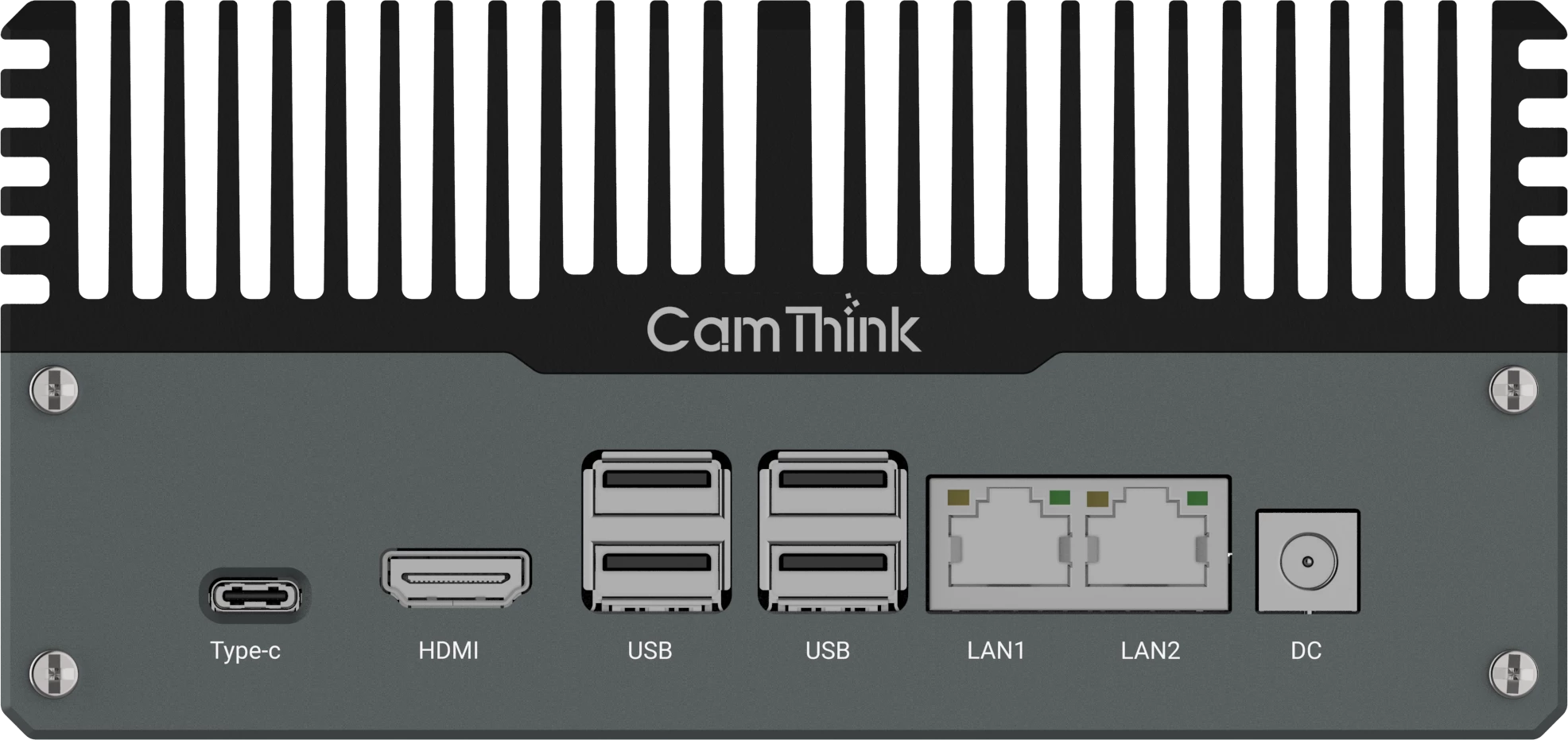
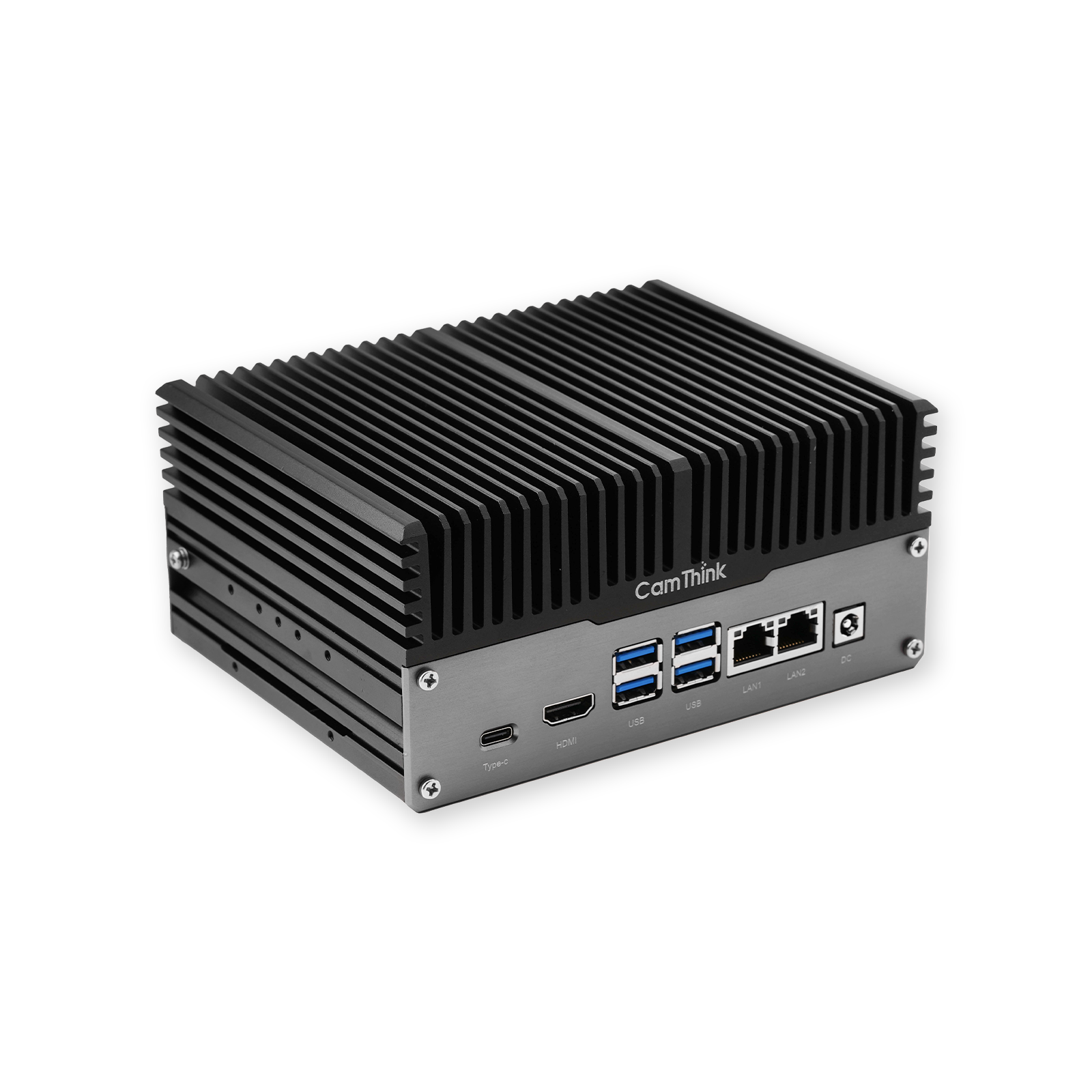
Choose the physical connection plan before the final compute configuration. A desktop demo may use one camera and an accessible power socket. A deployed station can require two networks, USB devices, serial equipment and a controlled DC supply. Drawing those connections exposes which hardware choices actually simplify installation.
NeoEdge NG4500 combines Jetson Orin Nano or Orin NX options with dual Gigabit Ethernet, USB and field interfaces in an enclosed system. Its 12–36 V DC input gives teams a route into sites that already distribute DC power. These features are useful when your application connects visual input to a local machine, a customer network or an upstream service. The ordered module and storage configuration determine the resources available to the application. NG4500 hardware and interface overview
Consider a camera on a local network and an operations service on a second network. Two Ethernet ports make a physical connection possible, while your software and network configuration define how traffic moves. Similarly, a serial connector gives an application a physical path to equipment, while the integration implements the equipment’s protocol. Build those application connections into the pilot so the box is evaluated as part of the system.
Carry the Working Software into the Evaluation
The fastest evaluation preserves a reproducible version of the working application. Record the development platform, JetPack release, runtime libraries, model export, input pipeline and application configuration. This lets your team separate a hardware difference from a software change when a result moves.
NG4500 provides a Jetson software path for applications built with CUDA, TensorRT and associated tooling. Use the software image supported by the selected NG4500 configuration as the migration target. Bring the application across with its dependencies and rebuild target-specific components as required. Keeping a model export and a small set of representative inputs makes it possible to compare outputs before a camera is installed at the new site. NG4500 platform documentation
A container can help package the application and its user-space dependencies. GPU access, device permissions and host compatibility still belong to the deployment design. An application that starts correctly should also open the real input, process it and deliver a usable result. That full run is more informative for a purchase than a benchmark of the model alone.
Price the Installed System and Its Ongoing Work
The purchase decision becomes clearer when costs follow the life of a unit. Add the compute, storage, enclosure, supply, radio options, mounting and assembly to the hardware quote. Then add integration time and the work needed to maintain the application at the site.
For a custom product, separate one-time engineering from recurring cost per unit. A carrier design and enclosure effort can be spread over a large production run. In a pilot or a small deployment, those same hours are concentrated into a few systems. A complete box can make the initial project easier to cost because the physical platform is already a product.
As an illustrative budgeting exercise, give both routes an identical input list and ask how many engineering hours each needs before the first site installation. Then ask what must be repeated for the second unit. Include software installation, cable preparation and service access. This reveals whether the saving is in parts, assembly or development time, and whether the project has the volume to recover its initial effort.
CamThink’s NG4500 configuration page is the purchasing starting point for an enclosed Jetson system. Select the module and available storage options around the application, then include the accessories needed at the intended site in the comparison.
Run One Representative Site Before Expanding
A first site pilot should prove the workflow the customer will use. Start with the actual input source, run the selected model and deliver its result to the receiving application. Observe the system over a representative busy period, including storage writes, networking and any additional process running beside inference.
A model timing figure covers one part of that work. For video, decoding and preprocessing can change the demand on CPU, memory and GPU. For an image-based workflow, a burst of captures can create a queue even when the average daily volume is small. Record the time from usable input to the result the operator or business service receives.
For the equipment-room example, the pilot succeeds when the computer processes the intended camera input, returns the agreed event and can be installed and serviced in the proposed location. Review mounting clearance and the thermal conditions around the enclosure as part of that same run. The exact deployment environment should follow the selected product specification.
When your application is ready for this step, plan an NG4500 evaluation with CamThink. A working model, a representative input and the site connection plan give the discussion a clear starting point.
Choose an Evaluation Unit You Can Reuse
We recommend selecting the first NG4500 around the workload and installation that the project expects to repeat. Enough memory for the application, the storage needed by the evidence policy and the appropriate network interfaces make that unit useful after the first demonstration.
Compare module options against the entire application. A larger model, multiple concurrent inputs or additional services can change the memory and processing requirement. If the project primarily analyzes existing IP cameras, continue with our edge AI box selection guide. It explains the video and receiving-system decisions that follow this hardware route.
A standard unit provides a development and site-test starting point. Where the deployment needs a different hardware or integration configuration, that evaluation can define the requirements for a further configuration discussion. The value of the first purchase is a repeatable path from your working application to a system the customer can operate.