Scaling a Water Meter Monitoring System for 50+ Units:
NE101 + NG4500 Architecture
Deploying 10 water meter cameras on individual LTE SIMs is manageable.
At 50, 100, or 300 meters, centralize image processing while choosing each camera’s network path by site coverage.
NE101 cameras upload over WiFi, WiFi HaLow, or LTE Cat.1 to NeoMind on an NG4500; for WiFi and HaLow, the AP or gateway connects to the host over LAN/Ethernet. OCR runs on the host and structured readings go to your SCADA or BMS. Includes architecture options, hardware BOM, deployment workflow, NeoMind integration, and cost comparison.
When you deploy 5–10 NE101 cameras on individual LTE Cat.1 SIM cards, the architecture is simple:
each camera connects independently to cellular, uploads images to an MQTT broker, and your OCR pipeline processes reads on a server.
For scattered remote sites, this remains the right approach.
At 50+ meters concentrated on one building, campus, or industrial facility, the economics and operational complexity change.
With IoT SIM pricing at $1–3 per device per month, 100 units adds $1,200–$3,600/year in recurring connectivity costs.
Managing 100 APN configurations, SIM renewals, and independent reconnect cycles becomes a maintenance burden.
If images must stay entirely on-premises for compliance or privacy reasons, routing through cellular may also be architecturally undesirable.
At this point, centralized OCR on an NG4500 is a strong production architecture. NE101 cameras can reach the same NeoMind host over local WiFi/HaLow or over LTE Cat.1 when a secure network route is available. Local radio links remove per-camera SIM costs and can keep image traffic on-site; LTE remains useful when the meters are spread across a plant or beyond local radio coverage. The NG4500 aggregates images, runs OCR, and delivers readings to SCADA or BMS in either case.
Scope of this guide
This article focuses on centralized OCR for 50+ water meters on a building, campus, or industrial site; the cameras may use local radio or LTE Cat.1.
For smaller or geographically dispersed deployments, see our
LTE vs HaLow comparison guide.
For a complete overview of the full solution,
see the IoT Camera Meter Reading guide.
System Architecture
In large-scale deployments, image capture and OCR inference are handled separately. NE101 units capture and transmit images at each meter,
while NeoMind on the NG4500 processes OCR centrally. A PC or other suitable Linux host can run NeoMind for evaluation; for a 50-camera production rollout, the NG4500 is our recommended central host. This reduces per-device cost, simplifies maintenance, and keeps AI
workloads off battery-powered field devices.
The architecture consists of three layers:
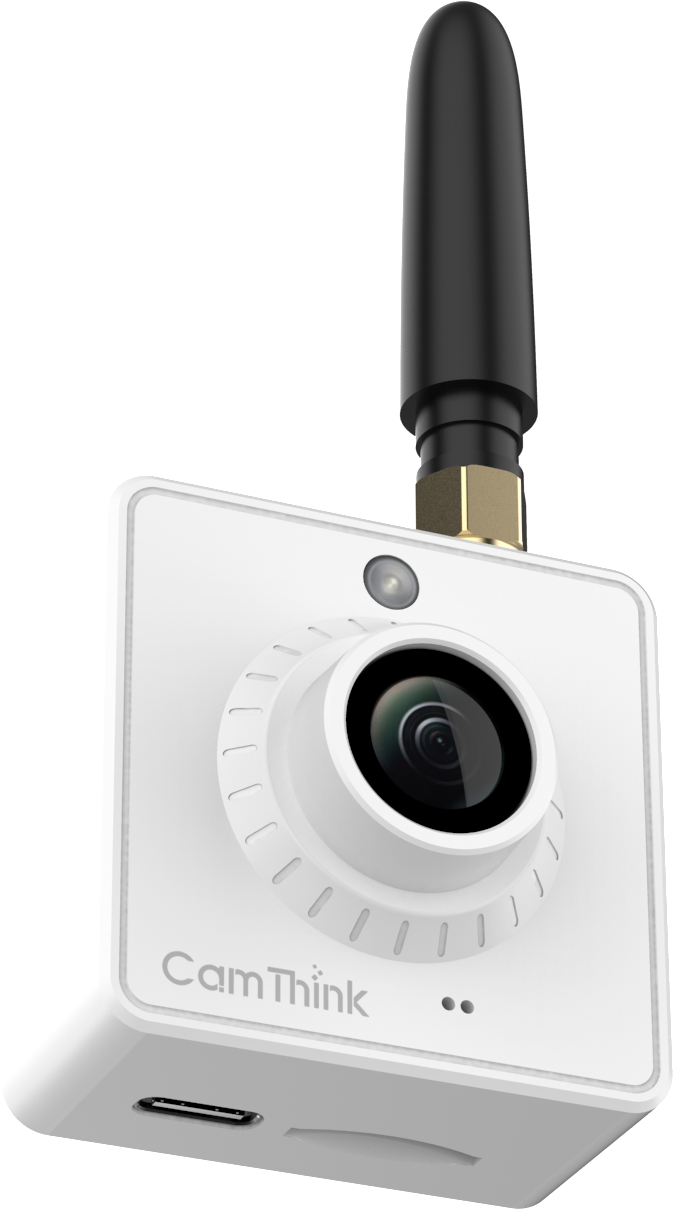
1. Capture nodes: NE101 cameras installed at each water meter to capture images on schedule or by event.
2. Network path: NE101 uses WiFi or WiFi HaLow to an AP/gateway, then LAN/Ethernet to the NeoMind host; or Cat.1 over the carrier network to a reachable host.
3. Centralized edge inference: NeoMind on NG4500 runs OCR and sends structured readings to your monitoring platform.
Data flow — centralized gateway architecture
NE101 (×N)
Capture Battery-powered
→WiFi/HaLow / LTE Cat.1
NG4500
OCR MQTT /NeoMind
→MQTT / API
SCADA / BMS
Monitor Analyze
Local Connectivity Options: WiFi HaLow is well suited to basement meters and longer links when an AP can reach the installed cameras. WiFi works when existing coverage reaches the meter locations. In both cases, Ethernet is the AP/gateway’s LAN backhaul to the NeoMind host, not an NE101 interface. For geographically dispersed meters, LTE Cat.1 cameras can upload through the carrier network to the same centralized host, provided its MQTT endpoint is reachable.
Choosing the Right NG4500 Model:
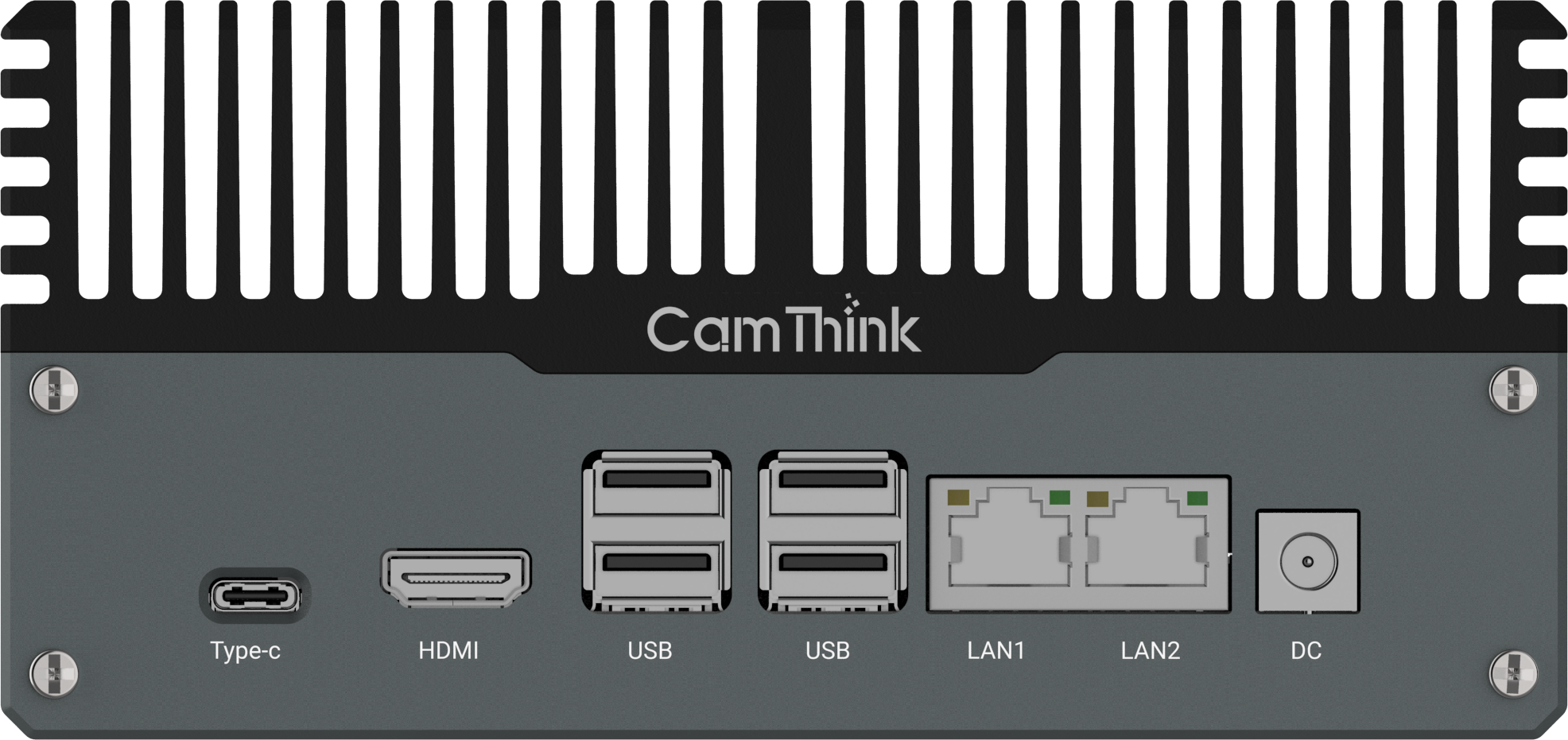
For scheduled meter-image OCR, NG4510 (Orin Nano 4GB, 20 TOPS) is an entry point for a lighter fleet, while NG4511 (Orin Nano 8GB, 40 TOPS) gives a 50-camera rollout more memory and processing headroom. CamThink’s engineering sizing for a standard NG4521 (Orin NX 16GB, 100 TOPS; 157 TOPS in SUPER mode) is 100 NE101 cameras for scheduled meter captures. Beyond that, size from capture frequency, peak upload bursts, OCR model mix, and storage needs rather than camera count alone.
Recommended Hardware for a 50-Unit Pilot
A representative hardware stack for deploying 50 NE101 cameras with a centralized gateway architecture.
Scale the NE101 count to your site requirements and choose connectivity based on existing infrastructure.
• WiFi — Most cost-effective when existing WiFi coverage reaches meter locations
NG4500 Sizing
• NG4510 (20 TOPS) — Entry fleet with lightweight OCR and staggered captures
• NG4511 (40 TOPS) — Recommended for a 50-camera rollout with processing headroom
• NG4521 (100 TOPS; 157 SUPER) — Engineering baseline: 100 NE101s on scheduled meter OCR; scale further by workload
Choosing the Right NG4500 for Your Deployment
ENTRY
NG4510
Jetson Orin Nano 4GB · 20 TOPS
• 30–50-camera planning scenario
• Lightweight OCR pipelines
• NeoMind + OCR + MQTT
• Best for pilot deployments
RECOMMENDED
NG4511
Jetson Orin Nano 8GB · 40 TOPS
• 50-camera rollout with headroom
• More memory for buffering
• Heavier OCR or multi-service workloads
• Best for most deployments
HIGH-CAPACITY
NG4521
Jetson Orin NX 16GB · 100 TOPS (157 SUPER)
• 100 NE101s on scheduled meter OCR*
• Multi-model AI pipelines
• VLM / advanced OCR workloads
• Best for large-scale sites
*The 30–50 and 50-camera figures are planning scenarios; the NG4521 100-camera figure is CamThink’s engineering baseline for scheduled meter captures. Peak uploads, OCR latency, model mix, and retention drive final sizing.
NeoMind Memory Considerations
If NeoMind is used for device management, MQTT brokering, and dashboard services only, NG4510 (4GB RAM) is typically sufficient for small to medium deployments.
If you enable LLM-assisted automation or AI chat features using a local backend such as Ollama with models like ministral-3:3b or deepseek-r1:7b,
8GB RAM is the practical minimum, with 16GB+ recommended for smoother performance and future headroom. In these cases, choose NG4511 or above.
Cost Comparison: Local WiFi/HaLow vs Individual LTE
The example below compares 100 NE101 cameras over three years. Both network paths use a central NG4500 for NeoMind OCR; the inputs are $2 per LTE SIM per month, $120–180 per year for host electricity, and the hardware ranges shown in the table. Installation, maintenance, taxes, and existing network costs are outside this comparison.
3-Year Cost Comparison
Item
LTE Uplink + NG4500 (100 units)
WiFi/HaLow + NG4500 (100 units)
Hardware(NE101)
~$9,000 (100 × NE101 4G LTE)
~$8,500–9,900 (depending on version)
NG4500 / AP hardware
~$1,000–1,400 (NeoEdge)
~$1,000–1,400 (NeoEdge + existing WiFi or optional AP)
Year 1 Recurring
~$2,520–2,580/yr (SIMs + host electricity)
~$120–180/yr electricity
3-Year Recurring
~$7,560–7,740 (SIMs + host electricity)
~$360–540 cumulative electricity cost
3-Year Total
~$17,560–18,140
~$9,860–11,840
Operational Comparison
Factor
LTE Uplink + NG4500
WiFi/HaLow + NG4500
Data Privacy
Images transit the cellular network; protect the route to the NeoMind host with MQTTS.
Images can stay on-premises when APs, gateway, and NeoMind host are on-site.
OCR Inference Location
Central NG4500 / NeoMind, reached over LTE
Central NG4500 / NeoMind on the local LAN
Management Overhead
100 SIMs and APN configs; 1 central OCR host
AP coverage and LAN backhaul; 1 central OCR host
With the inputs above, the local WiFi/HaLow path is already cheaper by the end of Year 1. Lower SIM rates or new AP installation shift the crossover. WiFi is most cost-effective where coverage already exists; HaLow is useful when its measured link reaches meters that standard WiFi cannot. A 50-camera fleet can still use LTE Cat.1 with central NG4500 OCR when local radio coverage is impractical.
Deployment Workflow
Deploying 50-300+ cameras requires planning but doesn’t have to be complex. The workflow below separates
preparation, installation, gateway setup, and validation
into distinct phases. Each phase is designed to scale efficiently: batch device preparation reduces
on-site time, bulk configuration accelerates setup, and early validation prevents costly rework.
1
Plan the Deployment
Survey meter locations, network availability, and site constraints. Estimate camera count and choose the
appropriate NG4500 variant. For large deployments, define naming conventions and MQTT topic structures in advance.
2
Install and Connect Devices
Mount NE101 units, verify camera alignment, and connect devices to the chosen WiFi/HaLow network or LTE Cat.1 service. For battery-powered
installations, record installation dates for maintenance planning.
3
Configure Gateway and Data Flow
Set up the NG4500 and NeoMind, configure the MQTT broker, register devices, and assign unique topics.
Use bulk import and templates to accelerate large deployments.
4
Deploy OCR and Validate
Deploy your OCR model and validate performance across different meter types and lighting conditions
before scaling to the full site.
Deploying 50+ meters?
Talk to our team about architecture design, hardware selection, and volume pricing before finalizing your BOM.
Each NE101 publishes its image payload over WiFi, WiFi HaLow, or 4G LTE Cat.1; the radio path changes, but NeoMind still receives the image at its MQTT endpoint. WiFi and HaLow reach the host through an AP/gateway and LAN/Ethernet backhaul. Cat.1 cameras can be spread across the plant and upload through the carrier network to the same reachable host.
NeoMind decodes the image, runs OCR on the NG4500, and delivers structured readings to monitoring systems through the configured OpenAPI, Data Push, or Webhook integration.
NE101 → MQTT broker (inbound payload from each camera)
For lightweight OCR models running on the NG4510, inference is typically sub-second per image.
End-to-end latency depends on model complexity, queue depth, and the selected Jetson Orin variant.
Fleet Operations at Scale
Managing 50-300+ cameras requires operational processes beyond simple installation. NeoMind provides
the management layer, but long-term success depends on disciplined maintenance workflows. Key operational areas include:
Battery Replacement Planning
At 3+ years battery life (10 captures/day in WiFi mode), replacement is infrequent but predictable. For 100+ deployments, schedule replacements proactively rather than reactively.
Use NeoMind alerts at 20% battery remaining, then plan bulk replacement events within a 3–6 month window to reduce site visits.
Treat firmware changes as a staged fleet operation. The standard NE101 upgrade path is the device Web UI; projects with a remote OTA integration can use the same release sequence:
1. update 5–10 devices first
2. monitor captures, uploads, and battery behaviour for 24–48 hours
3. continue by site or device group after validation
For mission-critical deployments, retain the prior firmware and a recovery procedure.
Device Grouping and Access Control
For deployments across multiple buildings or sites, organize devices by building, floor, meter type, or deployment phase. This simplifies monitoring by making it easier to isolate issues and view relevant metrics without filtering through hundreds of devices.
Grouping also enables granular access control, so maintenance teams only see and manage the devices relevant to their assigned location or responsibility.
Storage and Retention Planning
At 4–6 reads/day with ~50–100KB images, a 100-device deployment generates roughly 7–22GB/year of raw images. Allow additional space for metadata, indexes, temporary files, and backups; longer retention periods increase storage requirements.
A common strategy is to retain raw images locally for 6–12 months, then archive or delete older data automatically based on compliance or audit requirements. NeoMind can automate retention and cleanup policies at scale.
Backup and Disaster Recovery
For production deployments, back up NeoMind configuration regularly, including device registration, automation rules, and dashboard layouts. Store backups externally or on a network location, and document the restore process so recovery is fast in the event of failure.
For redundancy-critical sites, consider a warm-standby NG4500 with replicated configuration to minimize downtime.
Maintenance Scheduling at Scale
For 50+ deployments, proactive maintenance is more efficient than reactive troubleshooting. Review alerts weekly, monitor battery trends monthly, review firmware quarterly, and inspect hardware annually.
When Not to Deploy a New HaLow Network
A new HaLow AP network is most useful for concentrated deployments where standard WiFi cannot reach the meters. The central NG4500 OCR host can also receive from LTE Cat.1 or existing WiFi. Consider those paths when:
Geographically Scattered Meters If meters are spread across a wide area — such as rural water meters across 50 km² service area — one local WiFi or HaLow AP may not cover them. Per-device LTE Cat.1 can still bring images to a centralized NG4500 over the carrier network; the host does not need to sit within radio range of every camera.
Small Deployments (<20 units)
For smaller deployments on one site, a new HaLow AP may not pay back against existing LTE or WiFi coverage, especially for short-term projects. NeoMind still needs a host for OCR; a PC or Linux machine can serve an evaluation before selecting the production NG4500.
Existing WiFi Already Covers the Site
If your site already has reliable WiFi at all meter locations, a WiFi-based gateway architecture is often more cost-effective than deploying new WiFi HaLow infrastructure. Use HaLow only when range, walls, or interference prevent standard WiFi coverage.
Frequently Asked Questions
When should I use LTE instead of local WiFi or HaLow?
Use LTE Cat.1 when meters are geographically scattered (e.g., across a 50+ km² service area), when local AP coverage is impractical, or when SIM cost is acceptable for the deployment.
Use local WiFi or HaLow when AP coverage reaches the meters and avoiding per-camera SIM costs matters. Both paths can feed the same NG4500 running NeoMind OCR; camera count alone does not force a radio change.
Can I use existing WiFi instead of deploying HaLow?
Yes. If your site already has WiFi coverage at meter locations, standard WiFi is often the most
cost-effective option and may require no additional network infrastructure. NE101 WiFi variants can connect to existing access points. Use WiFi HaLow when standard WiFi cannot reach meter locations due to distance, walls, or interference, after checking the link with the intended AP. For connectivity selection guidance, see the
LTE vs WiFi HaLow comparison guide.
How many NE101 cameras can one NG4500 handle?
The NG4500’s capacity depends on the Jetson Orin variant, image size, OCR model, capture frequency, and peak upload pattern. For scheduled meter reading:
NG4510 (20 TOPS, 4GB RAM): 30–50 cameras as a light-workload planning scenario
NG4511 (40 TOPS, 8GB RAM): recommended starting point for a 50-camera rollout
NG4521 (100 TOPS, 16GB RAM): CamThink engineering baseline of 100 NE101 cameras for scheduled meter OCR
Beyond that, size from OCR latency during the busiest upload window, memory, and image retention rather than a fixed radio range.
What’s the maintenance overhead for 100+ devices?
With proper planning, 100+ devices can be managed with relatively low ongoing overhead. Key practices include:
1. preventive maintenance — weekly alert reviews, monthly battery trend analysis, quarterly firmware review;
2. automated alerting — tiered alerts (critical vs. warning) to avoid alarm fatigue;
3. battery planning — proactive replacement scheduling at 20% remaining battery.
With these workflows in place, routine maintenance can often be kept to a few hours per month after initial deployment.
How do I handle battery replacements at scale?
At 3+ year battery life, replacements are infrequent but predictable. Use NeoMind’s battery monitoring to create alerts at 20% remaining battery, then schedule bulk replacement events within a 3–6 month window rather than replacing devices individually.
The NE101 reports battery metrics in each MQTT payload, allowing NeoMind to track trends over time and help forecast replacement cycles proactively. For large fleets, maintaining a 5–10% battery buffer stock can reduce emergency procurement risk.
Can NeoMind manage a mix of connectivity types?
Yes. NeoMind manages devices by MQTT topic and device ID, regardless of connectivity path. A mixed fleet—such as some NE101s connected via WiFi / WiFi HaLow gateway and others using direct LTE—can be managed within the same NeoMind instance and dashboard. This is useful for hybrid deployments where some meters are on-site and others are remote.
What OCR model is recommended for mechanical water meter digit recognition?
CamThink’s NeoMind OCR Solution (see the
OCR Solution wiki guide)
provides the recommended workflow. For drum-counter and odometer-style mechanical water meter under consistent lighting, a YOLO-based digit detection model trained on your specific meter type typically achieves 95–98%+ accuracy. For scale deployments, validate performance on 10–20 sample meters before full rollout to identify problematic meter types early.
Can the NG4500 handle other AI workloads alongside meter OCR?
Yes, particularly on higher-spec variants. The NG4520/NG4521 (Jetson Orin NX 8–16GB,
70–100 TOPS) has headroom to run additional parallel workloads, such as anomaly detection, secondary OCR models, or lightweight LLM-based automation.
The NG4510/NG4511 (Orin Nano) is more constrained and generally suitable for a single
primary OCR workload alongside NeoMind’s device management stack.
HH
Harry Hua
Technical Director · 10+ Years in Technical Solutions
10+ years of IoT architecture experience, specializing in edge AI and IoT deployment. Led the technical architecture design for multiple large-scale water meter digitization projects, validating the cost-effectiveness and stability of gateway solutions in real-world deployments.